Department of Cardiology, Erasmus MC Thoraxcenter, 's Gravendijkwal 230, 3015 CE, Rotterdam, the Netherlands,
Neth Heart J. 2012 Jan;20(1):24-32. doi: 10.1007/s12471-011-0173-6.
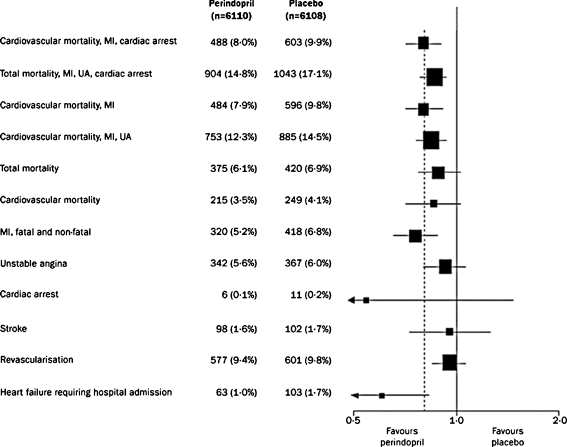
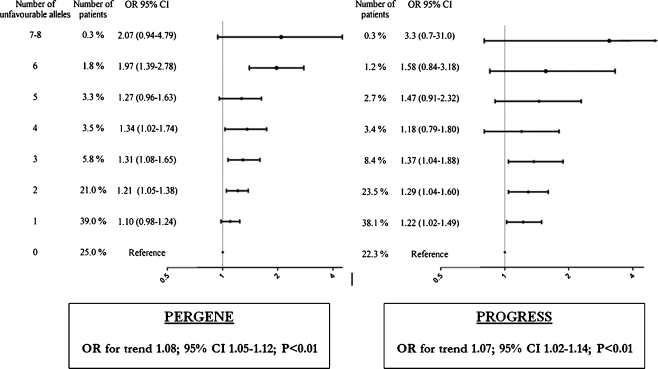
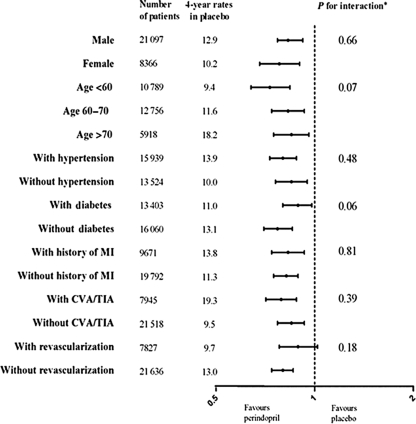
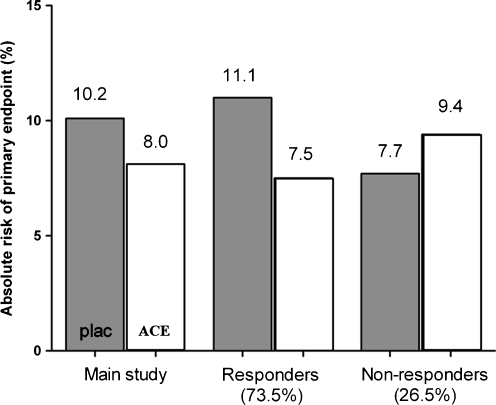
In patients with stable coronary artery disease (CAD) without overt heart failure, ACE inhibitors are among the most commonly used drugs as these agents have been proven effective in reducing the risk of cardiovascular events. Considerable individual variations in the blood pressure response to ACE inhibitors are observed and as such heterogeneity in clinical treatment effect would be likely as well. Assessing the consistency of treatment benefit is essential for the rational and cost-effective prescription of ACE inhibitors. Information on heterogeneities in treatment effect between subgroups of patients could be used to develop an evidence-based guidance for the installation of ACE-inhibitor therapy. Obviously, therapy should only be applied in those patients who most likely will benefit. Attempts to develop such treatment guidance by using clinical characteristics have been unsuccessful. No heterogeneity in risk reduction by ACE inhibitors has been observed in relation to relevant clinical characteristics. A new approach to such 'guided-therapy' could be to integrate more patient-specific characteristics such as the patients' genetic information. If proven feasible, pharmacogenetic profiling could optimise patients' benefit of treatment and reduce unnecessary treatment of patients. Cardiovascular pharmacogenetic research of ACE inhibitors in coronary artery disease patients is in a formative stage and studies are limited. The PERGENE study is a large pharmacogenetic substudy of the EUROPA trial, aimed to assess the achievability of pharmacogenetic profiling. We provide an overview of the main results of the PERGENE study in terms of the genetic determinants of treatment benefit and blood pressure response. The main results of the PERGENE study show a pharmacogenetic profile related to the treatment benefit of perindopril identifying responders and non-responders to treatment.
在没有明显心力衰竭的稳定型冠状动脉疾病 (CAD) 患者中,血管紧张素转换酶抑制剂 (ACEI) 是最常用的药物之一,因为这些药物已被证明可有效降低心血管事件的风险。观察到 ACEI 对血压的反应存在相当大的个体差异,因此临床治疗效果也可能存在异质性。评估治疗益处的一致性对于 ACEI 的合理和具有成本效益的处方至关重要。关于患者亚组之间治疗效果的异质性信息可用于为 ACE 抑制剂治疗制定基于证据的指导。显然,只有在最有可能受益的患者中才应应用该疗法。使用临床特征来开发这种治疗指导的尝试均未成功。ACEI 降低风险方面没有观察到与相关临床特征的异质性。这种“指导治疗”的新方法可以整合更多患者特异性特征,例如患者的遗传信息。如果证明可行,药物遗传学分析可以优化患者的治疗获益并减少不必要的治疗。冠心病患者 ACEI 的心血管药物遗传学研究仍处于形成阶段,研究有限。PERGENE 研究是 EUROPA 试验的一项大型药物遗传学子研究,旨在评估药物遗传学分析的可行性。我们提供了 PERGENE 研究的主要结果概述,包括治疗获益和血压反应的遗传决定因素。PERGENE 研究的主要结果显示,与培哚普利治疗获益相关的药物遗传学分析可识别治疗的应答者和无应答者。