Department of Biological Sciences, San Jose State University, San Jose, California, United States of America.
PLoS One. 2011;6(6):e21280. doi: 10.1371/journal.pone.0021280. Epub 2011 Jun 20.
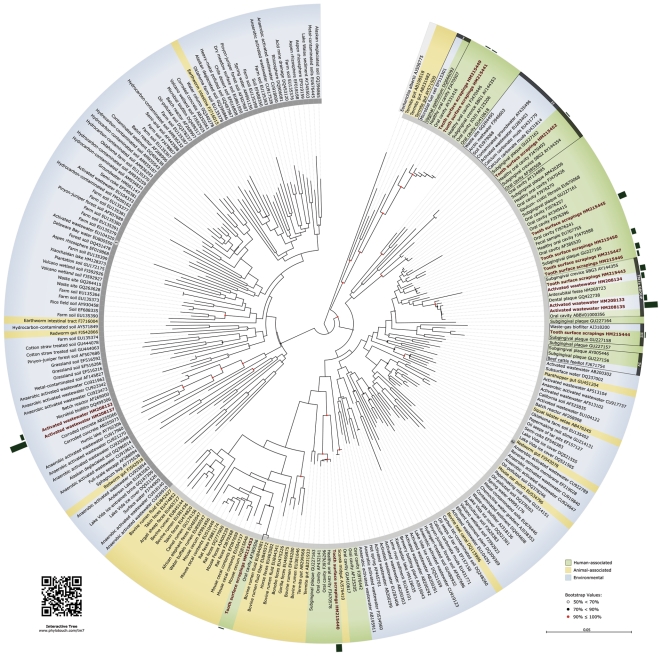
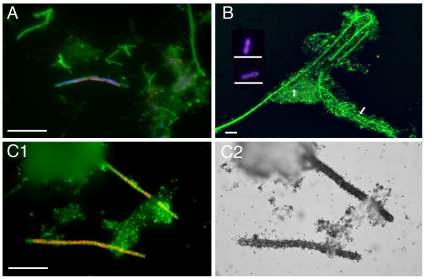
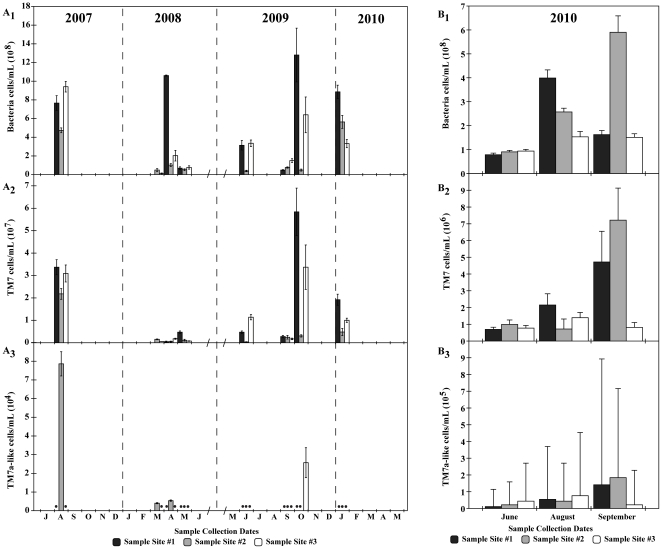
We have identified an environmental bacterium in the Candidate Division TM7 with ≥98.5% 16S rDNA gene homology to a group of TM7 bacteria associated with the human oral cavity and skin. The environmental TM7 bacterium (referred to as TM7a-like) was readily detectable in wastewater with molecular techniques over two years of sampling. We present the first images of TM7a-like cells through FISH technique and the first images of any TM7 as viable cells through the STARFISH technique. In situ quantification showed TM7 concentration in wastewater up to five times greater than in human oral sites. We speculate that upon further characterization of the physiology and genetics of the TM7a-like bacterium from environmental sources and confirmation of its genomic identity to human-associated counterparts it will serve as model organisms to better understand its role in human health. The approach proposed circumvents difficulties imposed by sampling humans, provides an alternative strategy to characterizing some diseases of unknown etiology, and renders a much needed understanding of the ecophysiological role hundreds of unique Bacteria and Archaea strains play in mixed microbial communities.
我们从候选门 TM7 中分离到一株与口腔和皮肤共生的 TM7 细菌具有≥98.5%同源性的环境细菌。通过分子技术,我们在两年的采样过程中,在废水中很容易检测到环境 TM7 细菌(称为 TM7a 样)。我们通过 FISH 技术首次展示了 TM7a 样细胞的图像,通过 STARFISH 技术首次展示了任何 TM7 作为活细胞的图像。原位定量显示,废水中 TM7 的浓度比口腔中的 TM7 高五倍。我们推测,进一步对来自环境的 TM7a 样细菌的生理和遗传特性进行表征,并确认其与人类相关对应物的基因组身份后,它将作为模型生物,以更好地理解其在人类健康中的作用。该方法提出了一种规避从人体采样带来的困难的方案,为表征某些病因不明的疾病提供了一种替代策略,并使我们对混合微生物群落中数百种独特的细菌和古细菌菌株在生态生理作用方面有了更深入的了解。