Department of Otorhinolaryngology, Head and Neck Surgery, Medical Center of the University of Heidelberg, Im Neuenheimer Feld 400, 69120 Heidelberg, Germany.
Health Qual Life Outcomes. 2011 Jun 29;9:48. doi: 10.1186/1477-7525-9-48.
Chronic suppurative otitis media (CSOM) is frequently associated with symptoms of inflammation like discharge from the ear or pain. In many cases, patients suffer from hearing loss causing communication problems and social withdrawal. The objective of this work was to collect prospective audiological data and data on general and disease-specific quality of life with validated quality of life measurement instruments to assess the impact of the disease on health-related quality of life (HR-QOL).
121 patients were included in the study. Patients were clinically examined in the hospital before and 6 months after surgery including audiological testing. They filled in the quality of life questionnaires SF-36 and Chronic Otitis Media Outcome Test 15 (COMOT-15) pre-operatively and 6 and 12 months post-operatively, respectively.
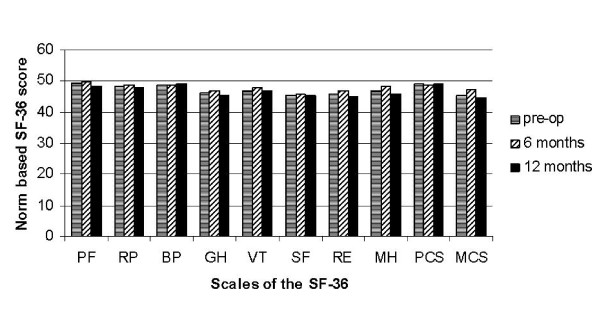
Complete data records from 90 patients were available for statistical analysis. Disease-specific HR-QOL in patients with CSOM improved after tympanoplasty in all the scales of the COMOT-15. There was no difference in HR-QOL assessment between patients with mesotympanic respectively epitympanic CSOM. However, we did find the outcome to be worse in patients who received revision surgery compared with those receiving primary surgery. Audiometric findings correlated very well with the subscale hearing function from the COMOT-15 questionnaire. General HR-QOL measured with the SF-36 was not significantly changed by tympanoplasty.
Tympanoplasty did lead to a significant improvement of disease-specific HR-QOL in patients with CSOM while general HR-QOL did not change. Very well correlations were found between the subscale hearing function from the COMOT-15 questionnaire and audiological findings. Revision surgery seems to be a predictor for a worse outcome.
慢性化脓性中耳炎(CSOM)常伴有耳部溢液或疼痛等炎症症状。在许多情况下,患者会出现听力损失,导致沟通问题和社交退缩。本研究旨在收集前瞻性听力学数据和使用经过验证的生活质量测量工具获得的一般和疾病特异性生活质量数据,以评估疾病对健康相关生活质量(HR-QOL)的影响。
本研究纳入了 121 名患者。患者在手术前和手术后 6 个月在医院进行临床检查,包括听力测试。他们分别在术前、术后 6 个月和 12 个月填写生活质量问卷 SF-36 和慢性中耳炎结局测试 15(COMOT-15)。
90 名患者的完整数据记录可用于统计分析。在所有 COMOT-15 量表中,CSOM 患者在鼓室成形术后的疾病特异性 HR-QOL 均得到改善。鼓室中隔型和鼓室上型 CSOM 患者的 HR-QOL 评估无差异。然而,我们发现与初次手术相比,接受翻修手术的患者预后更差。听力测试结果与 COMOT-15 问卷的听力功能子量表高度相关。鼓室成形术对 SF-36 测量的一般 HR-QOL 没有显著影响。
鼓室成形术可显著改善 CSOM 患者的疾病特异性 HR-QOL,而一般 HR-QOL 则没有变化。COMOT-15 问卷的听力功能子量表与听力测试结果之间存在很好的相关性。翻修手术似乎是预后不良的预测因素。