Gout Stéphanie, Huot Jacques
Le Centre de recherche en cancérologie de l'Université Laval, L'Hôtel-Dieu de Québec, 9 rue McMahon, Quebec, Canada.
Cancer Microenviron. 2008 Dec;1(1):69-83. doi: 10.1007/s12307-008-0007-2. Epub 2008 Mar 14.
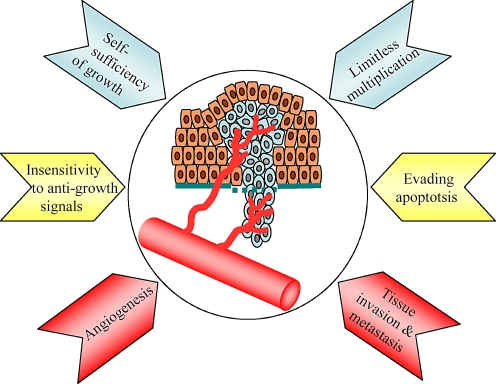
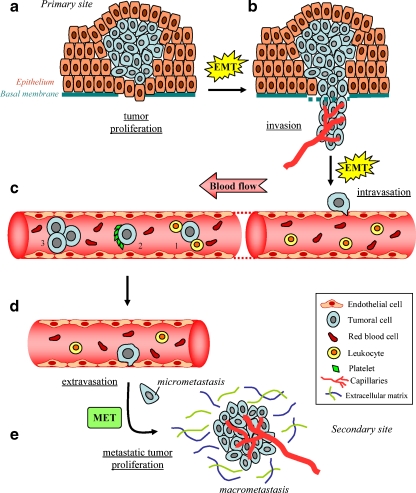
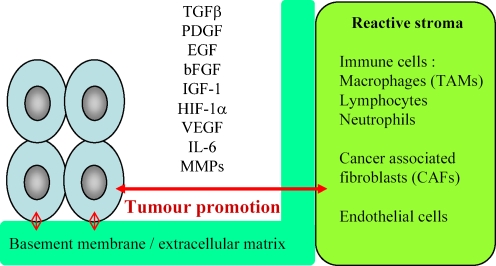
One person on three will receive a diagnostic of cancer during his life. About one third of them will die of the disease. In most cases, death will result from the formation of distal secondary sites called metastases. Several events that lead to cancer are under genetic control. In particular, cancer initiation is tightly associated with specific mutations that affect proto-oncogenes and tumour suppressor genes. These mutations lead to unrestrained growth of the primary neoplasm and a propensity to detach and to progress through the subsequent steps of metastatic dissemination. This process depends tightly on the surrounding microenvironment. In fact, several studies support the point that tumour development relies on a continuous cross-talk between cancer cells and their cellular and extracellular microenvironments. This signaling cross-talk is mediated by transmembrane receptors expressed on cancer cells and stromal cells. The aim of this manuscript is to review how the cancer microenvironment influences the journey of a metastatic cell taking liver invasion by colorectal cancer cells as a model.
三个人中就有一人在一生中会被诊断出患有癌症。其中约三分之一的人会死于这种疾病。在大多数情况下,死亡将由称为转移灶的远端继发部位的形成导致。导致癌症的几个事件受基因控制。特别是,癌症的起始与影响原癌基因和肿瘤抑制基因的特定突变密切相关。这些突变导致原发性肿瘤不受控制地生长,并倾向于脱离并经历转移扩散的后续步骤。这个过程紧密依赖于周围的微环境。事实上,多项研究支持肿瘤发展依赖于癌细胞与其细胞和细胞外微环境之间持续的相互作用这一观点。这种信号相互作用由癌细胞和基质细胞上表达的跨膜受体介导。本文的目的是综述癌症微环境如何影响以结肠癌细胞肝转移为模型的转移细胞的进程。