Charlie Norwood VA Medical Center, Georgia Health Sciences University, Augusta, Georgia, USA.
Mol Cancer Res. 2011 Aug;9(8):1067-77. doi: 10.1158/1541-7786.MCR-10-0445. Epub 2011 Jul 1.
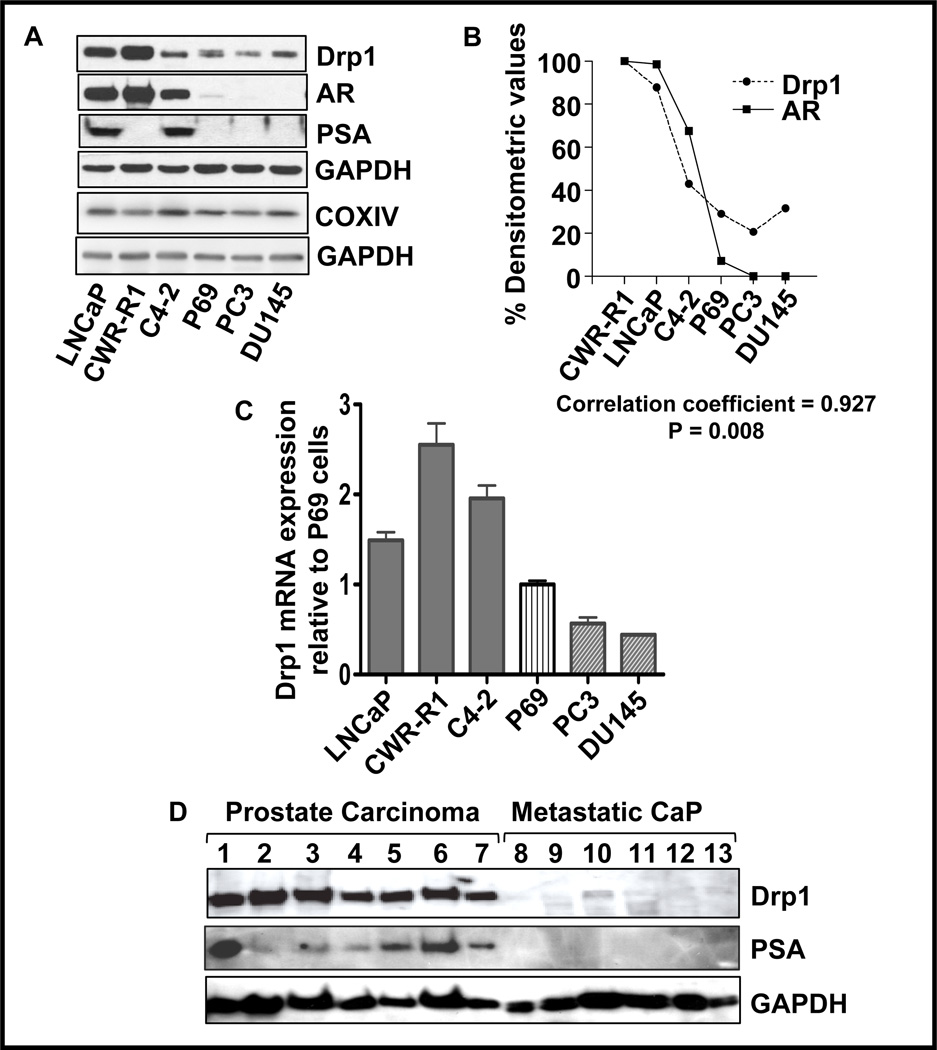
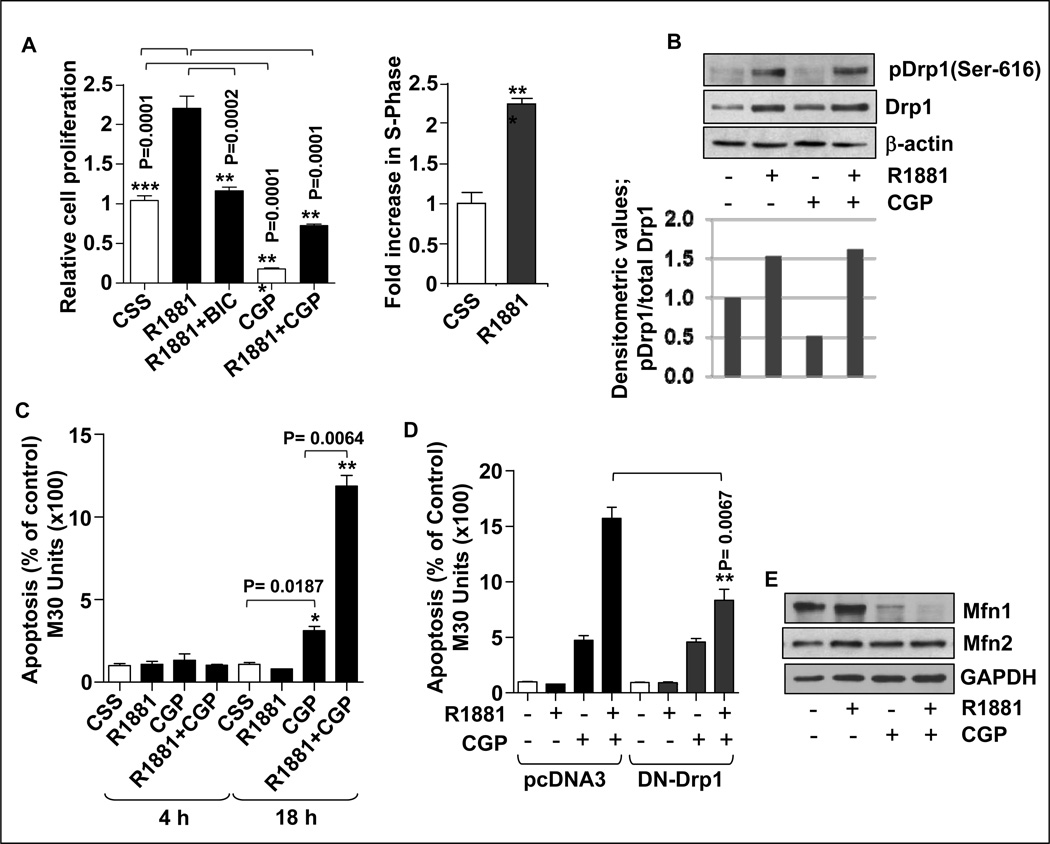
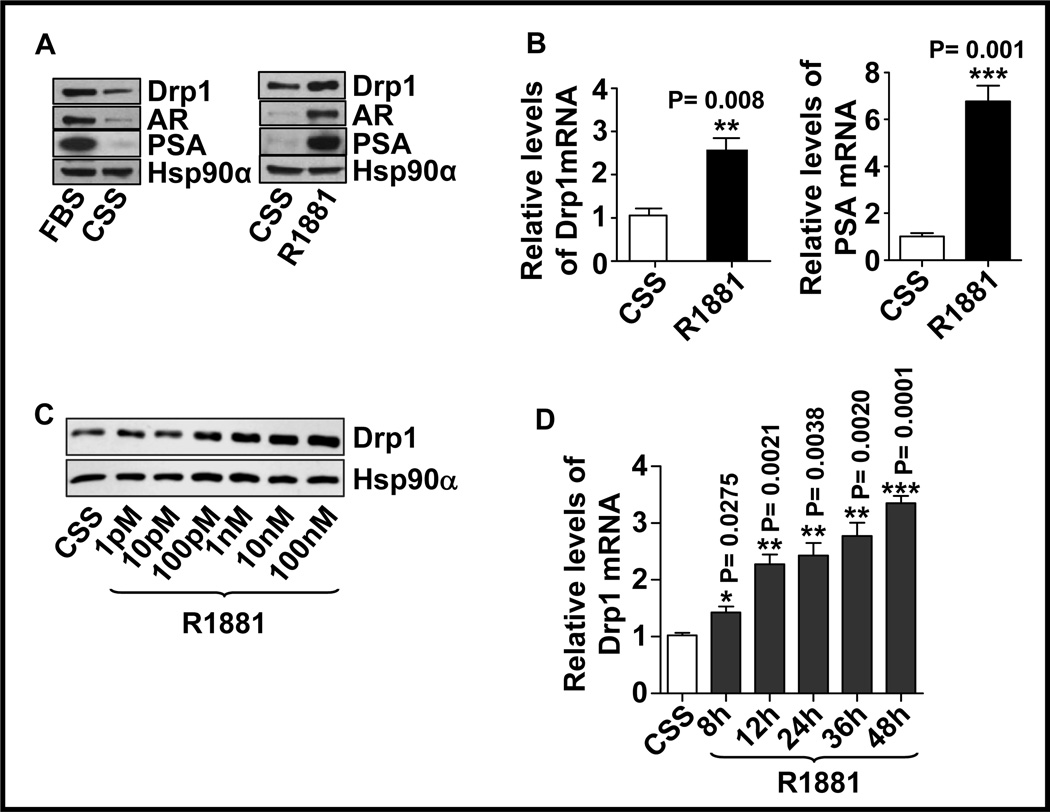
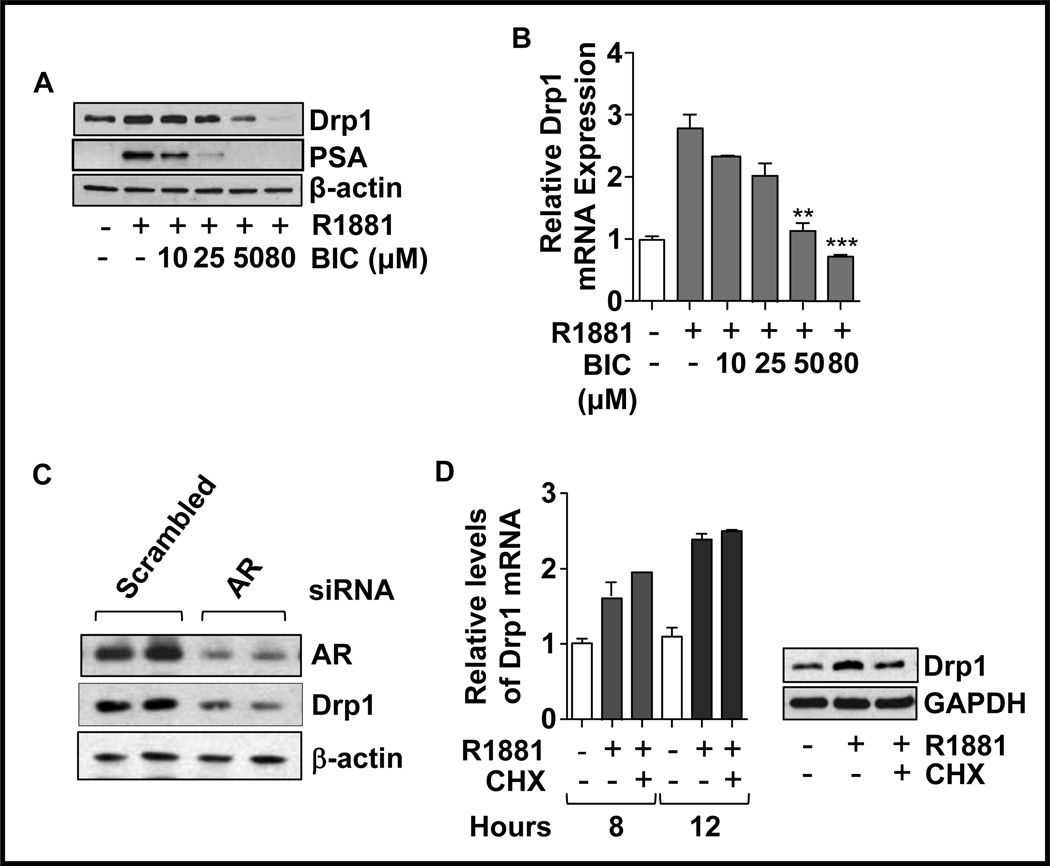
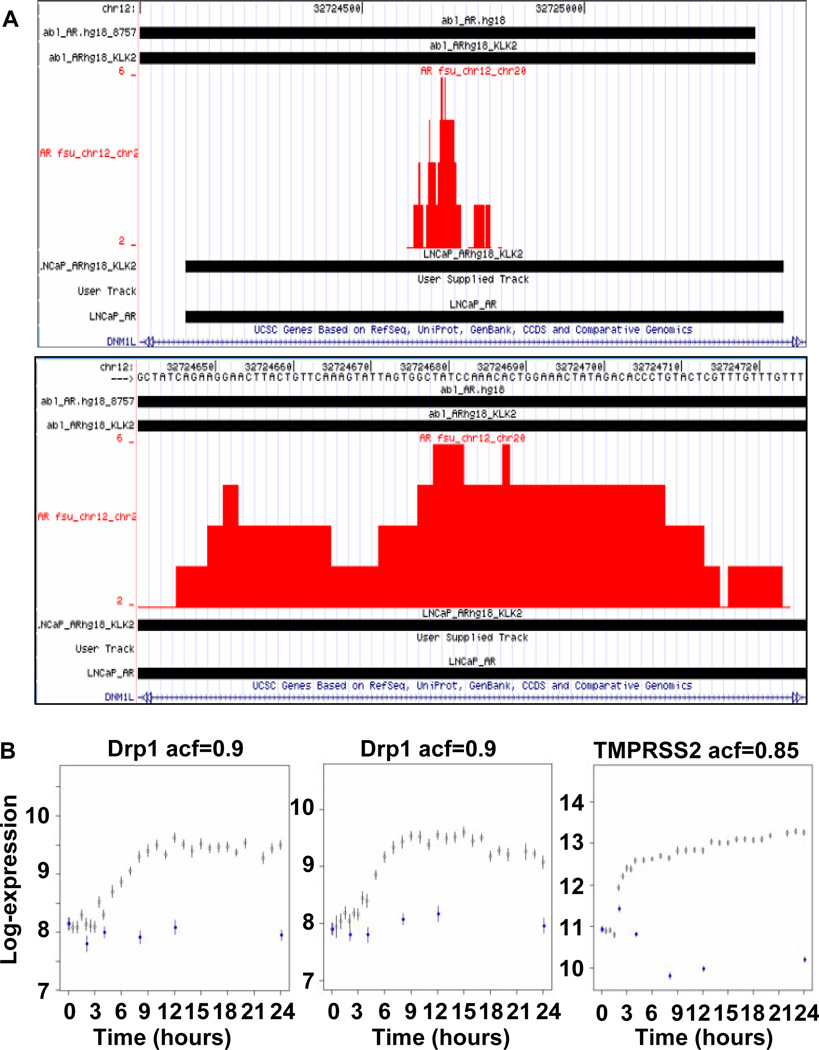
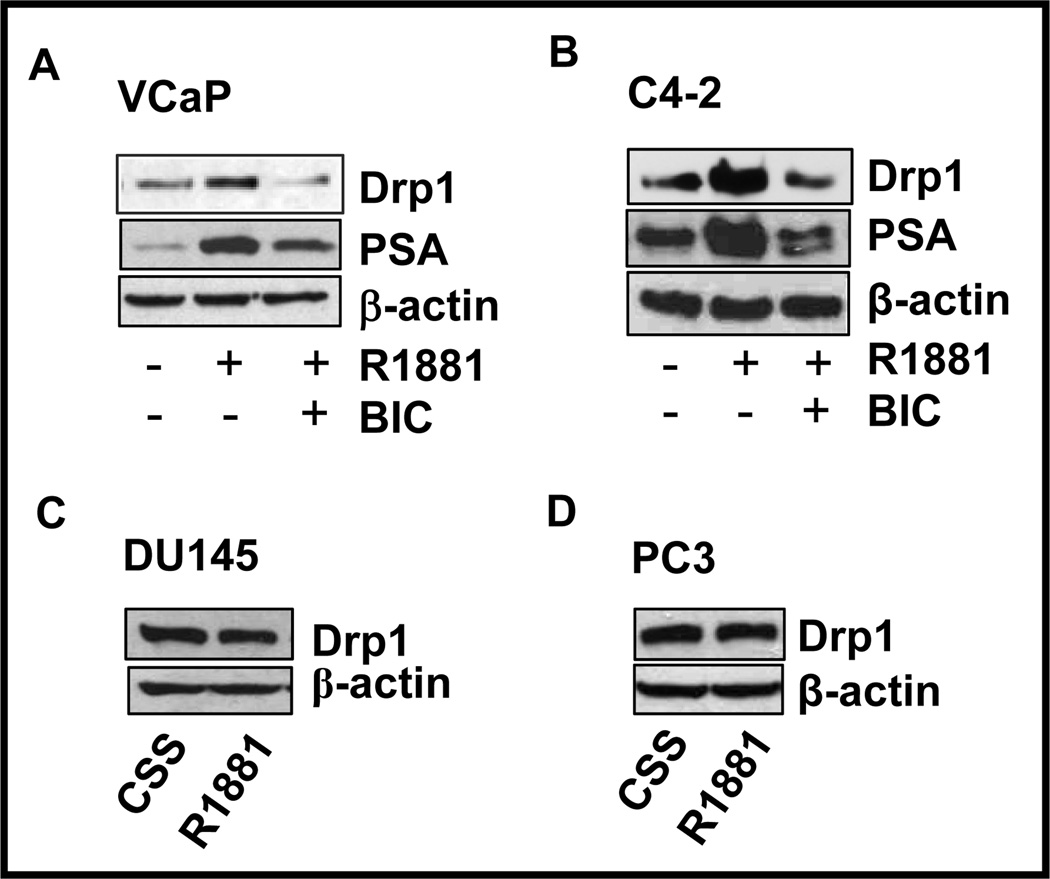
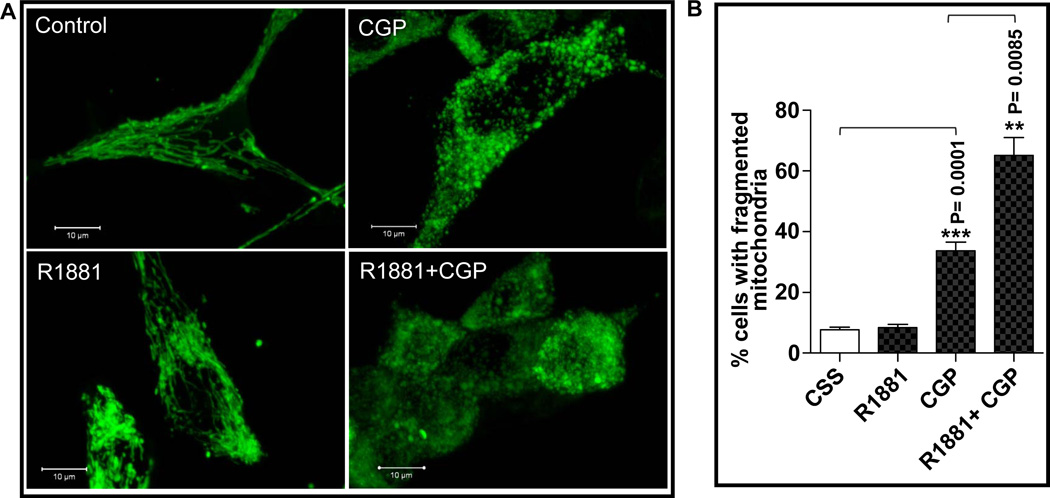
Androgen and androgen receptors (AR) play critical roles in the proliferation of prostate cancer through transcriptional regulation of target genes. Here, we found that androgens upregulated the expression of dynamin-related protein 1 (Drp1), which is involved in the induction of mitochondrial fission, a common event in mitosis and apoptosis. Clinical tissue samples and various prostate cancer cell lines revealed a positive correlation between Drp1 and AR levels. Treatment of androgen-sensitive cells with an AR agonist, R1881, and antagonist, bicalutamide, showed that Drp1 is transcriptionally regulated by androgens, as confirmed by an AR ChIP-seq assay. Live imaging experiments using pAcGFP1-Mito stably transfected LNCaP (mito-green) cells revealed that androgen did not induce significant mitochondrial fission by itself, although Drp1 was upregulated. However, when treated with CGP37157 (CGP), an inhibitor of mitochondrial Ca²⁺ efflux, these cells exhibited mitochondrial fission, which was further enhanced by pretreatment with R1881, suggesting that androgen-induced Drp1 expression facilitated CGP-induced mitochondrial fission. This enhanced mitochondrial fission was correlated with increased apoptosis. Transfection with dominant-negative (DN-Drp1, K38A) rescued cells from increased apoptosis, confirming the role of androgen-induced Drp1 in the observed apoptosis with combination treatment. Furthermore, we found that CGP reduced the expression of Mfn1, a protein that promotes mitochondrial fusion, a process which opposes fission. We suggest that androgen-increased Drp1 enhanced mitochondrial fission leading to apoptosis. The present study shows a novel role for androgens in the regulation of mitochondrial morphology that could potentially be utilized in prostate cancer therapy.
雄激素和雄激素受体 (AR) 通过对靶基因的转录调控,在前列腺癌的增殖中发挥关键作用。在这里,我们发现雄激素上调了参与线粒体裂变的动力相关蛋白 1 (Drp1) 的表达,线粒体裂变是有丝分裂和细胞凋亡中的常见事件。临床组织样本和各种前列腺癌细胞系显示 Drp1 与 AR 水平之间存在正相关。用 AR 激动剂 R1881 和拮抗剂比卡鲁胺处理雄激素敏感细胞表明,Drp1 是受雄激素转录调控的,这一点通过 AR ChIP-seq 检测得到了证实。使用稳定转染 pAcGFP1-Mito 的 LNCaP(mito-green)细胞的实时成像实验表明,尽管 Drp1 上调,但雄激素本身不会诱导明显的线粒体裂变。然而,当用线粒体 Ca²⁺外排抑制剂 CGP37157 (CGP) 处理这些细胞时,它们表现出线粒体裂变,用 R1881 预处理进一步增强了这种裂变,表明雄激素诱导的 Drp1 表达促进了 CGP 诱导的线粒体裂变。这种增强的线粒体裂变与凋亡增加相关。转染显性失活 (DN-Drp1,K38A) 可挽救因联合治疗而增加的细胞凋亡,证实了雄激素诱导的 Drp1 在观察到的凋亡中的作用。此外,我们发现 CGP 降低了促进线粒体融合的蛋白质 Mfn1 的表达,而线粒体融合与裂变相反。我们认为雄激素增加的 Drp1 增强了线粒体裂变,导致细胞凋亡。本研究表明雄激素在调节线粒体形态方面具有新的作用,这可能在前列腺癌治疗中得到应用。