Institute of Biology, State University of Campinas, Campinas, SP, Brazil.
Department of Histology, Institute of Biomedical Sciences, Federal University of Uberlândia, Uberlândia, MG, Brazil.
Oxid Med Cell Longev. 2019 Jan 9;2019:5080798. doi: 10.1155/2019/5080798. eCollection 2019.
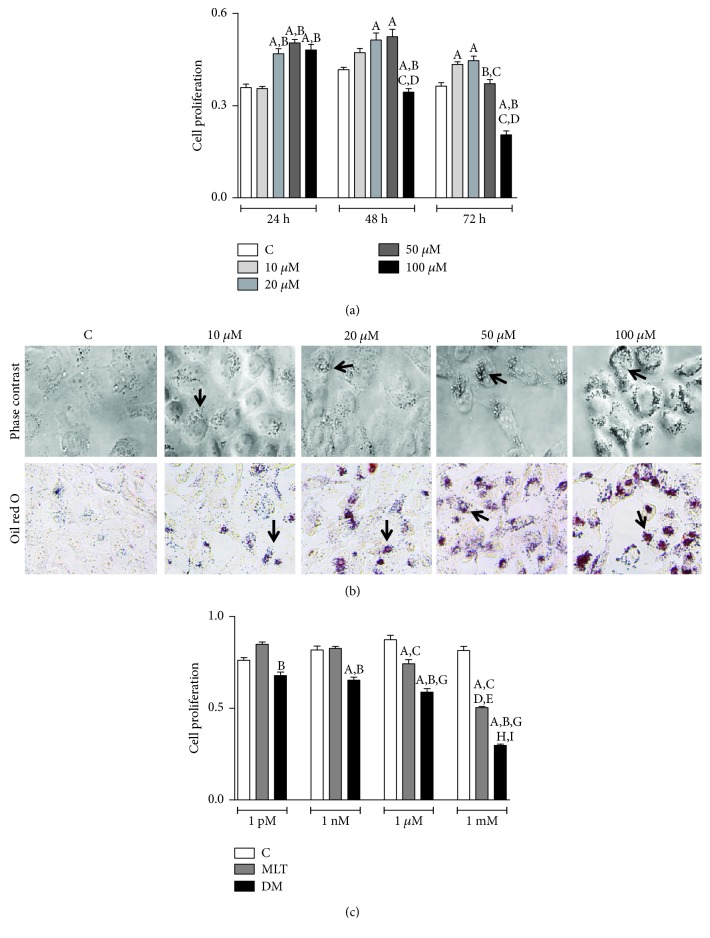
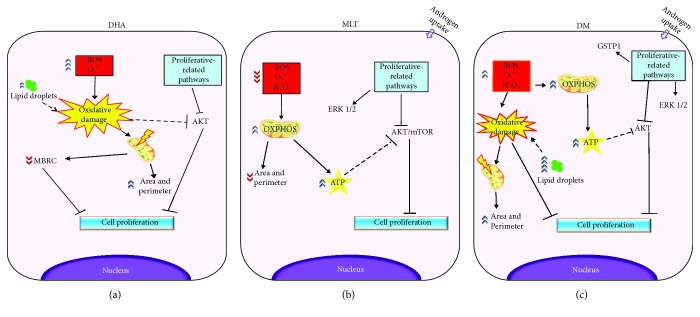
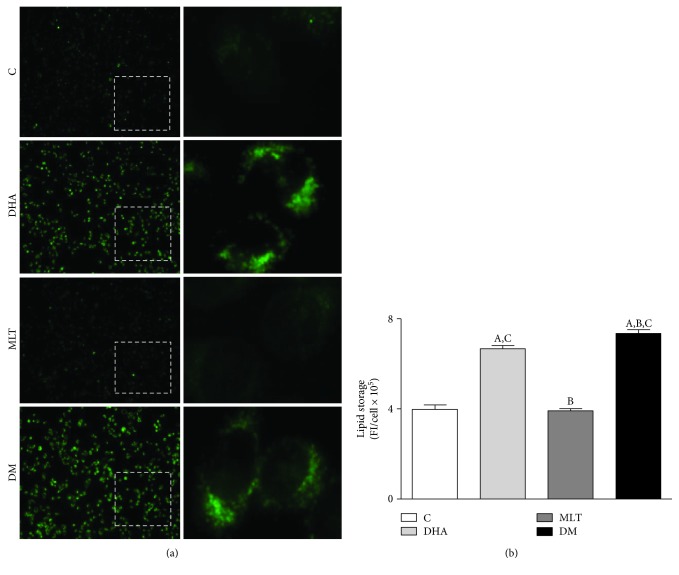
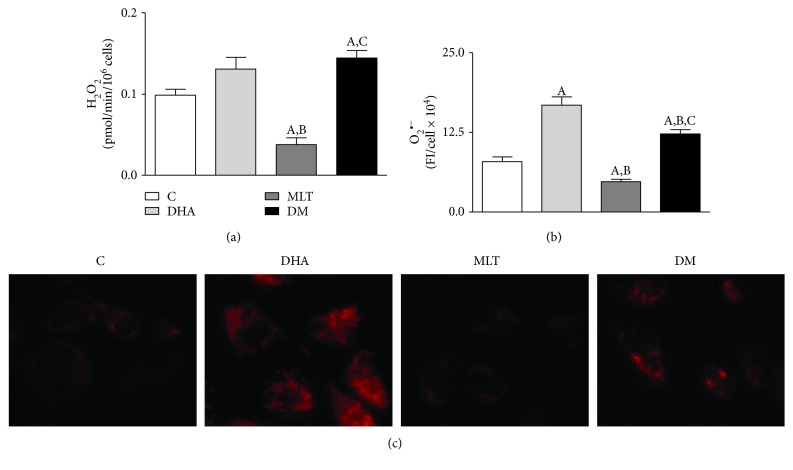
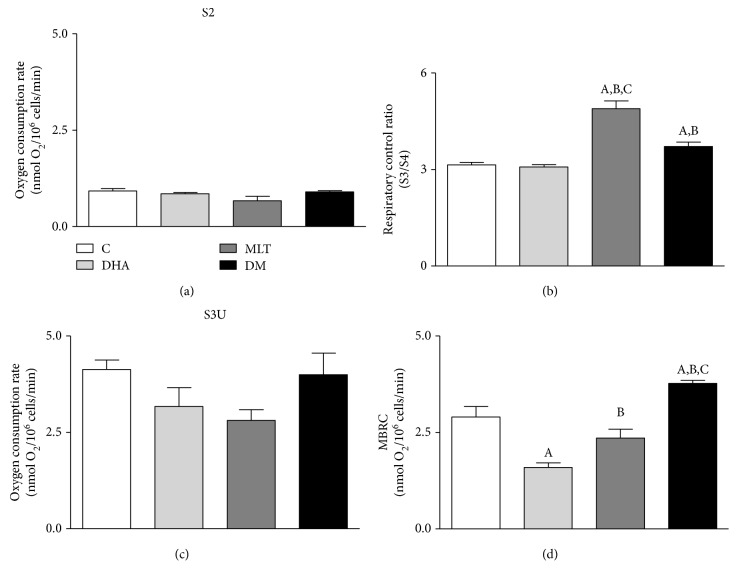
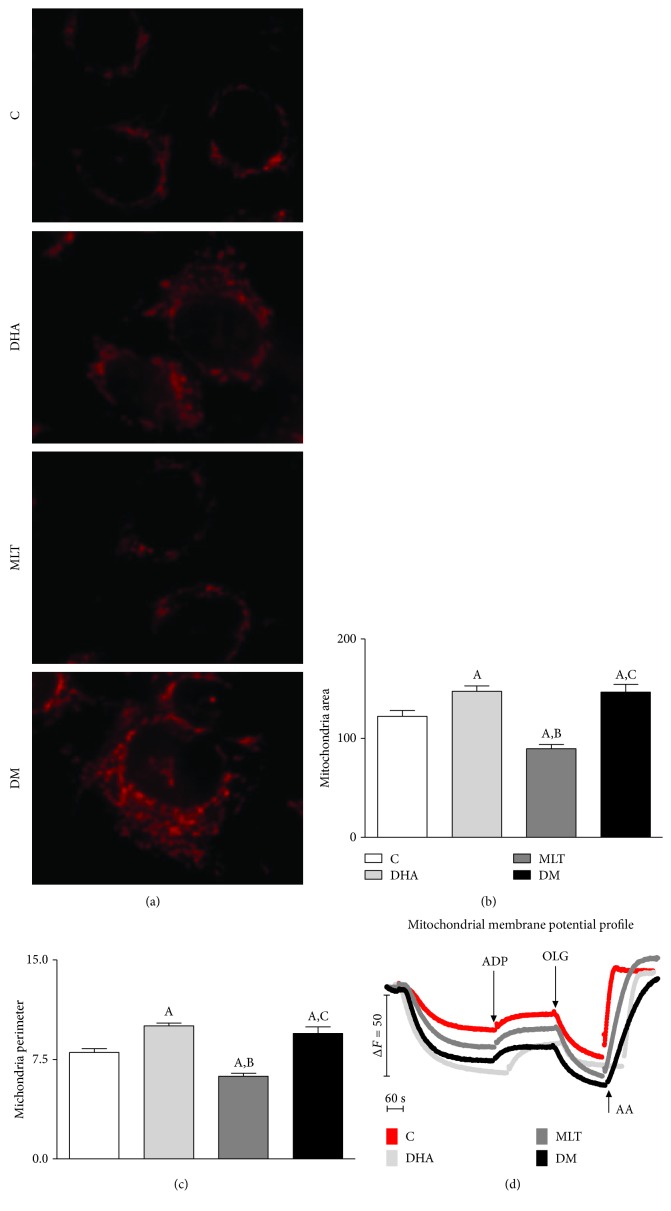
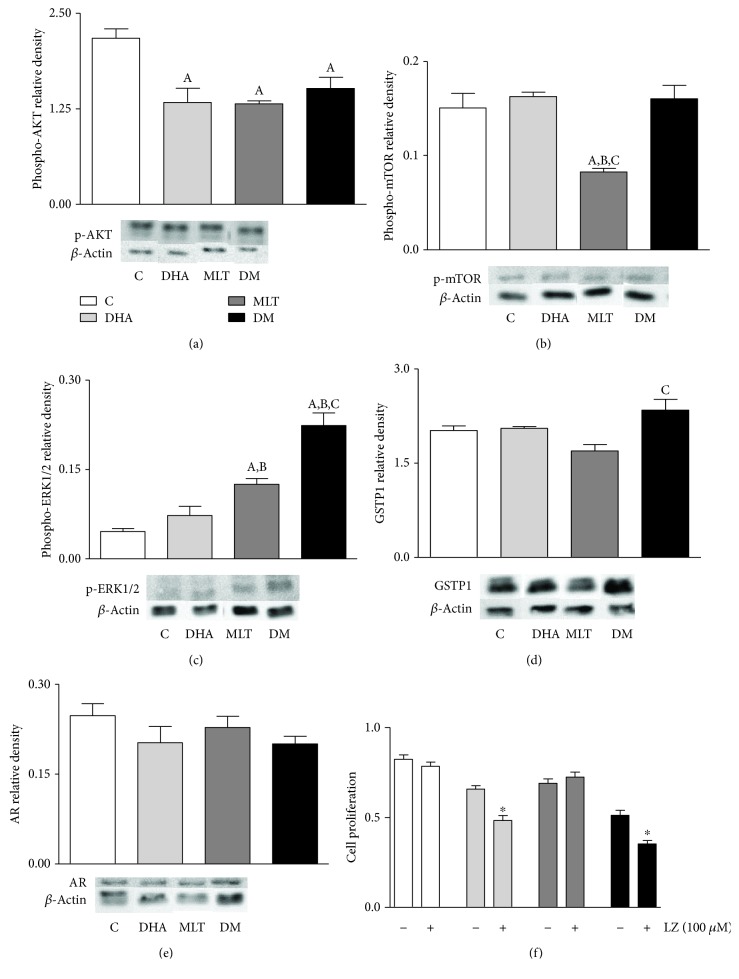
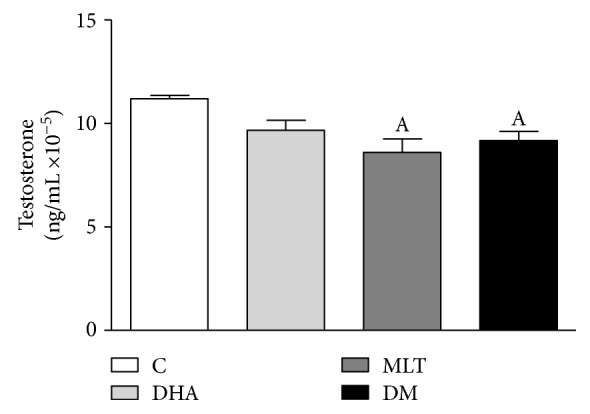
Prostate cancer development has been associated with changes in mitochondrial activity and reactive oxygen species (ROS) production. Melatonin (MLT) and docosahexaenoic acid (DHA) have properties to modulate both, but their protective role, mainly at early stages of prostate cancer, remains unclear. In this study, the effects of MLT and DHA, combined or not, on PNT1A cells with regard to mitochondria bioenergetics, ROS production, and proliferation-related pathways were examined. Based on dose response and lipid accumulation assays, DHA at 100 M and MLT at 1 M for 48 h were chosen. DHA doubled and MLT reduced (40%) superoxide anion production, but coincubation (DM) did not normalize to control. Hydrogen peroxide production decreased after MLT incubation only ( < 0.01). These alterations affected the area and perimeter of mitochondria, since DHA increased whereas MLT decreased, but such hormone has no effect on coincubation. DHA isolated did not change the oxidative phosphorylation rate (OXPHOS), but decreased ( < 0.001) the mitochondrial bioenergetic reserve capacity (MBRC) which is closely related to cell responsiveness to stress conditions. MLT, regardless of DHA, ameliorated OXPHOS and recovered MBRC after coincubation. All incubations decreased AKT phosphorylation; however, only MLT alone inhibited p-mTOR. MLT increased p-ERK1/2 and, when combined to DHA, increased GSTP1 expression ( < 0.01). DHA did not change the testosterone levels in the medium, whereas MLT alone or coincubated decreased by about 20%; however, any incubation affected AR expression. Moreover, incubation with luzindole revealed that MLT effects were MTR1/2-independent. In conclusion, DHA increased ROS production and impaired mitochondrial function which was probably related to AKT inactivation; MLT improved OXPHOS and decreased ROS which was related to AKT/mTOR dephosphorylation, and when coincubated, the antiproliferative action was related to mitochondrial bioenergetic modulation associated to AKT and ERK1/2 regulation. Together, these findings point to the potential application of DHA and MLT towards the prevention of proliferative prostate diseases.
前列腺癌的发展与线粒体活性和活性氧(ROS)产生的变化有关。褪黑素(MLT)和二十二碳六烯酸(DHA)都具有调节这两者的特性,但它们的保护作用,特别是在前列腺癌的早期阶段,仍然不清楚。在这项研究中,研究了 MLT 和 DHA 单独或联合使用对 PNT1A 细胞线粒体生物能学、ROS 产生和增殖相关途径的影响。基于剂量反应和脂质积累测定,选择了 100μM 的 DHA 和 1μM 的 MLT 进行 48 小时孵育。DHA 将超氧阴离子的产生增加了一倍,而 MLT 将其减少了(40%),但共孵育(DM)未能恢复到对照水平。仅在 MLT 孵育后,过氧化氢的产生减少(<0.01)。这些变化影响了线粒体的面积和周长,因为 DHA 增加而 MLT 减少,但这种激素对共孵育没有影响。DHA 单独孵育不会改变氧化磷酸化率(OXPHOS),但会降低(<0.001)与细胞对应激条件的反应性密切相关的线粒体生物能储备能力(MBRC)。MLT 无论是否与 DHA 一起孵育,均可改善 OXPHOS 并恢复共孵育后的 MBRC。所有孵育均降低了 AKT 磷酸化;然而,只有 MLT 单独抑制了 p-mTOR。MLT 增加了 p-ERK1/2 的表达,当与 DHA 一起孵育时,增加了 GSTP1 的表达(<0.01)。DHA 不会改变培养基中的睾酮水平,而 MLT 单独或共同孵育时降低了约 20%;然而,任何孵育都会影响 AR 的表达。此外,用 luzindole 孵育揭示了 MLT 作用与 MTR1/2 无关。总之,DHA 增加了 ROS 的产生并损害了线粒体功能,这可能与 AKT 失活有关;MLT 改善了 OXPHOS 并减少了 ROS,这与 AKT/mTOR 去磷酸化有关,而当共孵育时,抗增殖作用与与 AKT 和 ERK1/2 调节相关的线粒体生物能调节有关。综上所述,这些发现表明 DHA 和 MLT 具有预防增殖性前列腺疾病的潜在应用。