Gamma Knife of Spokane, 910 W 5th Ave, Suite 102, Spokane, WA 99204, USA.
World J Surg Oncol. 2011 Jul 5;9:69. doi: 10.1186/1477-7819-9-69.
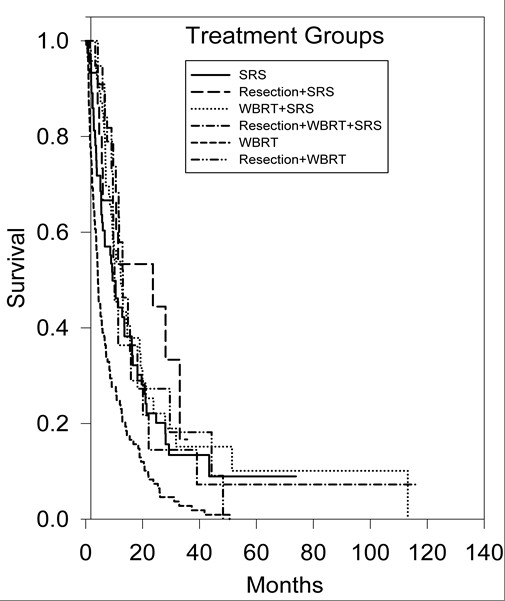
Whole brain radiation therapy (WBRT), surgical resection, stereotactic radiosurgery (SRS), and combinations of the three modalities are used in the management of patients with metastatic brain tumors. We present the previously unreported survival outcomes of 275 patients treated for newly diagnosed brain metastases at Cancer Care Northwest and Gamma Knife of Spokane between 1998 and 2008.
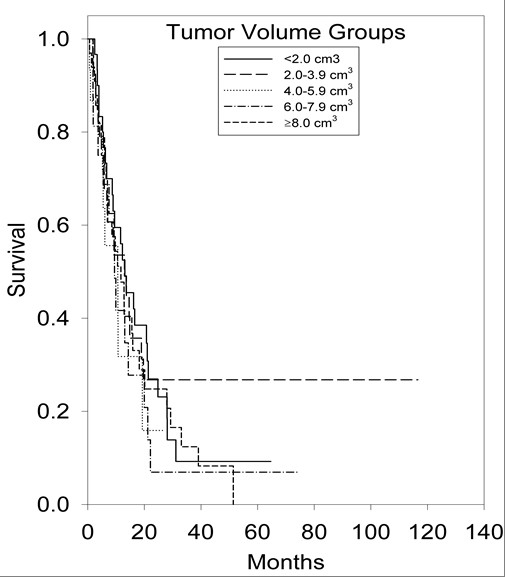
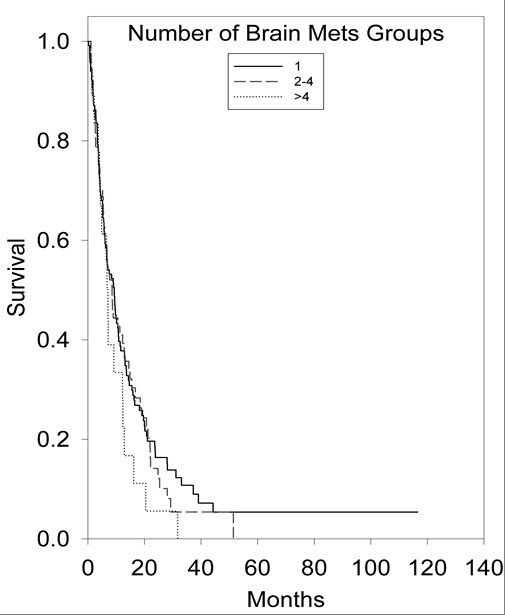
The effects treatment regimen, age, Eastern Cooperative Oncology Group-Performance Status (ECOG-PS), primary tumor histology, number of brain metastases, and total volume of brain metastases have on patient overall survival were analyzed. Statistical analysis was performed using Kaplan-Meier survival curves, Andersen 95% confidence intervals, approximate confidence intervals for log hazard-ratios, and multivariate Cox proportional hazard models.
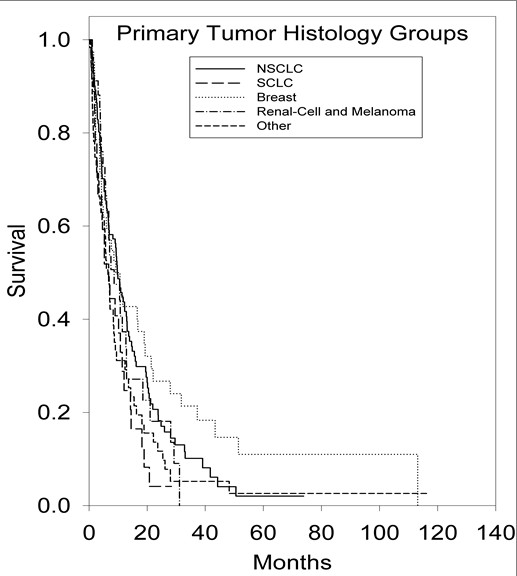
The median clinical follow up time was 7.2 months. On multivariate analysis, survival statistically favored patients treated with SRS alone when compared to patients treated with WBRT alone (p<0.001), patients treated with resection with SRS when compared to patients treated with SRS alone (p=0.020), patients in ECOG-PS class 0 when compared to patients in ECOG-PS classes 2 (p=0.04), 3 (p<0.001), and 4 (p<0.001), patients in the non-small-cell lung cancer group when compared to patients in the combined melanoma and renal-cell carcinoma group (p<0.001), and patients with breast cancer when compared to patients with non-small-cell lung cancer (p<0.001).
In our analysis, patients benefited from a combined modality treatment approach and physicians must consider patient age, performance status, and primary tumor histology when recommending specific treatments regimens.
全脑放疗(WBRT)、手术切除、立体定向放射外科(SRS)以及这三种方法的联合应用于转移性脑肿瘤患者的治疗。我们报告了 1998 年至 2008 年期间在西北癌症护理中心和斯波坎伽玛刀治疗新诊断的脑转移瘤的 275 例患者的未报告的生存结果。
分析了治疗方案、年龄、东部合作肿瘤学组表现状态(ECOG-PS)、原发肿瘤组织学、脑转移灶数量和脑转移灶总体积对患者总生存的影响。使用 Kaplan-Meier 生存曲线、Andersen 95%置信区间、对数风险比的近似置信区间和多变量 Cox 比例风险模型进行统计分析。
中位临床随访时间为 7.2 个月。多变量分析显示,与 WBRT 单独治疗相比,SRS 单独治疗的患者生存情况更好(p<0.001),与 SRS 单独治疗相比,SRS 联合手术切除治疗的患者生存情况更好(p=0.020),ECOG-PS 评分 0 分的患者比 ECOG-PS 评分 2 分(p=0.04)、3 分(p<0.001)和 4 分(p<0.001)的患者、非小细胞肺癌组的患者比黑色素瘤和肾细胞癌联合组的患者(p<0.001)以及乳腺癌患者比非小细胞肺癌患者(p<0.001)的生存情况更好。
在我们的分析中,患者从联合治疗方法中获益,医生在推荐特定治疗方案时必须考虑患者的年龄、表现状态和原发肿瘤组织学。