Fan Guokuan, Wen Lai, Li Minshu, Li Chao, Luo Benping, Wang Fang, Zhou Lingjun, Liu Lin
School of Life Science, Sun Yat-Sen University, Guangzhou, China.
BMC Cell Biol. 2011 Jul 6;12:30. doi: 10.1186/1471-2121-12-30.
Isolation of mouse MSCs (mMSCs) with normal ploidy from bone marrow remains challenging. mMSCs isolated under 20% O(2) are frequently contaminated by overgrown hematopoietic cells, and could also be especially vulnerable to oxidative damage, resulting in chromosomal instability. Culture under low oxygen or extracellular matrix (ECM) improves proliferation of MSCs in several species. We tested the hypothesis that culture under low oxygen in combination with ECM prepared from mouse embryonic fibroblast (MEF-ECM) could be used to purify proliferative mMSCs, and to reduce oxidative damage and maintain their chromosomal stability.
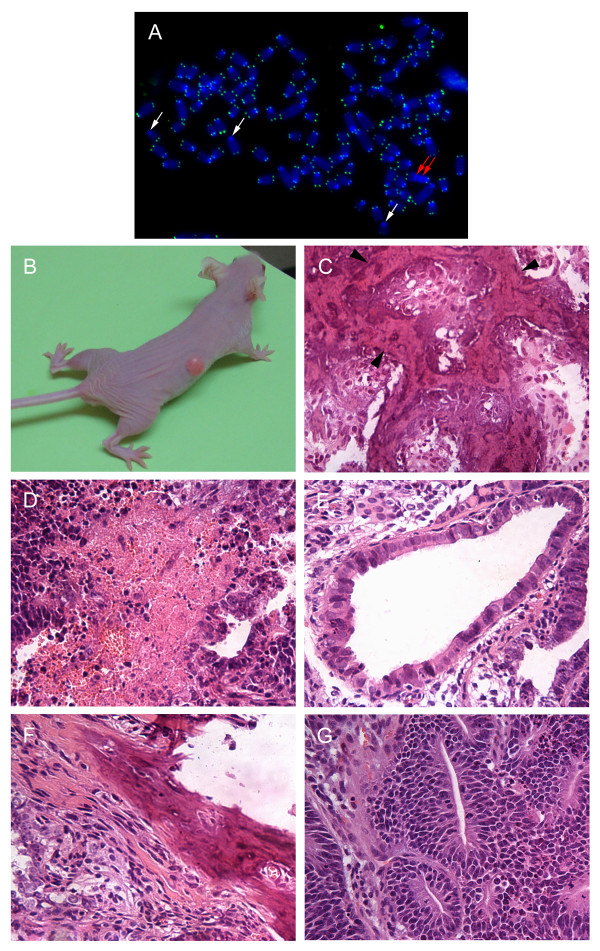
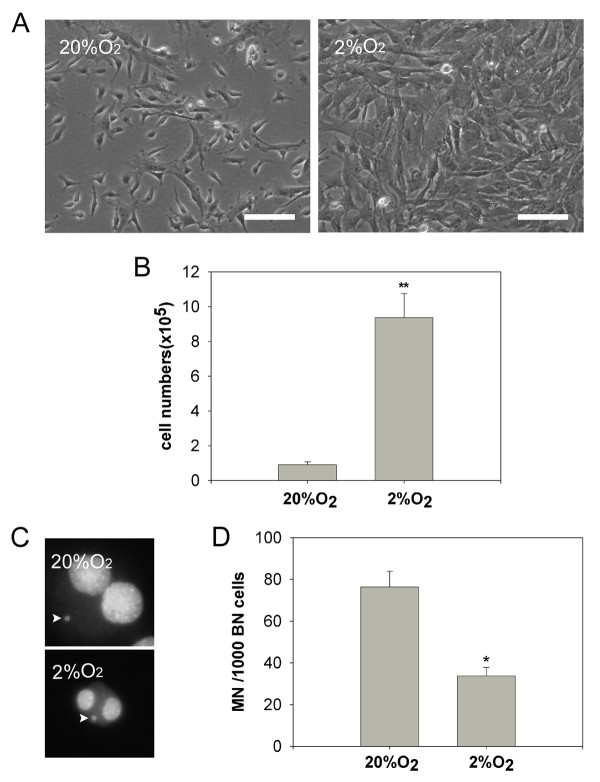
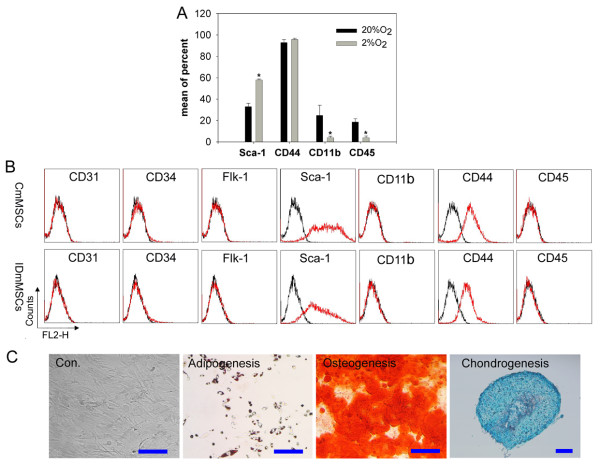
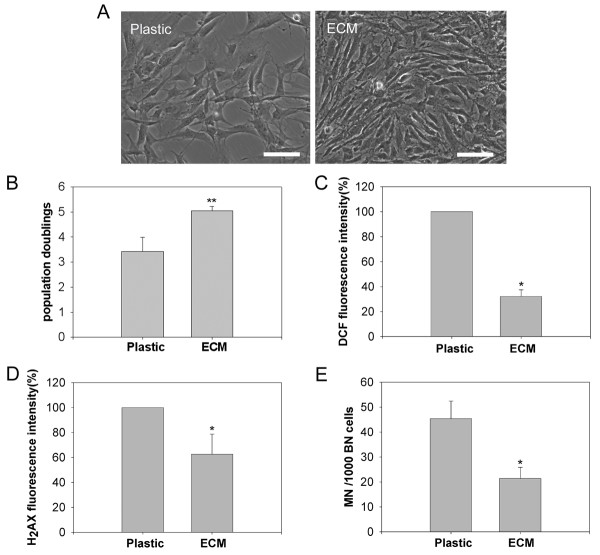
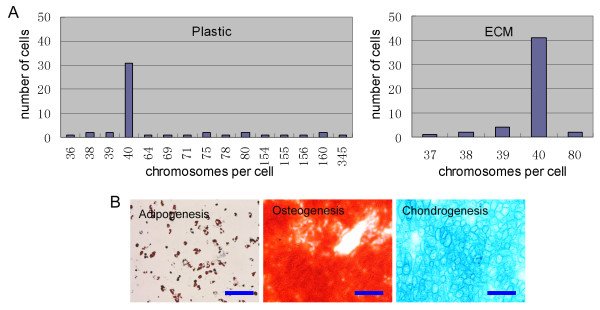
Optimization of culture conditions under 20% O(2) resulted in immortalization of mMSCs, showing extensive chromosome abnormalities, consistent with previous studies. In contrast, culture under low oxygen (2% O(2)) improved proliferation of mMSCs and reduced oxidative damage, such that mMSCs were purified simply by plating at low density under 2% O(2). MEF-ECM reduced oxidative damage and enhanced proliferation of mMSCs. However, these isolated mMSCs still exhibited high frequency of chromosome abnormalities, suggesting that low oxygen or in combination with MEF-ECM was insufficient to fully protect mMSCs from oxidative damage. Notably, antioxidants (alpha -phenyl-t-butyl nitrone (PBN) and N-acetylcysteine (NAC)) further reduced DNA damage and chromosomal abnormalities, and increased proliferation of mMSCs. mMSCs isolated by the combination method were successfully used to generate induced pluripotent stem (iPS) cells by ectopic expression of Oct4, Sox2, Klf4 and c-Myc.
We have developed a technique that allows to reduce the number of karyotypic abnormalities for isolation of primary mMSCs and for limited culture period by combination of low oxygen, MEF-ECM, antioxidants and low density plating strategy. The effectiveness of the new combination method is demonstrated by successful generation of iPS cells from the isolated mMSCs. However, a culture system for mMSCs still is needed to prevent all the anomalies, especially after a long-term culture period.
从骨髓中分离出具有正常倍性的小鼠间充质干细胞(mMSCs)仍然具有挑战性。在20%氧气条件下分离的mMSCs经常被过度生长的造血细胞污染,并且可能特别容易受到氧化损伤,导致染色体不稳定。在低氧或细胞外基质(ECM)条件下培养可改善几种物种间充质干细胞的增殖。我们测试了这样一种假设,即低氧条件下与从小鼠胚胎成纤维细胞制备的细胞外基质(MEF-ECM)联合培养可用于纯化增殖性mMSCs,并减少氧化损伤和维持其染色体稳定性。
在20%氧气条件下优化培养条件导致mMSCs永生化,显示出广泛的染色体异常,这与先前的研究一致。相比之下,低氧(2%氧气)条件下培养改善了mMSCs的增殖并减少了氧化损伤,使得通过在2%氧气条件下低密度接种即可简单地纯化mMSCs。MEF-ECM减少了氧化损伤并增强了mMSCs的增殖。然而,这些分离的mMSCs仍然表现出高频率的染色体异常,表明低氧或与MEF-ECM联合使用不足以完全保护mMSCs免受氧化损伤。值得注意的是,抗氧化剂(α-苯基叔丁基硝酮(PBN)和N-乙酰半胱氨酸(NAC))进一步减少了DNA损伤和染色体异常,并增加了mMSCs的增殖。通过联合方法分离的mMSCs通过异位表达Oct4、Sox2、Klf4和c-Myc成功用于生成诱导多能干细胞(iPS细胞)。
我们开发了一种技术,通过低氧、MEF-ECM、抗氧化剂和低密度接种策略的联合,可减少分离原代mMSCs时核型异常的数量,并在有限的培养期内维持其正常状态。从分离的mMSCs成功生成iPS细胞证明了新联合方法的有效性。然而,仍然需要一种用于mMSCs的培养系统来防止所有异常,特别是在长期培养后。