Department of Chemistry, Louisiana State University, Baton Rouge, Louisiana 70802, United States.
Environ Sci Technol. 2011 Aug 1;45(15):6356-65. doi: 10.1021/es2012947. Epub 2011 Jul 6.
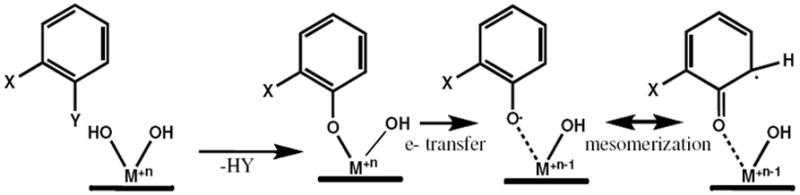
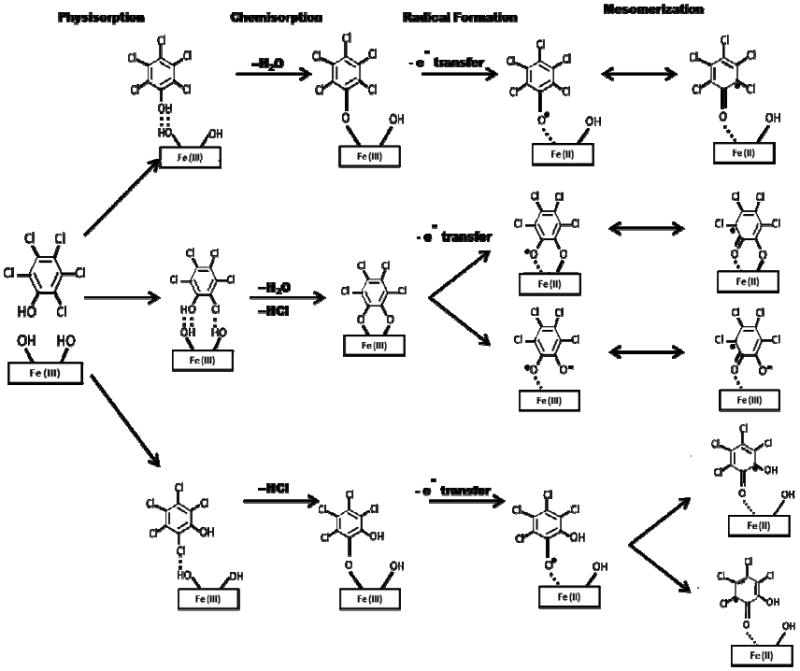
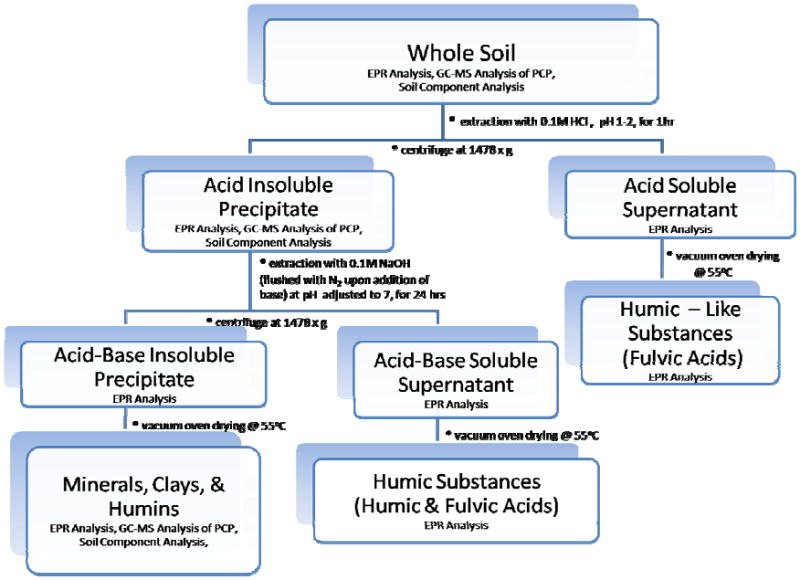
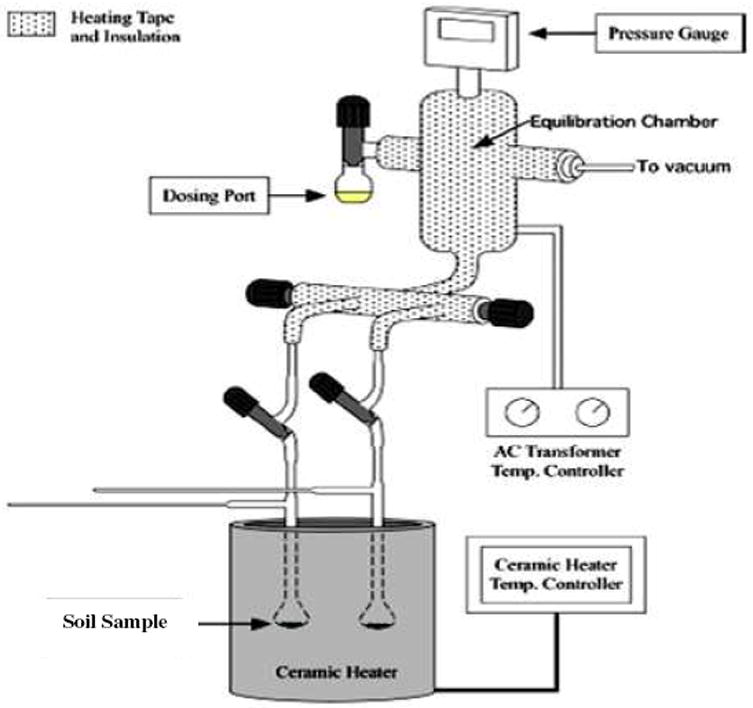
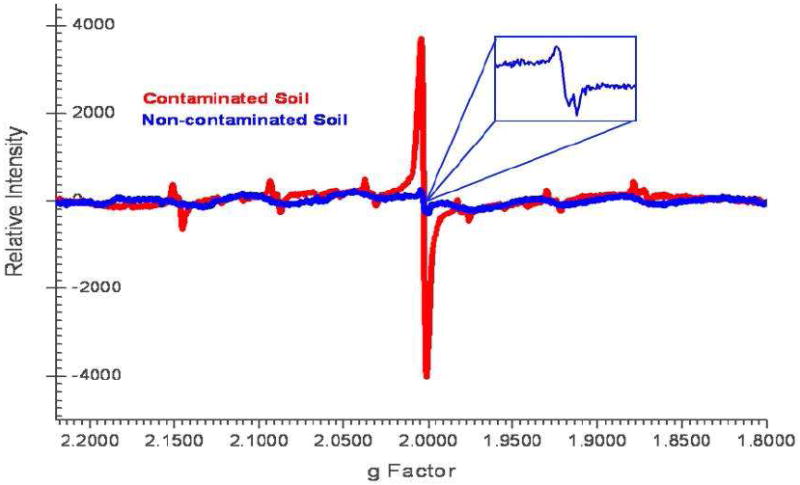
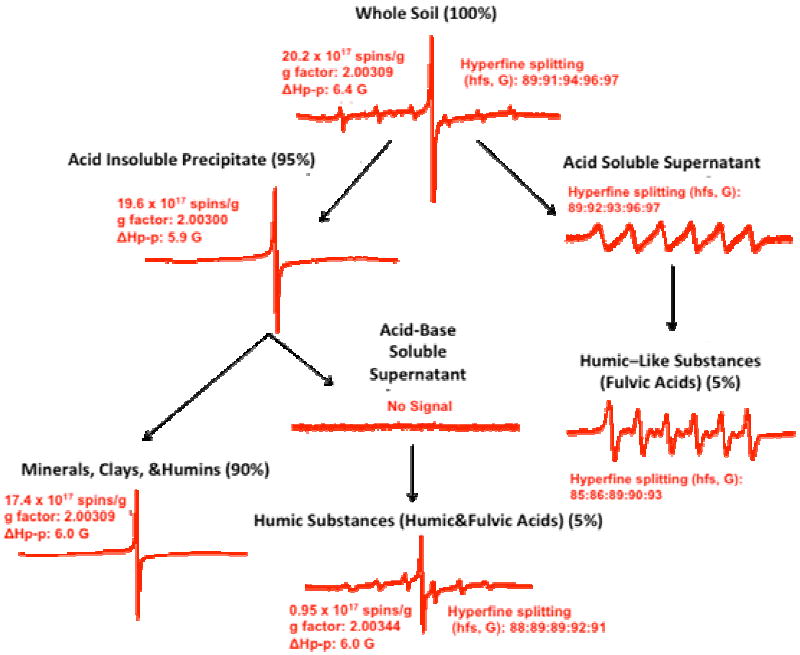
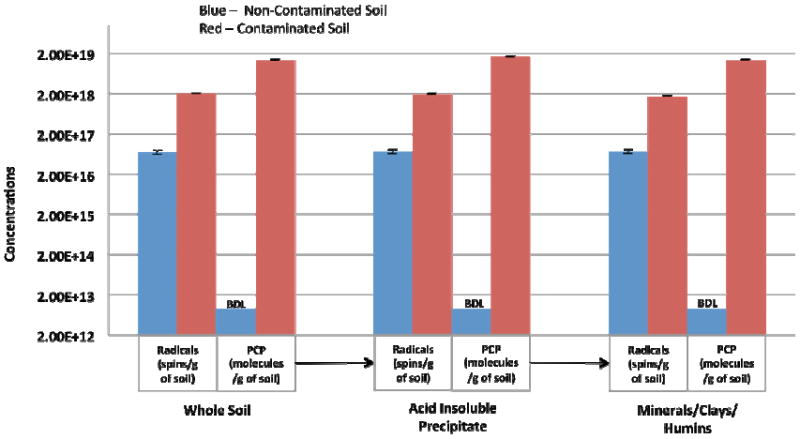
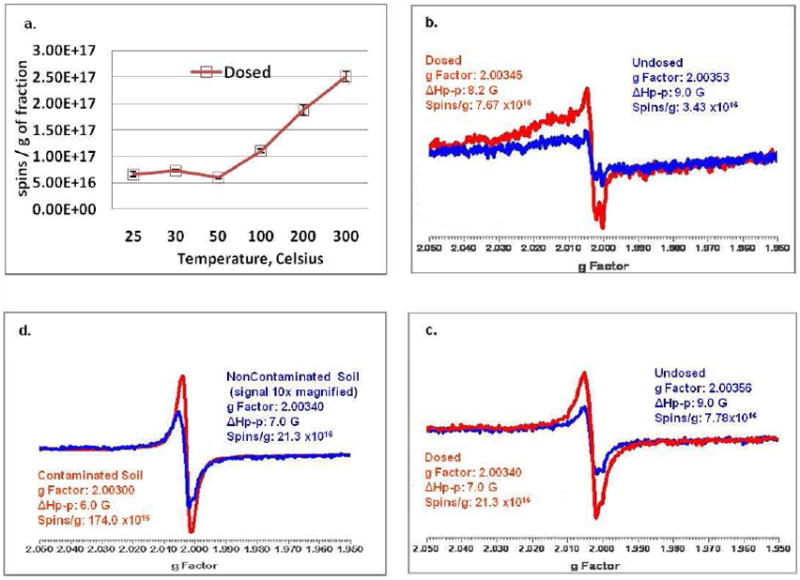
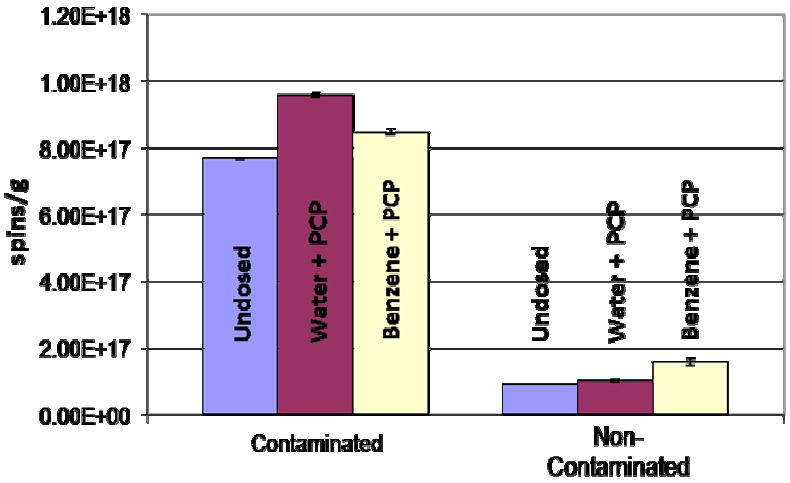
Environmentally persistent free radicals (EPFRs) have previously been observed in association with combustion-generated particles and airborne PM(2.5) (particulate matter, d < 2.5um). The purpose of this study was to determine if similar radicals were present in soils and sediments at Superfund sites. The site was a former wood treating facility containing pentachlorophenol (PCP) as a major contaminant. Both contaminated and noncontaminated (just outside the contaminated area) soil samples were collected. The samples were subjected to the conventional humic substances (HS) extraction procedure. Electron paramagnetic resonance (EPR) spectroscopy was used to measure the EPFR concentrations and determine their structure for each sample fraction. Analyses revealed a ∼30× higher EPFR concentration in the PCP contaminated soils (20.2 × 10(17) spins/g) than in the noncontaminated soil (0.7 × 10(17) spins/g). Almost 90% of the EPFR signal originated from the minerals/clays/humins fraction. GC-MS analyses revealed ∼6500 ppm of PCP in the contaminated soil samples and none detected in the background samples. Inductively coupled plasma-atomic emission spectrophotometry (ICP-AES) analyses revealed ∼7× higher concentrations of redox-active transition metals, in the contaminated soils than the noncontaminated soil. Vapor phase and liquid phase dosing of the clays/minerals/humins fraction of the soil with PCP resulted in an EPR signal identical to that observed in the contaminated soil, strongly suggesting the observed EPFR is pentachlorophenoxyl radical. Chemisorption and electron transfer from PCP to transition metals and other electron sinks in the soil are proposed to be responsible for EPFR formation.
环境持久性自由基(EPFRs)以前曾与燃烧生成的颗粒和空气中的 PM(2.5)(颗粒物,d<2.5μm)有关。本研究的目的是确定在超级基金场址的土壤和沉积物中是否存在类似的自由基。该场址是一个前木材处理设施,含有五氯苯酚(PCP)作为主要污染物。采集了受污染和未受污染(仅在污染区域外)的土壤样本。这些样本经过常规腐殖质(HS)提取程序处理。电子顺磁共振(EPR)光谱用于测量 EPFR 浓度并确定每个样品分数的结构。分析表明,受 PCP 污染的土壤中 EPFR 浓度(20.2×10(17)自旋/g)比未受污染的土壤(0.7×10(17)自旋/g)高约 30 倍。几乎 90%的 EPFR 信号源自矿物质/粘土/腐殖质分数。GC-MS 分析显示,受污染的土壤样品中含有约 6500 ppm 的 PCP,而背景样品中未检测到。电感耦合等离子体原子发射光谱(ICP-AES)分析显示,受污染土壤中氧化还原活性过渡金属的浓度比未受污染土壤高约 7 倍。将土壤的粘土/矿物质/腐殖质部分用 PCP 进行气相和液相处理,得到的 EPR 信号与在污染土壤中观察到的信号相同,强烈表明观察到的 EPFR 是五氯苯氧基自由基。PCP 向土壤中的过渡金属和其他电子阱的化学吸附和电子转移被认为是 EPFR 形成的原因。