Department of Biochemistry and Molecular Biology, University of British Columbia, Vancouver, British Columbia, Canada.
PLoS One. 2011;6(6):e21549. doi: 10.1371/journal.pone.0021549. Epub 2011 Jun 29.
Acidification of the cytoplasm and the extracellular environment is associated with many physiological and pathological conditions, such as intense exercise, hypoxia and tumourigenesis. Acidification affects important cellular functions including protein synthesis, growth, and proliferation. Many of these vital functions are controlled by mTORC1, a master regulator protein kinase that is activated by various growth-stimulating signals and inactivated by starvation conditions. Whether mTORC1 can also respond to changes in extracellular or cytoplasmic pH and play a role in limiting anabolic processes in acidic conditions is not known.
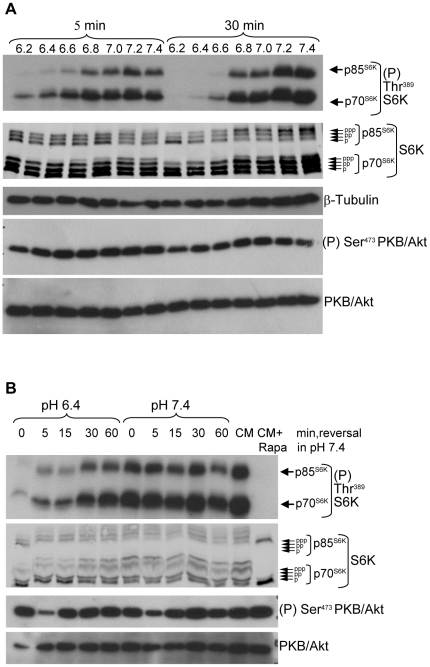
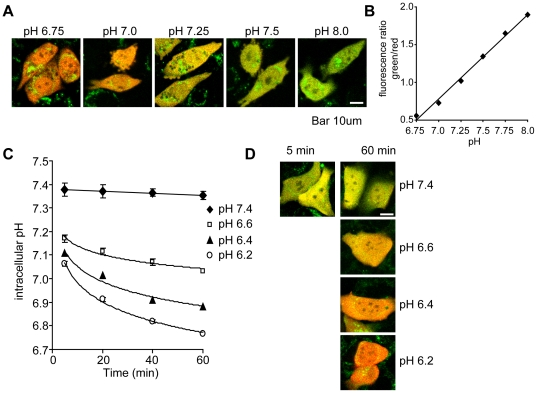
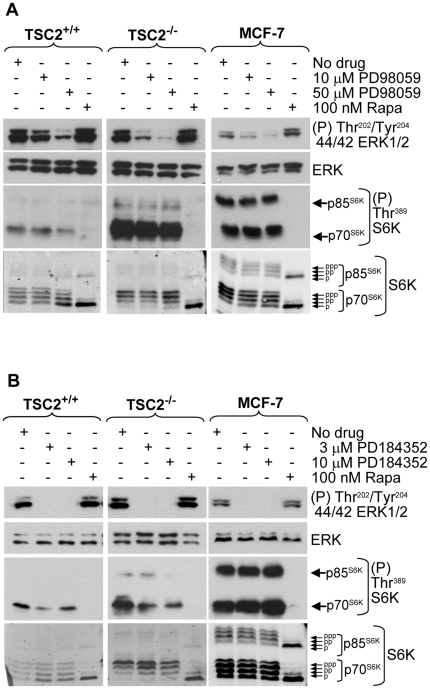
METHODOLOGY/FINDINGS: We examined the effects of acidifying the extracellular medium from pH 7.4 to 6.4 on human breast carcinoma MCF-7 cells and immortalized mouse embryo fibroblasts. Decreasing the extracellular pH caused intracellular acidification and rapid, graded and reversible inhibition of mTORC1, assessed by measuring the phosphorylation of the mTORC1 substrate S6K. Fibroblasts deleted of the tuberous sclerosis complex TSC2 gene, a major negative regulator of mTORC1, were unable to inhibit mTORC1 in acidic extracellular conditions, showing that the TSC1-TSC2 complex is required for this response. Examination of the major upstream pathways converging on the TSC1-TSC2 complex showed that Akt signaling was unaffected by pH but that the Raf/MEK/ERK pathway was inhibited. Inhibition of MEK with drugs caused only modest mTORC1 inhibition, implying that other unidentified pathways also play major roles.
This study reveals a novel role for the TSC1/TSC2 complex and mTORC1 in sensing variations in ambient pH. As a common feature of low tissue perfusion, low glucose availability and high energy expenditure, acidic pH may serve as a signal for mTORC1 to downregulate energy-consuming anabolic processes such as protein synthesis as an adaptive response to metabolically stressful conditions.
细胞质和细胞外环境的酸化与许多生理和病理状况有关,如剧烈运动、缺氧和肿瘤发生。酸化会影响包括蛋白质合成、生长和增殖在内的重要细胞功能。这些重要功能中的许多都是由 mTORC1 控制的,mTORC1 是一种主调控蛋白激酶,可被各种生长刺激信号激活,并被饥饿条件失活。mTORC1 是否也能响应细胞外或细胞质 pH 的变化,并在酸性条件下限制合成代谢过程中发挥作用尚不清楚。
方法/发现:我们研究了将细胞外培养基的 pH 从 7.4 降低到 6.4 对人乳腺癌 MCF-7 细胞和永生化的小鼠胚胎成纤维细胞的影响。降低细胞外 pH 会导致细胞内酸化,并快速、分级和可逆地抑制 mTORC1,通过测量 mTORC1 底物 S6K 的磷酸化来评估。缺乏雷帕霉素靶蛋白复合物 1 (mTORC1) 主要负调控因子结节性硬化复合物 TSC2 基因的成纤维细胞,在酸性细胞外条件下无法抑制 mTORC1,表明 TSC1-TSC2 复合物是该反应所必需的。对主要上游途径与 TSC1-TSC2 复合物的交汇点进行了检查,结果表明 Akt 信号不受 pH 影响,但 Raf/MEK/ERK 途径被抑制。用药物抑制 MEK 只会引起 mTORC1 的适度抑制,这意味着其他未被识别的途径也发挥了主要作用。
这项研究揭示了 TSC1/TSC2 复合物和 mTORC1 在感知环境 pH 变化方面的新作用。作为低组织灌注、低葡萄糖供应和高能量消耗的共同特征,酸性 pH 可能作为 mTORC1 下调能量消耗型合成代谢过程(如蛋白质合成)的信号,作为对代谢应激条件的适应性反应。