Biozentrum Grindel, Zoological Institute and Museum, University of Hamburg, Martin-Luther-King Platz 3, D-20146 Hamburg, Germany.
BMC Evol Biol. 2011 Jul 8;11:197. doi: 10.1186/1471-2148-11-197.
Monogynous mating systems with extremely low male mating rates have several independent evolutionary origins and are associated with drastic adaptations involving self-sacrifice, one-shot genitalia, genital damage, and termination of spermatogenesis immediately after maturation. The combination of such extreme traits likely restricts evolutionary potential perhaps up to the point of making low male mating rates irreversible and hence may constitute an evolutionary dead end. Here, we explore the case of a reversion to multiple mating from monogynous ancestry in golden orb-web spiders, Nephila senegalensis.
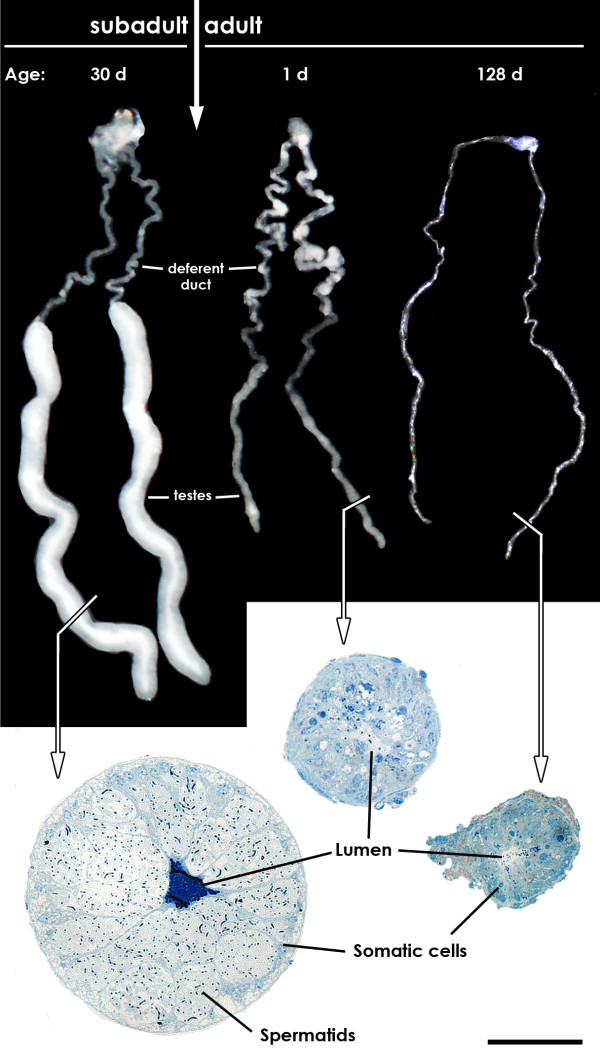
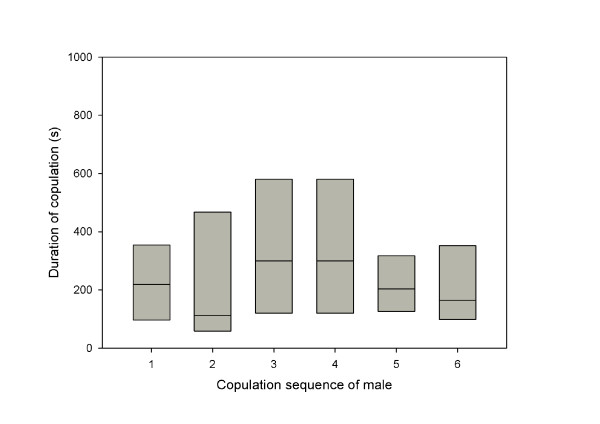
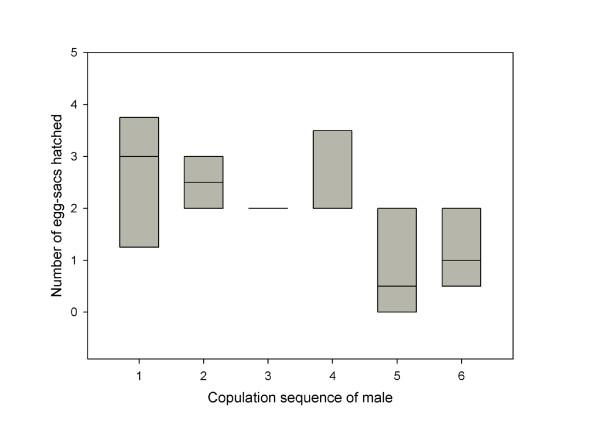
Male multiple mating is regained by the loss of genital damage and sexual cannibalism but spermatogenesis is terminated with maturation, restricting males to a single loading of their secondary mating organs and a fixed supply of sperm. However, males re-use their mating organs and by experimentally mating males to many females, we show that the sperm supply is divided between copulations without reloading the pedipalps.
By portioning their precious sperm supply, males achieve an average mating rate of four females which effectively doubles the maximal mating rate of their ancestors. A heritage of one-shot genitalia does not completely restrict the potential to increase mating rates in Nephila although an upper limit is defined by the available sperm load. Future studies should now investigate how males use this potential in the field and identify selection pressures responsible for a reversal from monogynous to polygynous mating strategies.
具有极低雄性交配率的单配偶制交配系统有几个独立的进化起源,并与剧烈的适应性有关,涉及自我牺牲、一次性生殖器、生殖器损伤和成熟后立即停止精子发生。这些极端特征的结合可能限制了进化潜力,甚至可能使低雄性交配率变得不可逆转,因此可能构成进化的死胡同。在这里,我们探讨了从单配偶制祖先重新回到多配偶制的情况,这发生在金蛛科蜘蛛 Nephila senegalensis 中。
雄性多配偶制通过失去生殖器损伤和性食同类行为而恢复,但精子发生在成熟时终止,限制了雄性只能对其二次交配器官进行单次装载,并提供固定的精子供应。然而,雄性会重新使用他们的交配器官,并且通过实验让雄性与许多雌性交配,我们表明精子供应在交配之间分配,而无需重新加载触肢。
通过分配他们宝贵的精子供应,雄性实现了平均与四只雌性交配的速率,这有效地使它们祖先的最大交配率增加了一倍。一次性生殖器的遗传并不完全限制了 Nephila 中增加交配率的潜力,尽管可用的精子负荷定义了一个上限。未来的研究现在应该调查雄性如何在野外利用这种潜力,并确定导致从单配偶制到多配偶制交配策略的反转的选择压力。