Cell Biology and Metabolism Program, National Institute of Child Health and Human Development, National Institutes of Health, Bethesda, Maryland 20892, USA.
Nature. 2011 Jul 10;475(7356):394-7. doi: 10.1038/nature10181.
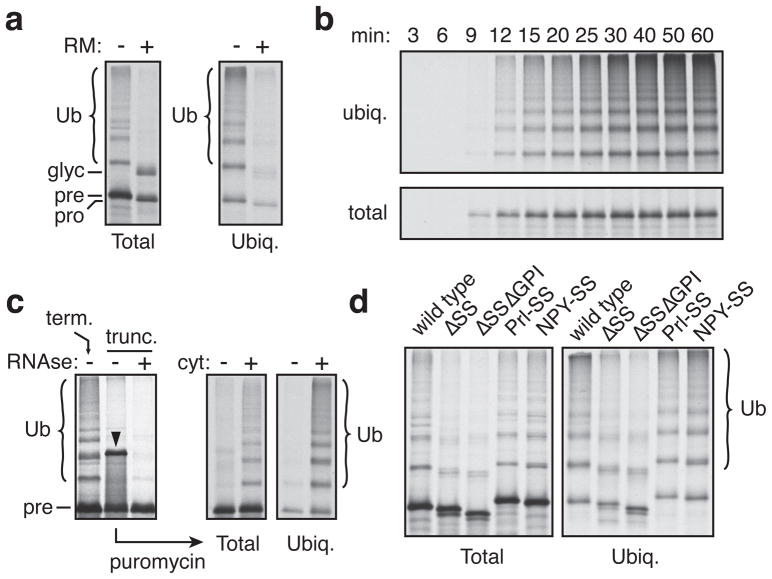
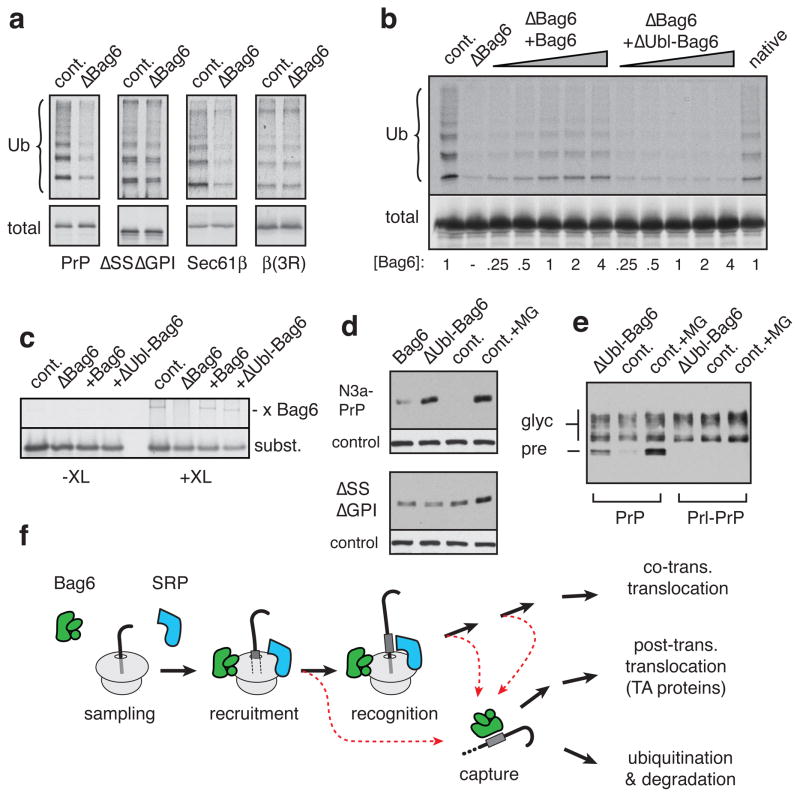
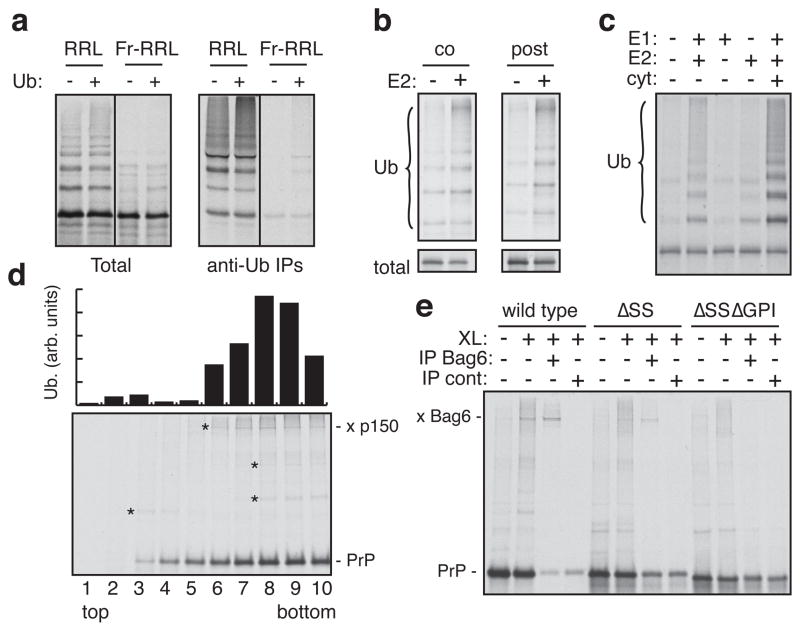
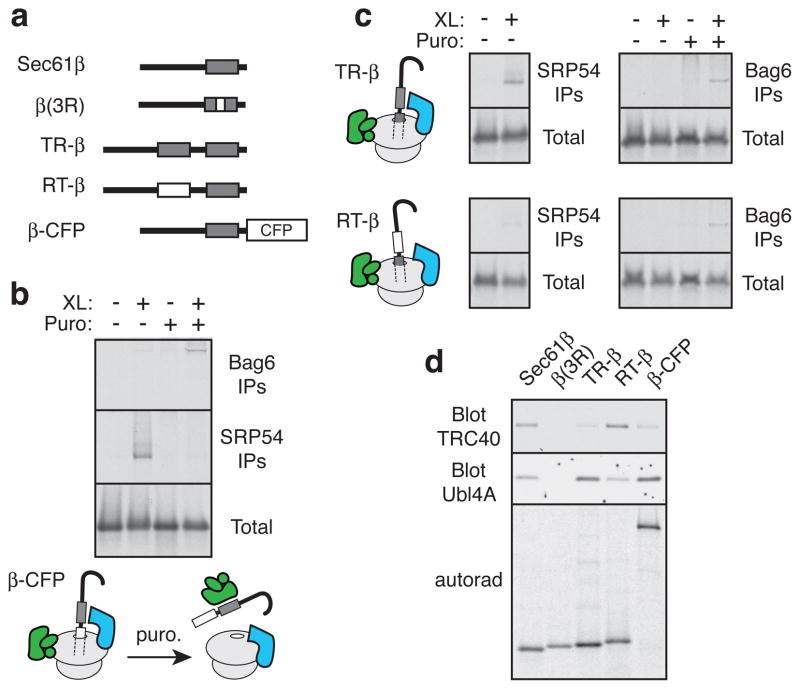
A substantial proportion of the genome encodes membrane proteins that are delivered to the endoplasmic reticulum by dedicated targeting pathways. Membrane proteins that fail targeting must be rapidly degraded to avoid aggregation and disruption of cytosolic protein homeostasis. The mechanisms of mislocalized protein (MLP) degradation are unknown. Here we reconstitute MLP degradation in vitro to identify factors involved in this pathway. We find that nascent membrane proteins tethered to ribosomes are not substrates for ubiquitination unless they are released into the cytosol. Their inappropriate release results in capture by the Bag6 complex, a recently identified ribosome-associating chaperone. Bag6-complex-mediated capture depends on the presence of unprocessed or non-inserted hydrophobic domains that distinguish MLPs from potential cytosolic proteins. A subset of these Bag6 complex 'clients' are transferred to TRC40 for insertion into the membrane, whereas the remainder are rapidly ubiquitinated. Depletion of the Bag6 complex selectively impairs the efficient ubiquitination of MLPs. Thus, by its presence on ribosomes that are synthesizing nascent membrane proteins, the Bag6 complex links targeting and ubiquitination pathways. We propose that such coupling allows the fast tracking of MLPs for degradation without futile engagement of the cytosolic folding machinery.
大量的基因组编码的膜蛋白通过专门的靶向途径被递送到内质网。靶向失败的膜蛋白必须迅速降解,以避免聚集和破坏细胞溶质蛋白的平衡。错误定位蛋白(MLP)降解的机制尚不清楚。在这里,我们在体外重新构建 MLP 降解,以鉴定该途径中涉及的因素。我们发现,与核糖体结合的新生膜蛋白除非被释放到细胞质中,否则不会成为泛素化的底物。它们的不适当释放导致被最近发现的与核糖体相关的伴侣 Bag6 复合物捕获。Bag6 复合物介导的捕获取决于未加工或未插入的疏水区的存在,这些疏水区将 MLP 与潜在的细胞质蛋白区分开来。这些 Bag6 复合物“客户”的一部分被转移到 TRC40 中以插入到膜中,而其余部分则迅速被泛素化。Bag6 复合物的耗竭选择性地损害了 MLP 的有效泛素化。因此,通过存在于正在合成新生膜蛋白的核糖体上,Bag6 复合物将靶向和泛素化途径联系起来。我们提出,这种偶联允许 MLP 快速跟踪降解,而不会使细胞质折叠机制徒劳无功地参与。