Gall Alevtina, Horowitz Amir, Joof Hassan, Natividad Angels, Tetteh Kevin, Riley Eleanor, Bailey Robin L, Mabey David C W, Holland Martin J
Viral Diseases Programme, Medical Research Council Laboratories Banjul, The Gambia.
Front Microbiol. 2011 Feb 10;2:10. doi: 10.3389/fmicb.2011.00010. eCollection 2011.
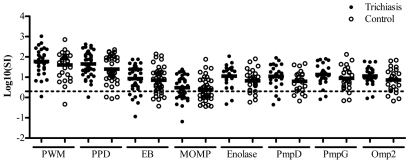
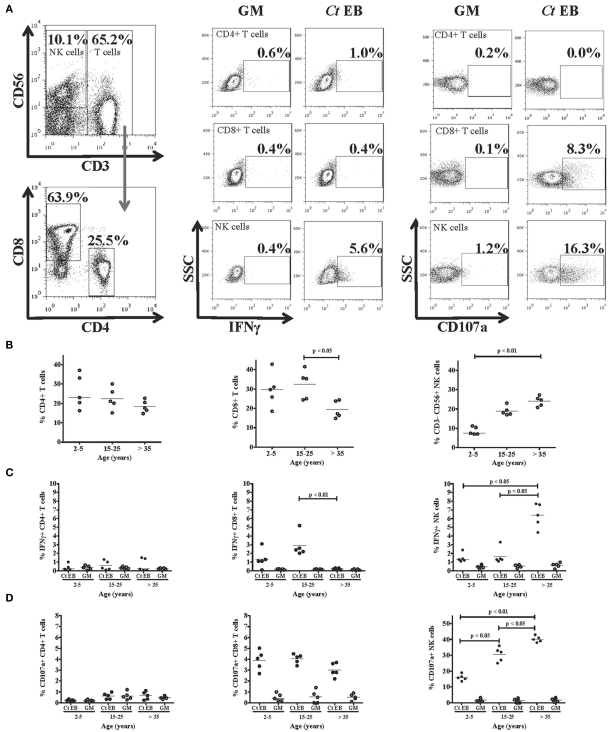
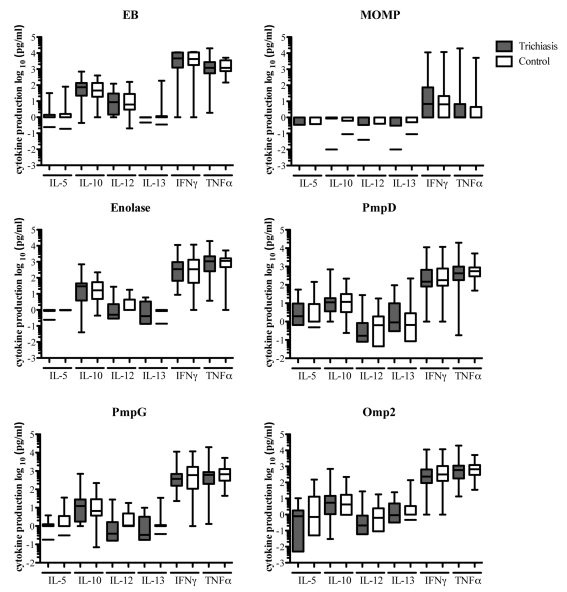
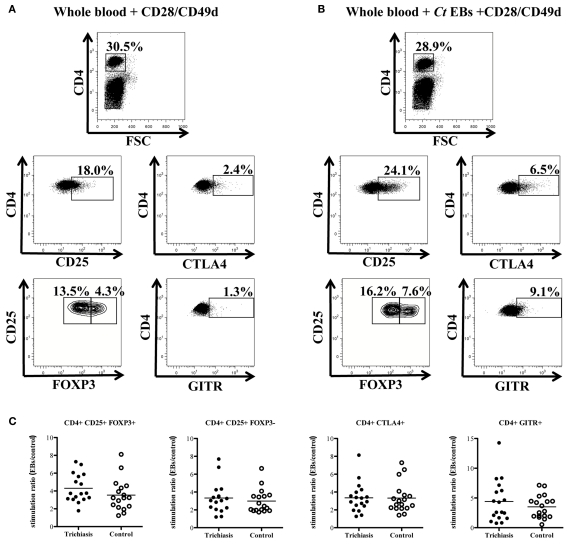
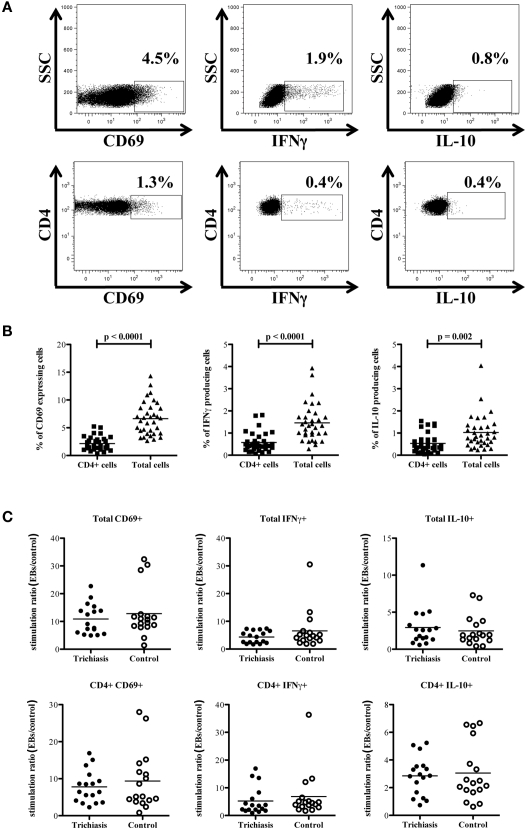
Trachomatous trichiasis (TT) caused by repeated or chronic ocular infection with Chlamydia trachomatis is the result of a pro-fibrotic ocular immune response. At the conjunctiva, the increased expression of both inflammatory (IL1B, TNF) and regulatory cytokines (IL10) have been associated with adverse clinical outcomes. We measured in vitro immune responses of peripheral blood to a number of chlamydial antigens. Peripheral blood effector cells (CD4, CD69, IFNγ, IL-10) and regulatory cells (CD4, CD25, FOXP3, CTLA4/GITR) were readily stimulated by C. trachomatis antigens but neither the magnitude (frequency or stimulation index) or the breadth and amount of cytokines produced in vitro [IL-5, IL-10, IL-12 (p70), IL-13, IFNγ, and TNFα] were significantly different between TT cases and their non-diseased controls. Interestingly we observed that CD4+ T cells account for <50% of the IFNγ positive cells induced following stimulation. Further investigation in individuals selected from communities where exposure to ocular infection with C. trachomatis is endemic indicated that CD3-CD56+ (classical natural killer cells) were a major early source of IFNγ production in response to C. trachomatis elementary body stimulation and that the magnitude of this response increased with age. Future efforts to unravel the contribution of the adaptive immune response to conjunctival fibrosis should focus on the early events following infection and the interaction with innate immune mediated mechanisms of inflammation in the conjunctiva.
由沙眼衣原体反复或慢性眼部感染引起的沙眼性倒睫(TT)是眼部促纤维化免疫反应的结果。在结膜处,炎症细胞因子(IL1B、TNF)和调节性细胞因子(IL10)表达的增加均与不良临床结局相关。我们检测了外周血对多种衣原体抗原的体外免疫反应。沙眼衣原体抗原可轻易刺激外周血效应细胞(CD4、CD69、IFNγ、IL-10)和调节性细胞(CD4、CD25、FOXP3、CTLA4/GITR),但TT患者与其未患病对照之间,体外产生的细胞因子的幅度(频率或刺激指数)、广度及数量[IL-5、IL-10、IL-12(p70)、IL-13、IFNγ和TNFα]均无显著差异。有趣的是,我们观察到刺激后诱导产生的IFNγ阳性细胞中,CD4 + T细胞占比不到50%。对沙眼衣原体眼部感染流行社区中个体的进一步研究表明,CD3 - CD56 +(经典自然杀伤细胞)是对沙眼衣原体原体刺激产生IFNγ的主要早期来源,且该反应的幅度随年龄增长而增加。未来为阐明适应性免疫反应对结膜纤维化的作用所做的努力,应聚焦于感染后的早期事件以及与结膜中先天性免疫介导的炎症机制的相互作用。