Lyme Disease Research Group, Department of Biology and Environmental Sciences, University of New Haven, New Haven, CT, USA;
Infect Drug Resist. 2011;4:97-113. doi: 10.2147/IDR.S19201. Epub 2011 May 3.
Lyme disease is a tick-borne illness caused by the spirochete Borrelia burgdorferi. Although antibiotic therapy is usually effective early in the disease, relapse may occur when administration of antibiotics is discontinued. Studies have suggested that resistance and recurrence of Lyme disease might be due to formation of different morphological forms of B. burgdorferi, namely round bodies (cysts) and biofilm-like colonies. Better understanding of the effect of antibiotics on all morphological forms of B. burgdorferi is therefore crucial to provide effective therapy for Lyme disease.
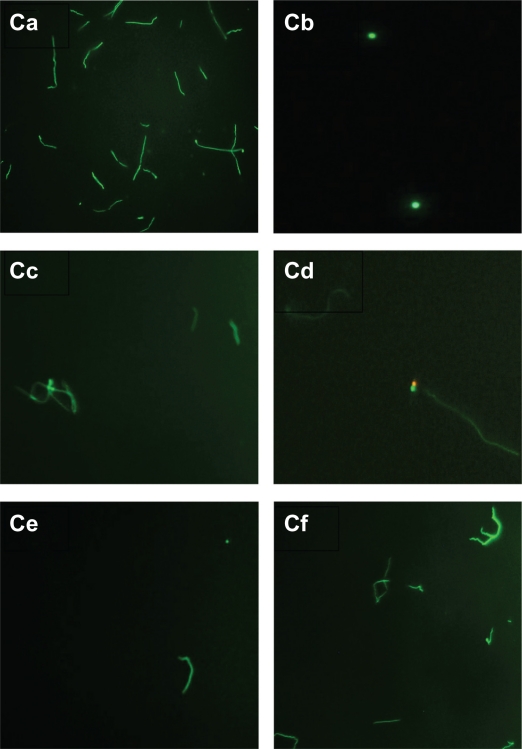
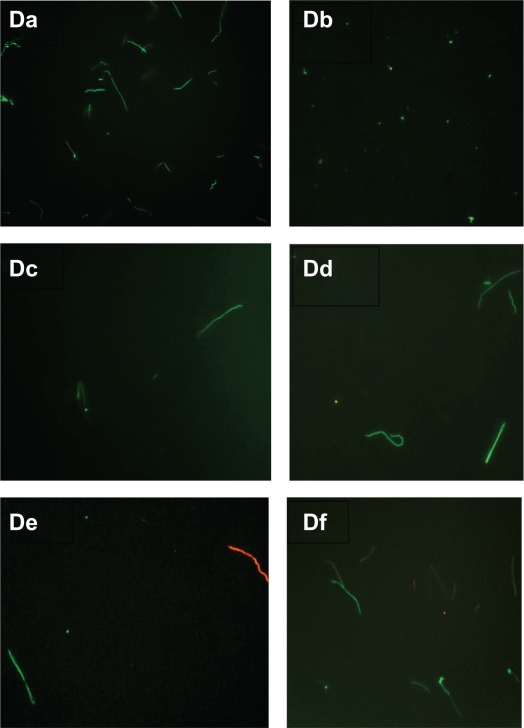
Three morphological forms of B. burgdorferi (spirochetes, round bodies, and biofilm-like colonies) were generated using novel culture methods. Minimum inhibitory concentration and minimum bactericidal concentration of five antimicrobial agents (doxycycline, amoxicillin, tigecycline, metronidazole, and tinidazole) against spirochetal forms of B. burgdorferi were evaluated using the standard published microdilution technique. The susceptibility of spirochetal and round body forms to the antibiotics was then tested using fluorescent microscopy (BacLight™ viability staining) and dark field microscopy (direct cell counting), and these results were compared with the microdilution technique. Qualitative and quantitative effects of the antibiotics against biofilm-like colonies were assessed using fluorescent microscopy and dark field microscopy, respectively.
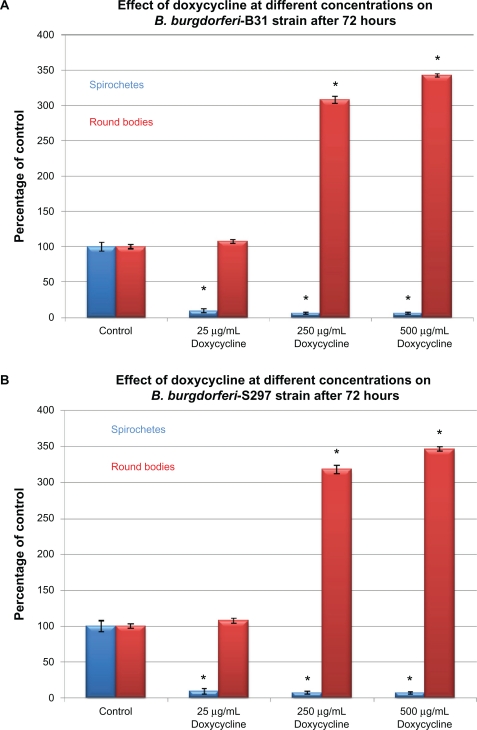
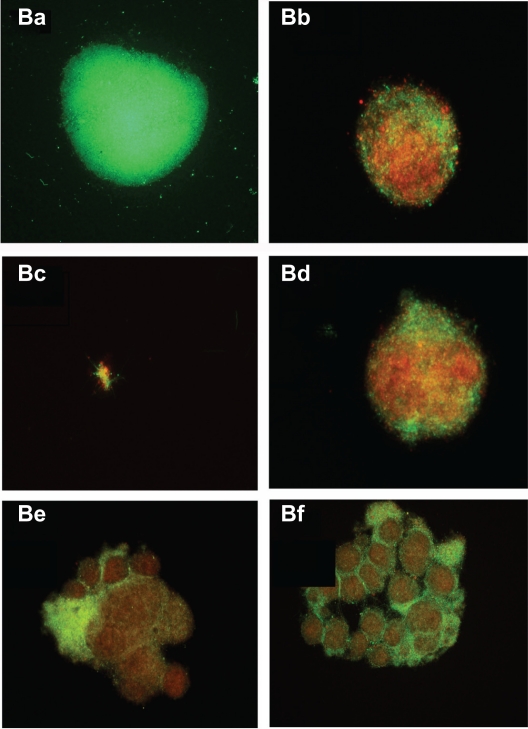
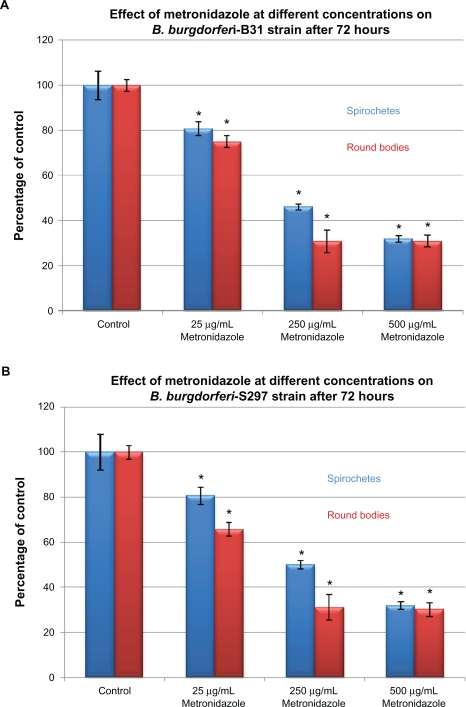
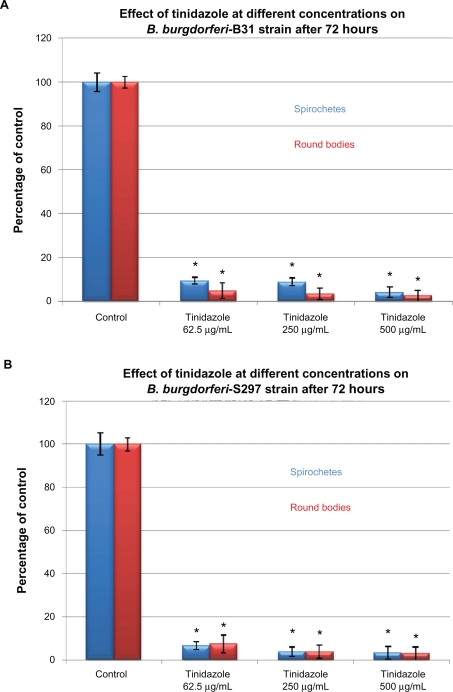
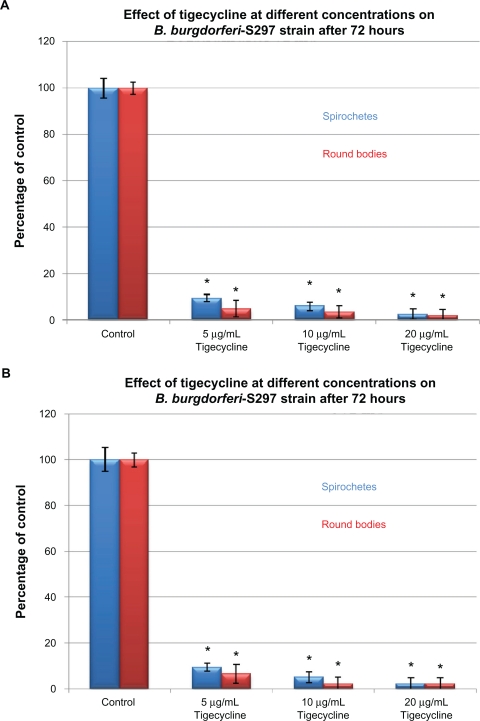
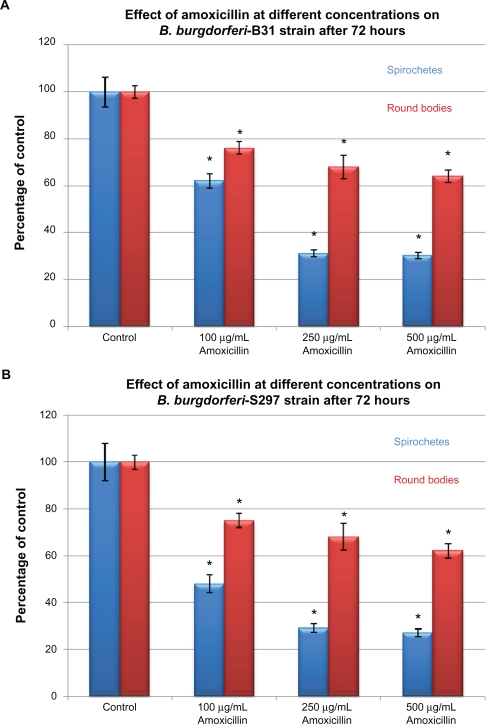
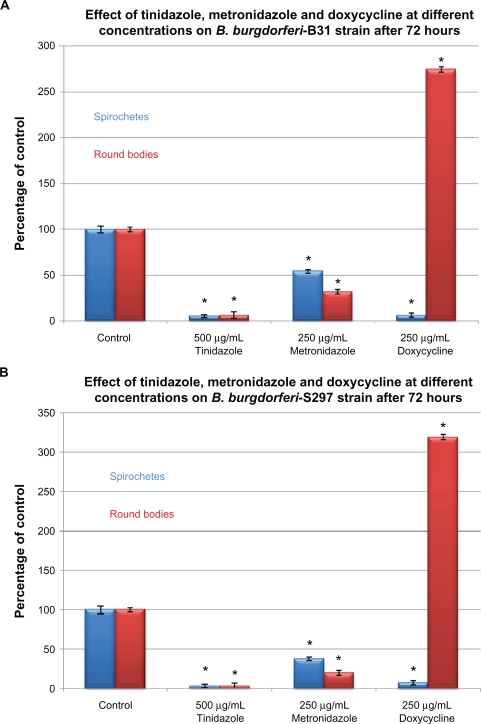
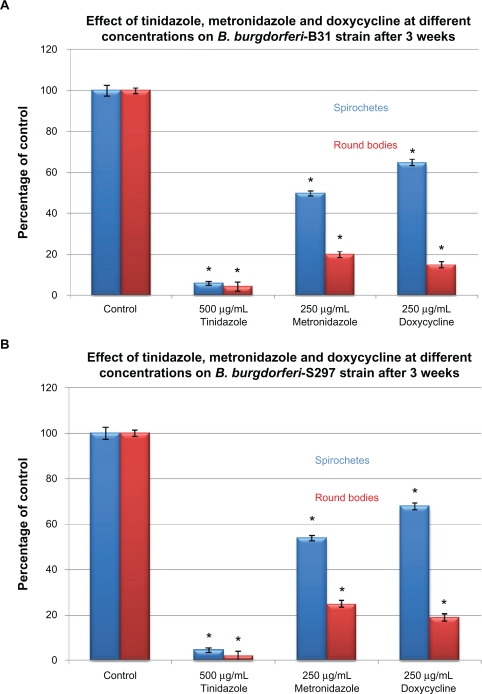
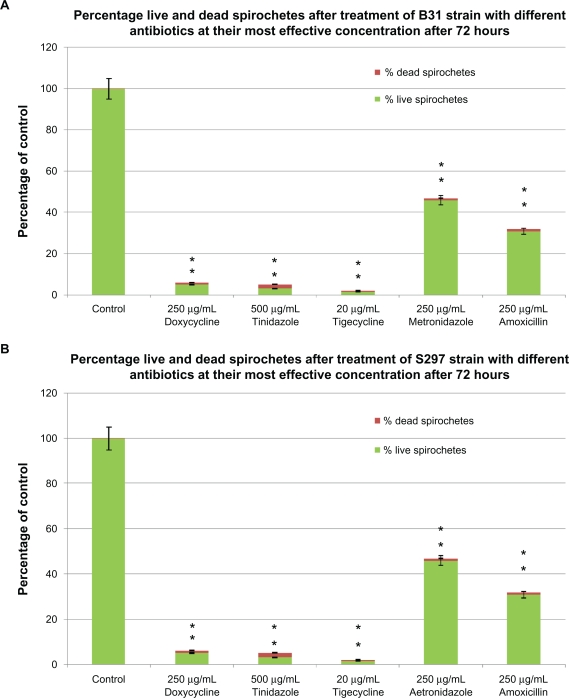
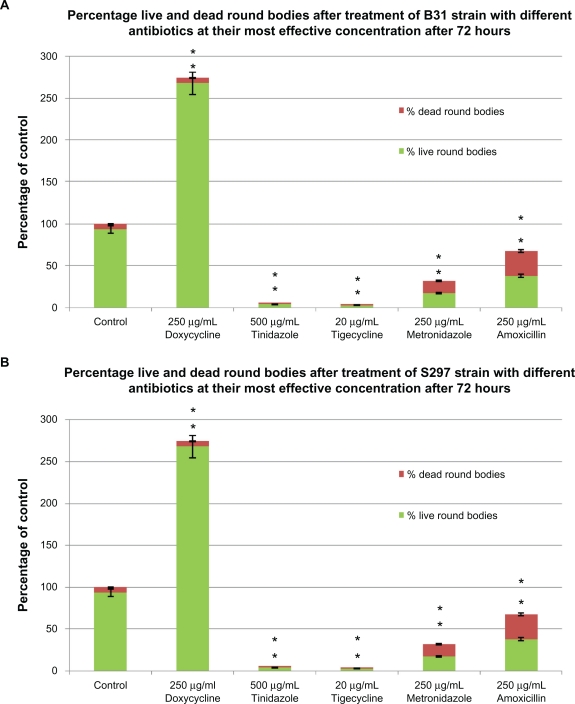
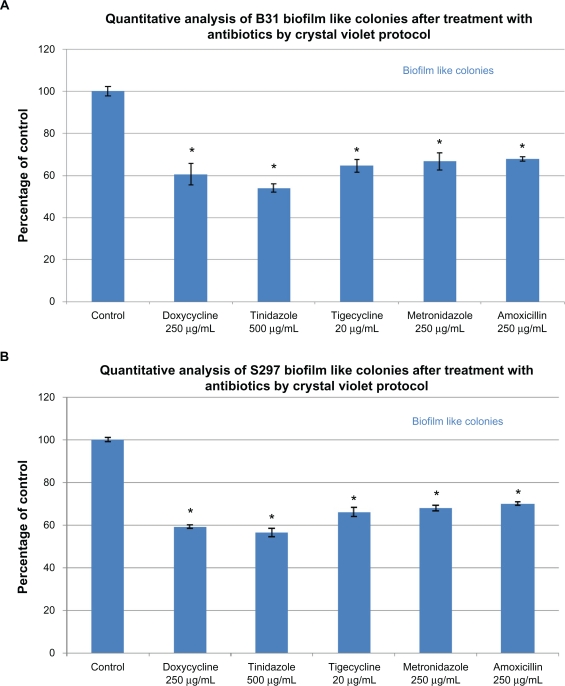
Doxycycline reduced spirochetal structures ∼90% but increased the number of round body forms about twofold. Amoxicillin reduced spirochetal forms by ∼85%-90% and round body forms by ∼68%, while treatment with metronidazole led to reduction of spirochetal structures by ∼90% and round body forms by ∼80%. Tigecycline and tinidazole treatment reduced both spirochetal and round body forms by ∼80%-90%. When quantitative effects on biofilm-like colonies were evaluated, the five antibiotics reduced formation of these colonies by only 30%-55%. In terms of qualitative effects, only tinidazole reduced viable organisms by ∼90%. Following treatment with the other antibiotics, viable organisms were detected in 70%-85% of the biofilm-like colonies.
Antibiotics have varying effects on the different morphological forms of B. burgdorferi. Persistence of viable organisms in round body forms and biofilm-like colonies may explain treatment failure and persistent symptoms following antibiotic therapy of Lyme disease.
莱姆病是一种由螺旋体伯氏疏螺旋体引起的蜱传疾病。尽管抗生素治疗在疾病早期通常有效,但在停止使用抗生素时可能会复发。研究表明,莱姆病的耐药性和复发可能是由于伯氏疏螺旋体形成了不同的形态,即圆形体(囊肿)和生物膜样菌落。因此,更好地了解抗生素对伯氏疏螺旋体所有形态的影响对于为莱姆病提供有效治疗至关重要。
使用新的培养方法生成了伯氏疏螺旋体的三种形态(螺旋体、圆形体和生物膜样菌落)。使用标准公布的微量稀释技术评估了五种抗菌药物(多西环素、阿莫西林、替加环素、甲硝唑和替硝唑)对伯氏疏螺旋体螺旋体形式的最小抑菌浓度和最小杀菌浓度。然后使用荧光显微镜(BacLight™ 活力染色)和暗场显微镜(直接细胞计数)测试了螺旋体和圆形体形式对这些抗生素的敏感性,并将这些结果与微量稀释技术进行了比较。使用荧光显微镜和暗场显微镜分别评估了抗生素对生物膜样菌落的定性和定量影响。
多西环素减少了约 90%的螺旋体结构,但将圆形体形式的数量增加了约两倍。阿莫西林减少了约 85%-90%的螺旋体形式和约 68%的圆形体形式,而甲硝唑治疗导致螺旋体结构减少约 90%和圆形体形式减少约 80%。替加环素和替硝唑治疗减少了约 80%-90%的螺旋体和圆形体形式。当评估对生物膜样菌落的定量影响时,五种抗生素仅将这些菌落的形成减少了 30%-55%。就定性影响而言,只有替硝唑将活生物体减少了约 90%。在用其他抗生素治疗后,在 70%-85%的生物膜样菌落中检测到了活生物体。
抗生素对伯氏疏螺旋体的不同形态有不同的影响。圆形体形式和生物膜样菌落中存活的生物体可能解释了莱姆病抗生素治疗后治疗失败和持续症状的原因。