Kubiak Jacek Z, El Dika Mohammed
Cell Cycle Group, Institute of Genetics & Development, University of Rennes 1, CNRS-UMR 6061, Faculty of Medicine, 2 Avenue Prof. Léon Bernard, CS 34317, 35043 Rennes Cedex, France.
Enzyme Res. 2011;2011:523420. doi: 10.4061/2011/523420. Epub 2011 Jun 22.
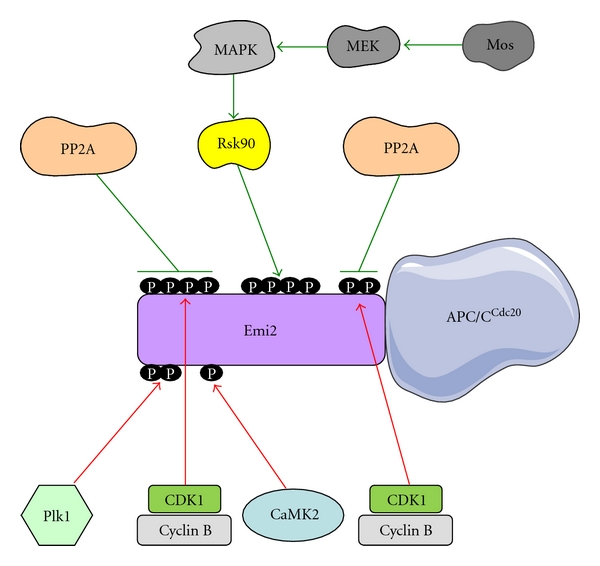
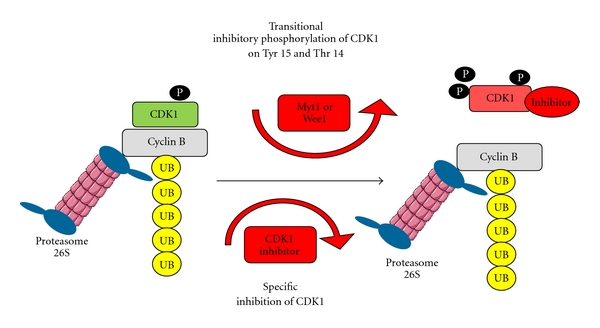
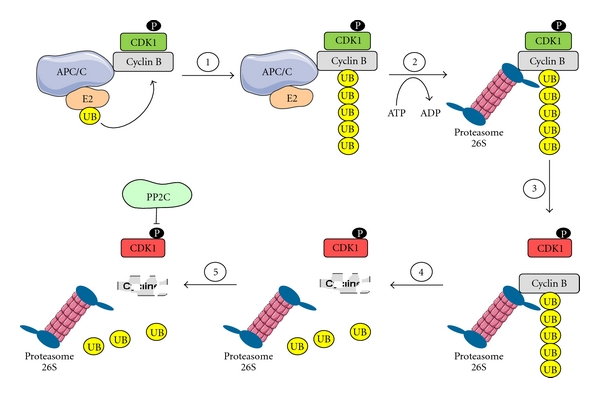
Cyclin-Dependent Kinase 1 (CDK1) is the major M-phase kinase known also as the M-phase Promoting Factor or MPF. Studies performed during the last decade have shown many details of how CDK1 is regulated and also how it regulates the cell cycle progression. Xenopus laevis cell-free extracts were widely used to elucidate the details and to obtain a global view of the role of CDK1 in M-phase control. CDK1 inactivation upon M-phase exit is a primordial process leading to the M-phase/interphase transition during the cell cycle. Here we discuss two closely related aspects of CDK1 regulation in Xenopus laevis cell-free extracts: firstly, how CDK1 becomes inactivated and secondly, how other actors, like kinases and phosphatases network and/or specific inhibitors, cooperate with CDK1 inactivation to assure timely exit from the M-phase.
细胞周期蛋白依赖性激酶1(CDK1)是主要的M期激酶,也被称为M期促进因子或MPF。过去十年进行的研究揭示了CDK1如何被调控以及它如何调控细胞周期进程的许多细节。非洲爪蟾无细胞提取物被广泛用于阐明这些细节,并全面了解CDK1在M期控制中的作用。M期退出时CDK1的失活是细胞周期中导致M期/间期转换的一个原始过程。在此,我们讨论非洲爪蟾无细胞提取物中CDK1调控的两个密切相关的方面:第一,CDK1如何失活;第二,其他因子,如激酶和磷酸酶网络及/或特定抑制剂,如何与CDK1失活协同作用,以确保及时退出M期。