Biomedical Technology and Cell Therapy Research Laboratory, Department of Biomedical Engineering, Artificial Cells and Organs Research Centre, Faculty of Medicine, McGill University, Montreal, Québec, Canada.
Diabetes Metab Syndr Obes. 2011;4:195-203. doi: 10.2147/DMSO.S18435. Epub 2011 Jun 3.
Obesity, hypercholesterolemia, elevated triglycerides, and type 2 diabetes are major risk factors for metabolic syndrome. Hamsters, unlike rats or mice, respond well to diet-induced obesity, increase body mass and adiposity on group housing, and increase food intake due to social confrontation-induced stress. They have a cardiovascular and hepatic system similar to that of humans, and can thus be a useful model for human pathophysiology.
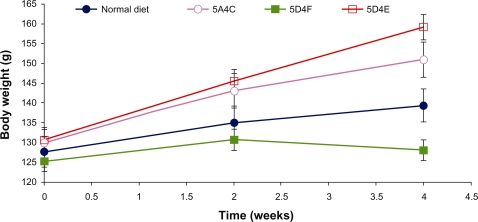
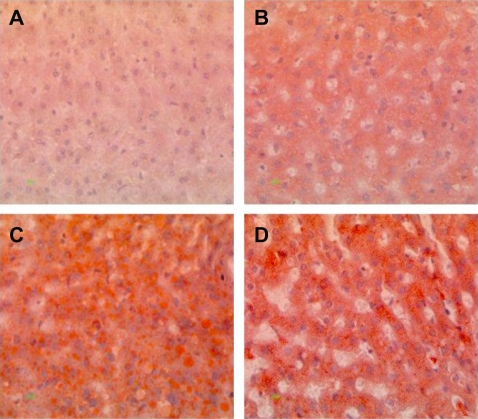
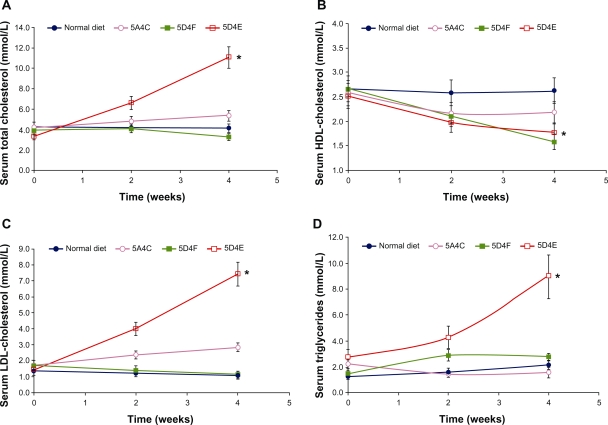
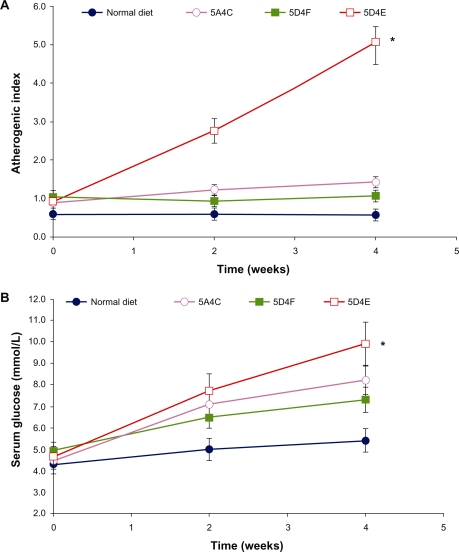
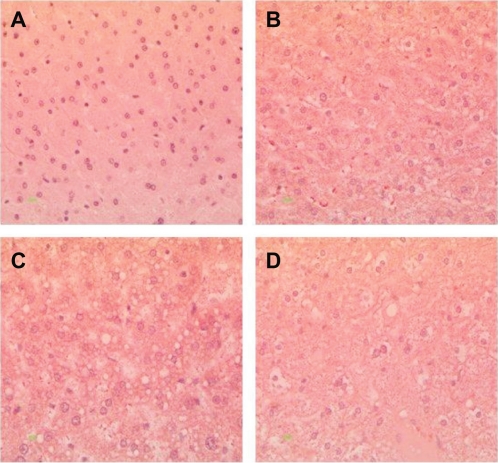
Experiments were planned to develop a diet-induced Bio F(1)B Golden Syrian hamster model of dyslipidemia and associated nonalcoholic fatty liver disease in the metabolic syndrome. Hamsters were fed a normal control diet, a high-fat/high-cholesterol diet, a high-fat/high-cholesterol/methionine-deficient/choline-devoid diet, and a high-fat/high-cholesterol/choline-deficient diet. Serum total cholesterol, high-density lipoprotein cholesterol, low-density lipoprotein cholesterol, triglycerides, glucose, atherogenic index, and body weight were quantified biweekly. Fat deposition in the liver was observed and assessed following lipid staining with hematoxylin and eosin and with oil red O.
In this study, we established a diet-induced Bio F(1)B Golden Syrian hamster model for studying dyslipidemia and associated nonalcoholic fatty liver disease in the metabolic syndrome. Hyperlipidemia and elevated serum glucose concentrations were induced using this diet. Atherogenic index was elevated, increasing the risk for a cardiovascular event. Histological analysis of liver specimens at the end of four weeks showed increased fat deposition in the liver of animals fed with a high-fat/high cholesterol diet, as compared to animals fed with the control diet.
Our study established that hamsters fed with a high-fat/high-cholesterol diet developed fatty liver and mild diabetes. Bio F(1)B hamsters fed with a high-fat/high-cholesterol diet may thus be a good animal model for research on the treatment of diet-induced metabolic syndrome complicated by nonalcoholic fatty liver disease.
肥胖、高胆固醇血症、甘油三酯升高和 2 型糖尿病是代谢综合征的主要危险因素。与大鼠或小鼠不同,仓鼠对饮食诱导的肥胖反应良好,在群体饲养时会增加体重和脂肪堆积,并因社会对抗引起的压力而增加食物摄入。它们的心血管和肝脏系统与人类相似,因此可以作为人类病理生理学的有用模型。
实验计划开发一种饮食诱导的 Bio F(1)B 金黄叙利亚仓鼠模型,用于研究代谢综合征中血脂异常和相关的非酒精性脂肪性肝病。仓鼠喂食正常对照饮食、高脂肪/高胆固醇饮食、高脂肪/高胆固醇/蛋氨酸缺乏/胆碱缺乏饮食和高脂肪/高胆固醇/胆碱缺乏饮食。每两周定量测定血清总胆固醇、高密度脂蛋白胆固醇、低密度脂蛋白胆固醇、甘油三酯、葡萄糖、致动脉粥样硬化指数和体重。用苏木精和伊红以及油红 O 对肝脏脂肪沉积进行观察和评估。
在这项研究中,我们建立了一种饮食诱导的 Bio F(1)B 金黄叙利亚仓鼠模型,用于研究代谢综合征中的血脂异常和相关的非酒精性脂肪性肝病。使用这种饮食诱导高脂血症和血清葡萄糖浓度升高。致动脉粥样硬化指数升高,增加了心血管事件的风险。四周结束时对肝脏标本进行组织学分析显示,与对照组相比,高脂肪/高胆固醇饮食组动物的肝脏脂肪沉积增加。
我们的研究表明,高脂肪/高胆固醇饮食喂养的仓鼠会发生脂肪肝和轻度糖尿病。因此,高脂肪/高胆固醇饮食喂养的 Bio F(1)B 仓鼠可能是研究饮食诱导的代谢综合征合并非酒精性脂肪性肝病的良好动物模型。