Craigen Bradford, Dashiff Aliza, Kadouri Daniel E
Department of Oral Biology, University of Medicine and Dentistry of New Jersey, Newark, NJ, 07101, USA.
Open Microbiol J. 2011;5:21-31. doi: 10.2174/1874285801105010021. Epub 2011 Jun 1.
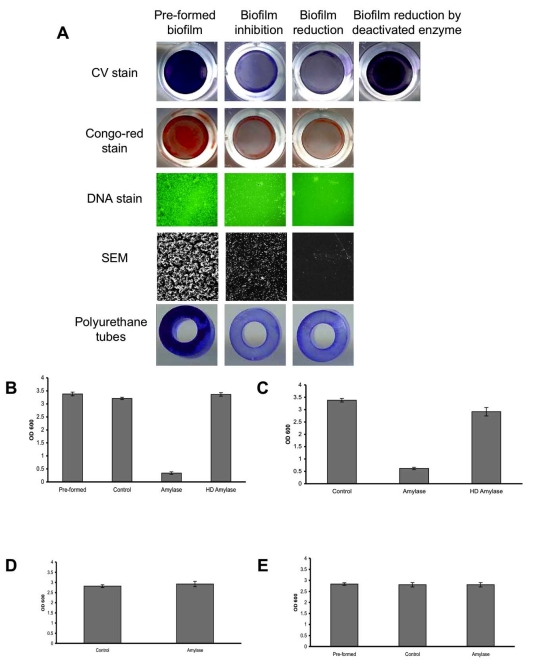
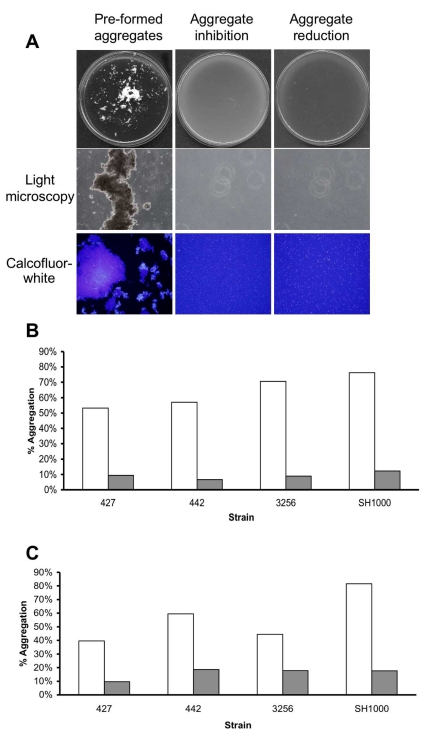
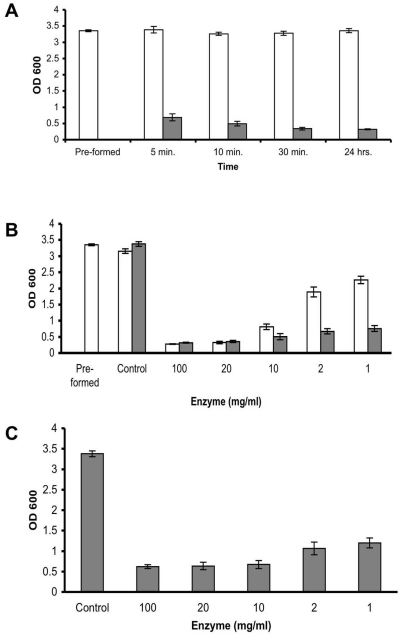
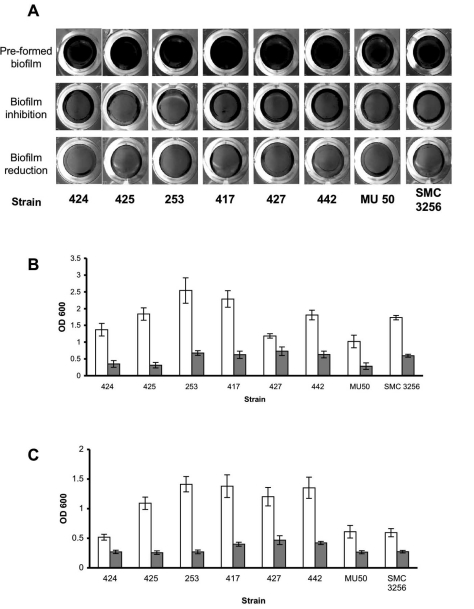
Staphylococcus aureus, a versatile human pathogen, is commonly associated with medical device infections. Its capacity to establish and maintain these infections is thought to be related to its ability to form adherent biofilms. In this study, commercially available α-amylase compounds from various biological sources were evaluated for their ability to reduce and prevent biofilm formation of several S. aureus isolates. Our data demonstrates that α-amylase compounds can rapidly detach biofilms of S. aureus, as well as inhibit biofilm formation. Our data also demonstrates that α-amylase compounds have an ability to reduce and disassociate S. aureus cell-aggregates grown in liquid suspension. These findings suggest that commercially available α-amylase compounds could be used in the future to control S. aureus biofilm-related infections.
金黄色葡萄球菌是一种具有多种致病能力的人类病原体,通常与医疗器械感染有关。人们认为它建立和维持这些感染的能力与其形成附着生物膜的能力有关。在本研究中,对来自各种生物来源的市售α-淀粉酶化合物减少和预防几种金黄色葡萄球菌分离株生物膜形成的能力进行了评估。我们的数据表明,α-淀粉酶化合物可迅速使金黄色葡萄球菌的生物膜脱落,并抑制生物膜形成。我们的数据还表明,α-淀粉酶化合物有能力减少和分离在液体悬浮液中生长的金黄色葡萄球菌细胞聚集体。这些发现表明,市售α-淀粉酶化合物未来可用于控制与金黄色葡萄球菌生物膜相关的感染。