Centro Cardiologico Monzino IRCCS, Milan, Italy.
J Cell Mol Med. 2012 May;16(5):1074-84. doi: 10.1111/j.1582-4934.2011.01382.x.
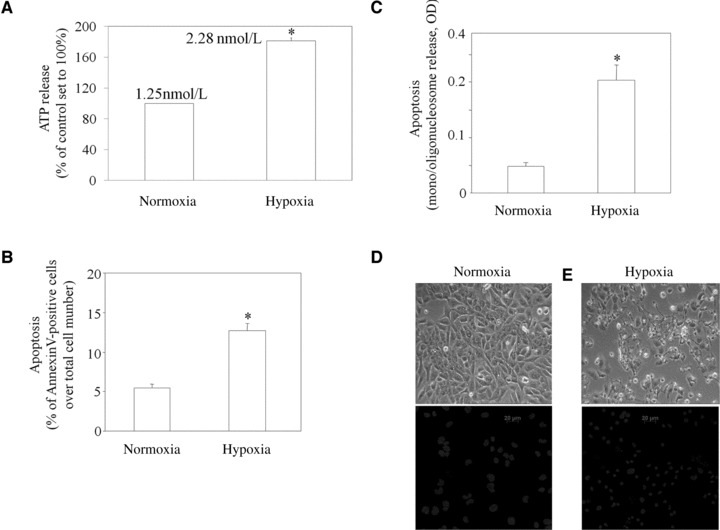
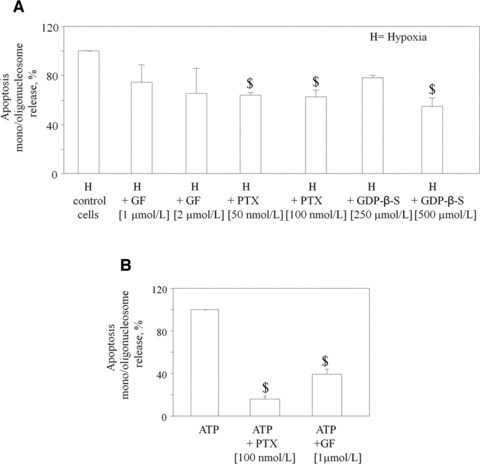
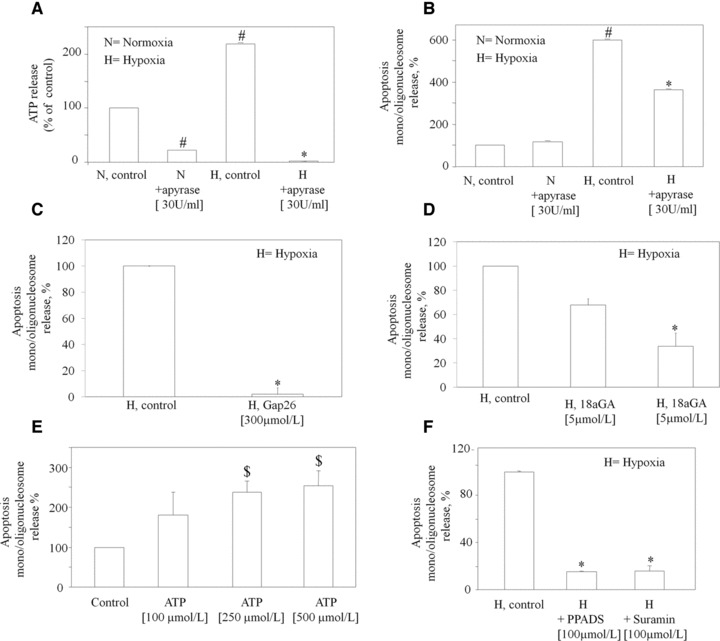
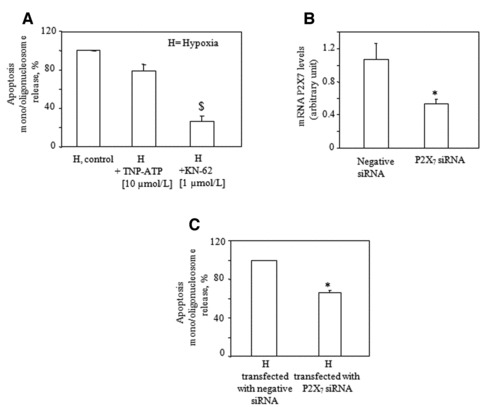
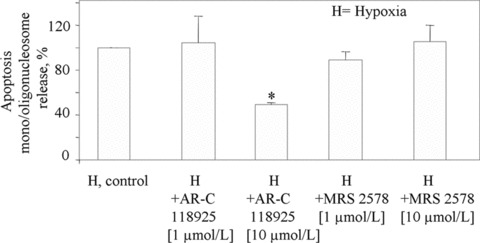
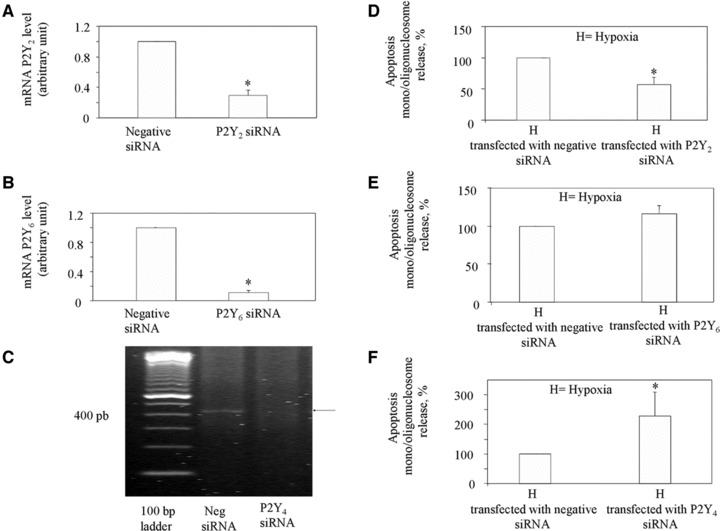
Blood levels of extracellular nucleotides (e.g. ATP) are greatly increased during heart ischaemia, but, despite the presence of their specific receptors on cardiomyocytes (both P2X and P2Y subtypes), their effects on the subsequent myocardial damage are still unknown. In this study, we aimed at investigating the role of ATP and specific P2 receptors in the appearance of cell injury in a cardiac model of ischaemic/hypoxic stress. Cells were maintained in a modular incubator chamber in a controlled humidified atmosphere of 95% N(2) for 16 hrs in a glucose-free medium. In this condition, we detected an early increase in the release of ATP in the culture medium, which was followed by a massive increase in the release of cytoplasmic histone-associated-DNA-fragments, a marker of apoptosis. Addition of either apyrase, which degrades extracellular ATP, or various inhibitors of ATP release via connexin hemichannels fully abolished ischaemic/hypoxic stress-associated apoptosis. To dissect the role of specific P2 receptor subtypes, we used a combined approach: (i) non-selective and, when available, subtype-selective P2 antagonists, were added to cardiomyocytes before ischaemic/hypoxic stress; (ii) selected P2 receptors genes were silenced via specific small interfering RNAs. Both approaches indicated that the P2Y(2) and P2χ(7) receptor subtypes are directly involved in the induction of cell death during ischaemic/hypoxic stress, whereas the P2Y(4) receptor has a protective effect. Overall, these findings indicate a role for ATP and its receptors in modulating cardiomyocyte damage during ischaemic/hypoxic stress.
在心肌缺血期间,细胞外核苷酸(例如 ATP)的血液水平会大大增加,但是,尽管心肌细胞上存在其特定的受体(P2X 和 P2Y 亚型都有),但其对随后心肌损伤的影响仍不清楚。在这项研究中,我们旨在研究 ATP 和特定 P2 受体在缺血/缺氧应激的心脏模型中细胞损伤出现中的作用。细胞在模块化孵育箱中于无葡萄糖的培养基中在 95%N2 的受控加湿气氛中保持 16 小时。在此条件下,我们检测到培养基中 ATP 的早期释放增加,随后细胞质组蛋白相关 DNA 片段(凋亡的标志物)的大量释放。添加能够降解细胞外 ATP 的 apyrase 或通过连接蛋白半通道释放 ATP 的各种抑制剂,可完全消除缺血/缺氧应激相关的凋亡。为了剖析特定 P2 受体亚型的作用,我们采用了一种组合方法:(i)在缺血/缺氧应激之前,向心肌细胞中添加非选择性和(有条件时)亚型选择性 P2 拮抗剂;(ii)通过特定的小干扰 RNA 沉默选定的 P2 受体基因。这两种方法均表明 P2Y(2)和 P2χ(7)受体亚型直接参与诱导缺血/缺氧应激期间的细胞死亡,而 P2Y(4)受体具有保护作用。总体而言,这些发现表明 ATP 及其受体在调节缺血/缺氧应激期间的心肌细胞损伤中起作用。