Department of Pharmacology, E.A.3801, SFR CAP-santé, Reims University Hospital, 51, rue Cognacq-Jay, 51095 Reims CEDEX, France.
Laboratory of Hematology, E.A.3801, SFR CAP-santé, Reims University Hospital, 51, rue Cognacq-Jay, 51095 Reims CEDEX, France.
Int J Mol Sci. 2019 Mar 22;20(6):1446. doi: 10.3390/ijms20061446.
Vascular endothelial injury during ischemia generates apoptotic cell death and precedes apoptosis of underlying tissues. We aimed at studying the role of extracellular adenosine triphosphate (ATP) on endothelial cells protection against hypoxia injury.
In a hypoxic model on endothelial cells, we quantified the extracellular concentration of ATP and adenosine. The expression of mRNA (ectonucleotidases, adenosine, and P2 receptors) was measured. Apoptosis was evaluated by the expression of cleaved caspase 3. The involvement of P2 and adenosine receptors and signaling pathways was investigated using selective inhibitors.
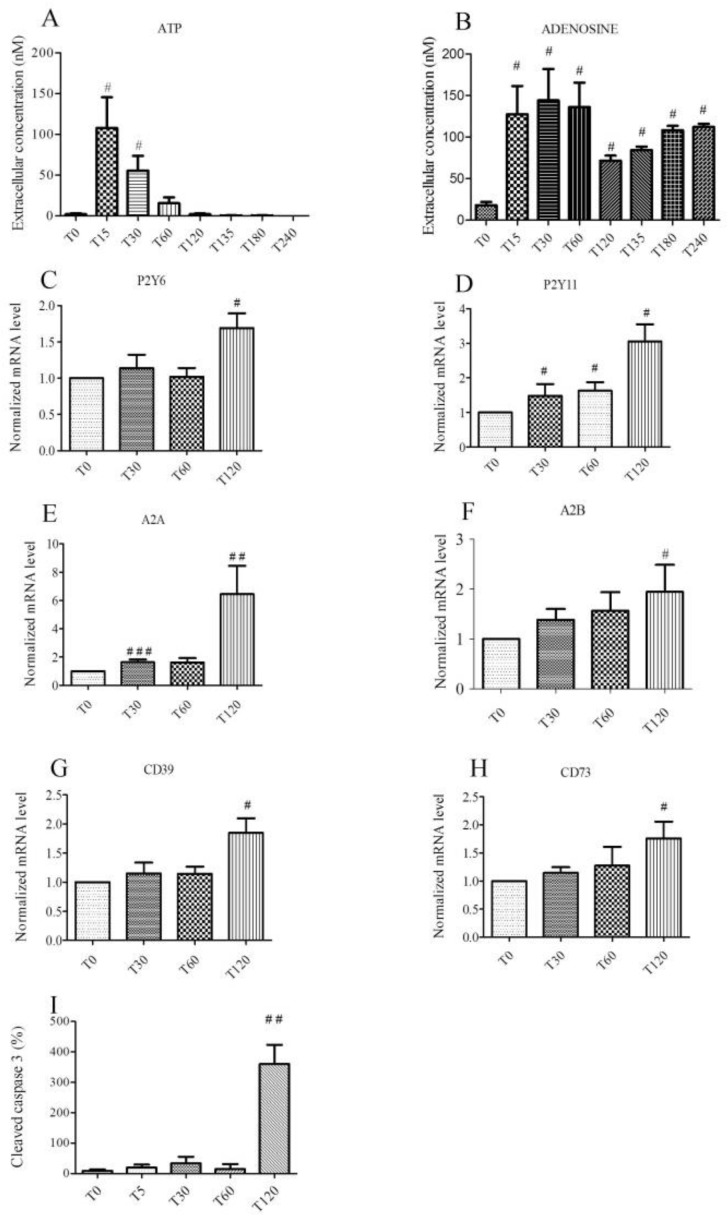
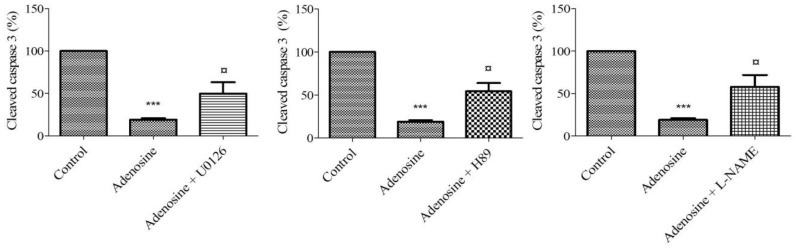
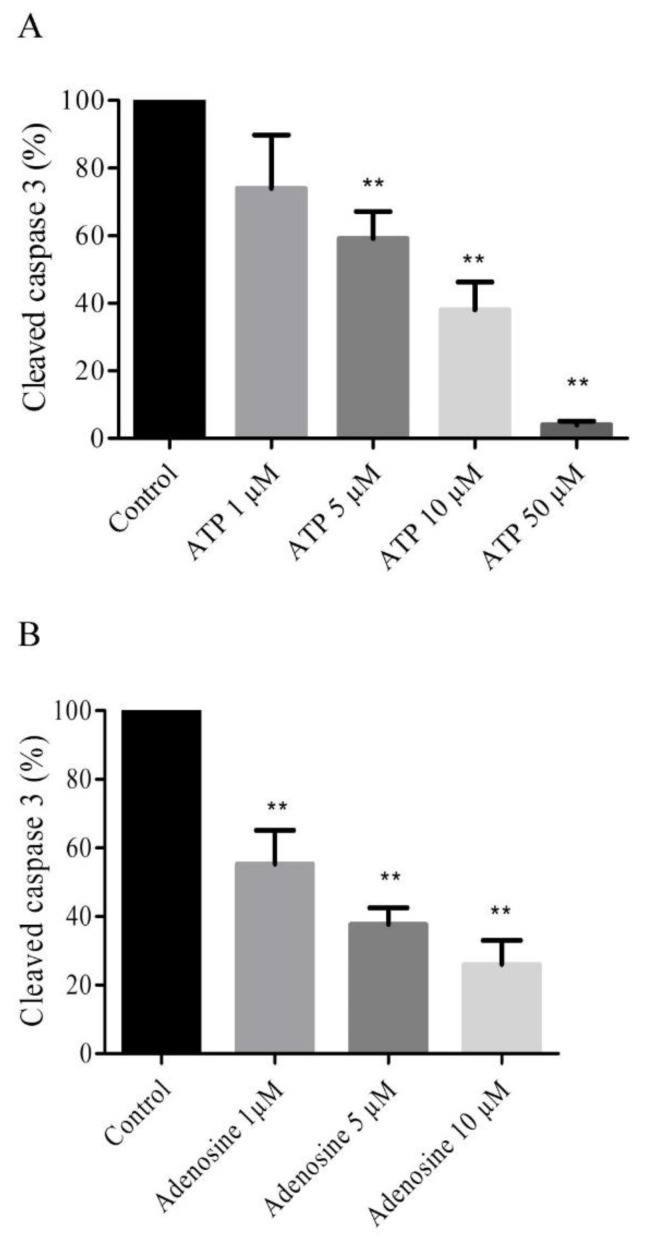
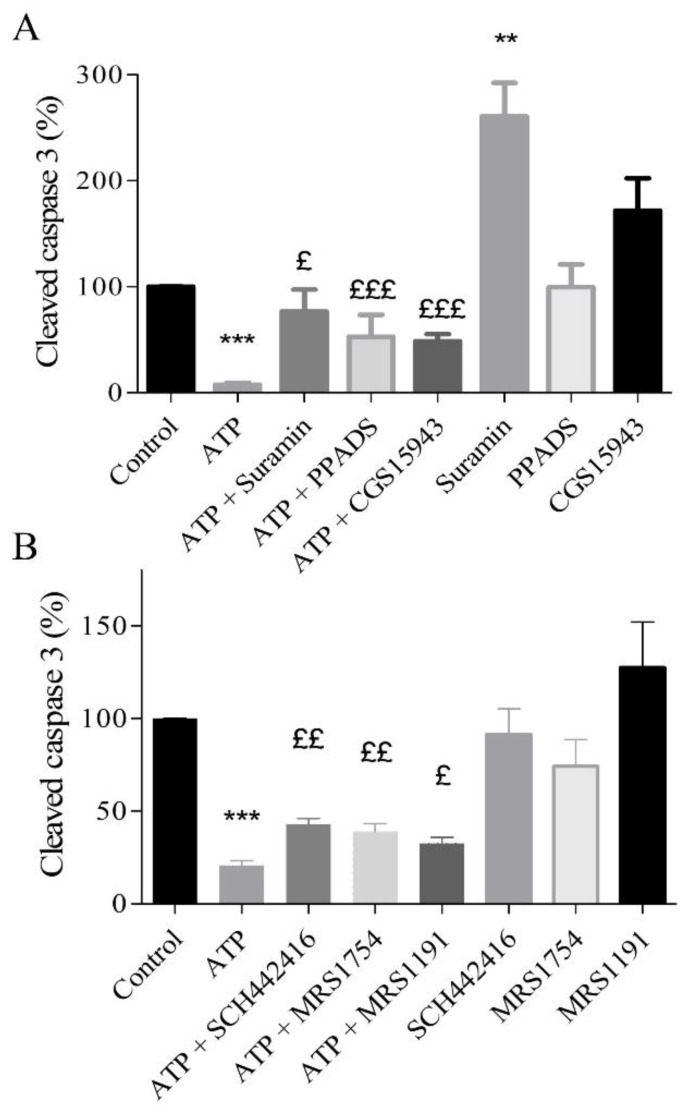
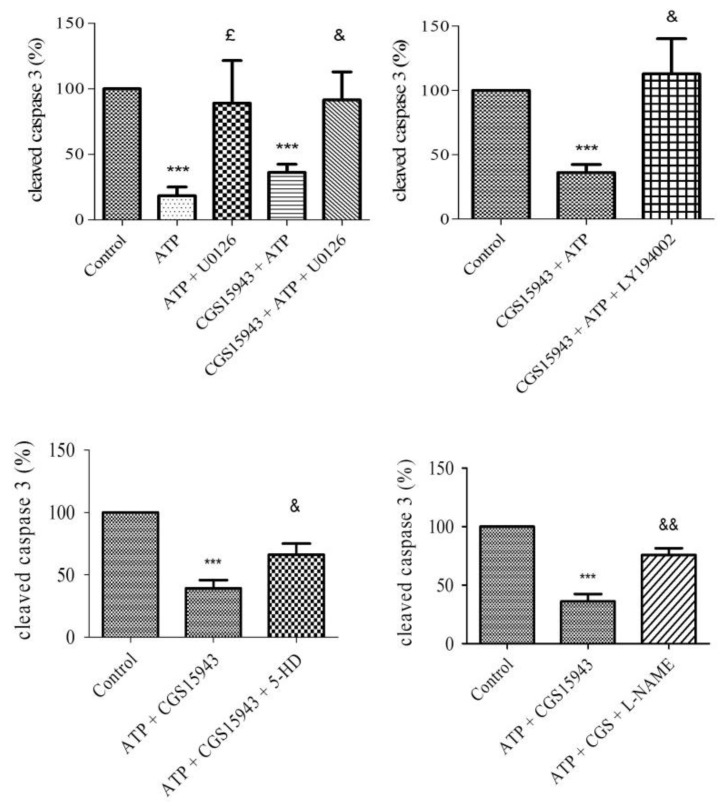
Hypoxic stress induced a significant increase in extracellular ATP and adenosine. After a 2-h hypoxic injury, an increase of cleaved caspase 3 was observed. ATP anti-apoptotic effect was prevented by suramin, pyridoxalphosphate-6-azophenyl-2',4'-disulfonic acid (PPADS), and CGS15943, as well as by selective A2A, A2B, and A3 receptor antagonists. P2 receptor-mediated anti-apoptotic effect of ATP involved phosphoinositide 3-kinase (PI3K), extracellular signal-regulated kinases (ERK1/2), mitoK, and nitric oxide synthase (NOS) pathways whereas adenosine receptor-mediated anti-apoptotic effect involved ERK1/2, protein kinase A (PKA), and NOS.
These results suggest a complementary role of P2 and adenosine receptors in ATP-induced protective effects against hypoxia injury of endothelial. This could be considered therapeutic targets to limit the development of ischemic injury of organs such as heart, brain, and kidney.
缺血过程中血管内皮损伤会产生凋亡细胞死亡,并先于其下组织的凋亡。我们旨在研究细胞外三磷酸腺苷(ATP)对内皮细胞缺氧损伤保护的作用。
在缺氧模型的内皮细胞中,我们量化了细胞外 ATP 和腺苷的浓度。测量了 mRNA(核苷酸酶、腺苷和 P2 受体)的表达。通过切割半胱氨酸天冬氨酸蛋白酶 3 的表达来评估细胞凋亡。使用选择性抑制剂研究 P2 和腺苷受体及信号通路的参与情况。
缺氧应激诱导细胞外 ATP 和腺苷显著增加。在 2 小时缺氧损伤后,观察到切割半胱氨酸天冬氨酸蛋白酶 3 的增加。苏拉明、吡哆醛-6-偶氮苯基-2',4'-二磺酸(PPADS)和 CGS15943 以及选择性 A2A、A2B 和 A3 受体拮抗剂均可阻止 ATP 的抗凋亡作用。P2 受体介导的 ATP 的抗凋亡作用涉及磷酸肌醇 3-激酶(PI3K)、细胞外信号调节激酶(ERK1/2)、线粒体 K 和一氧化氮合酶(NOS)途径,而腺苷受体介导的抗凋亡作用涉及 ERK1/2、蛋白激酶 A(PKA)和 NOS。
这些结果表明 P2 和腺苷受体在 ATP 诱导的内皮细胞缺氧损伤保护作用中具有互补作用。这可以被认为是治疗靶点,以限制心脏、大脑和肾脏等器官缺血损伤的发展。