Hayase Tamaki
Department of Legal Medicine, Kyoto University, Kyoto 606-8501, Japan.
BMC Pharmacol. 2011 Jul 18;11:6. doi: 10.1186/1471-2210-11-6.
The contributions of brain cannabinoid (CB) receptors, typically CB1 (CB type 1) receptors, to the behavioral effects of nicotine (NC) have been reported to involve brain transient receptor potential vanilloid 1 (TRPV1) receptors, and the activation of candidate endogenous TRPV1 ligands is expected to be therapeutically effective. In the present study, the effects of TRPV1 ligands with or without affinity for CB1 receptors were examined on NC-induced depression-like behavioral alterations in a mouse model in order to elucidate the "antidepressant-like" contributions of TRPV1 receptors against the NC-induced "depression" observed in various types of tobacco abuse.
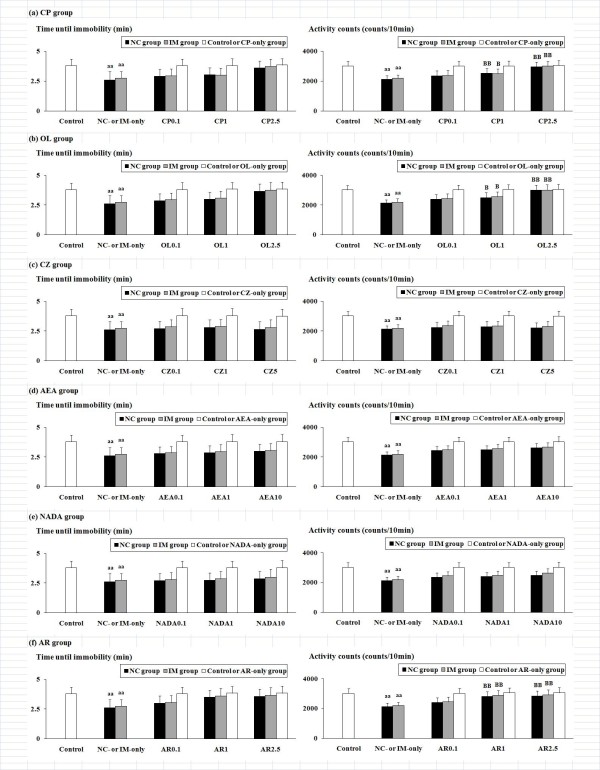
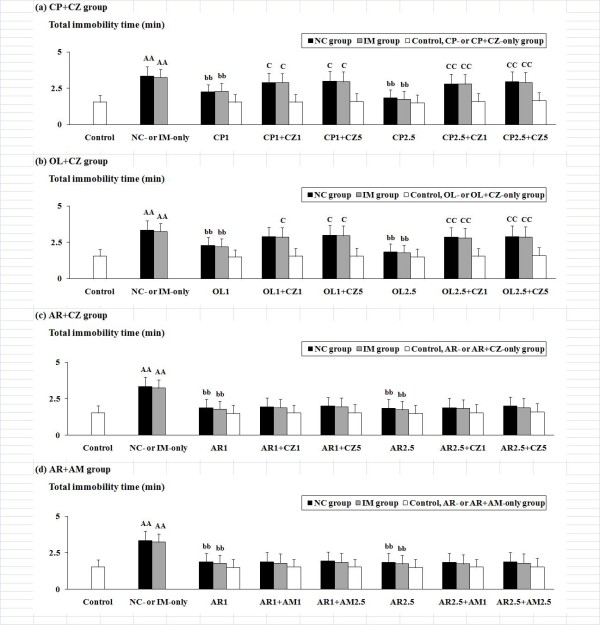
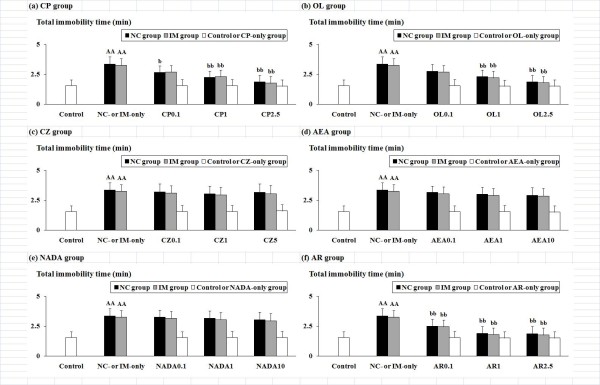
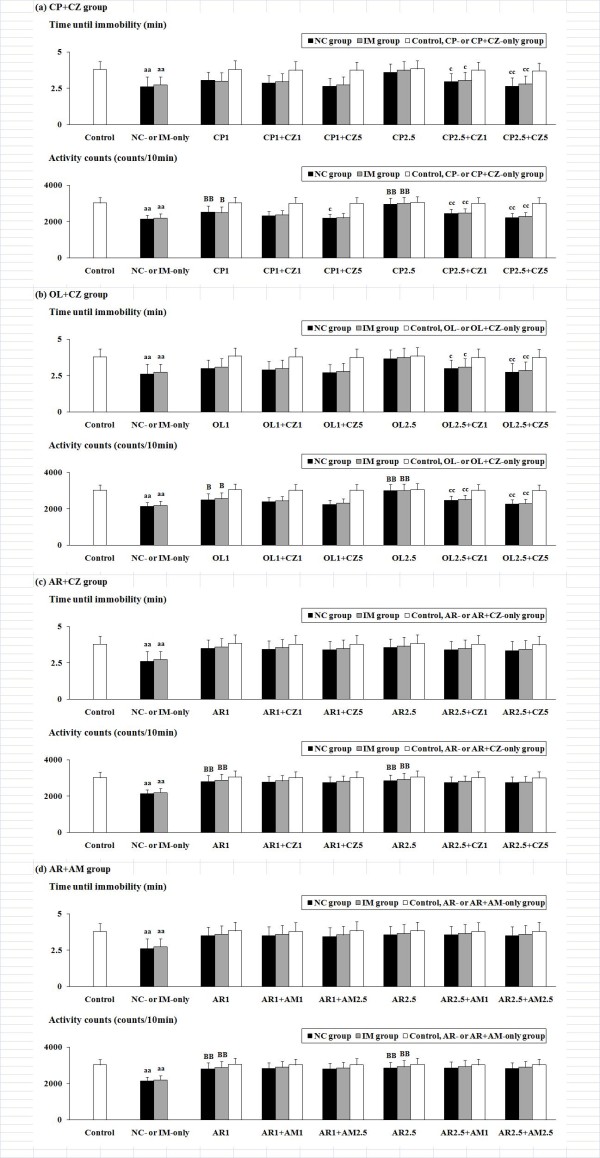
Repeated subcutaneous NC treatments (NC group: 0.3 mg/kg, 4 days), like repeated immobilization stress (IM) (IM group: 10 min, 4 days), caused depression-like behavioral alterations in both the forced swimming (reduced swimming behaviors) and the tail suspension (increased immobility times) tests, at the 2 h time point after the last treatment. In both NC and IM groups, the TRPV1 agonists capsaicin (CP) and olvanil (OL) administered intraperitoneally provided significant antidepressant-like attenuation against these behavioral alterations, whereas the TRPV1 antagonist capsazepine (CZ) did not attenuate any depression-like behaviors. Furthermore, the endogenous TRPV1-agonistic CB1 agonists anandamide (AEA) and N-arachidonyldopamine (NADA) did not have any antidepressant-like effects. Nevertheless, a synthetic "hybrid" agonist of CB1 and TRPV1 receptors, arvanil (AR), caused significant antidepressant-like effects. The antidepressant-like effects of CP and OL were antagonized by the TRPV1 antagonist CZ. However, the antidepressant-like effects of AR were not antagonized by either CZ or the CB1 antagonist AM 251 (AM).
The antidepressant-like effects of TRPV1 agonists shown in the present study suggest a characteristic involvement of TRPV1 receptors in NC-induced depression-like behaviors, similar to those caused by IM. The strong antidepressant-like effects of the potent TRPV1 plus CB1 agonist AR, which has been reported to cause part of its TRPV1-mimetic and cannabimimetic effects presumably via non-TRPV1 or non-CB1 mechanisms support a contribution from other sites of action which may play a therapeutically important role in the treatment of NC abuse.
据报道,脑大麻素(CB)受体,通常是CB1(1型CB)受体,对尼古丁(NC)行为效应的作用涉及脑瞬时受体电位香草酸亚型1(TRPV1)受体,并且激活候选内源性TRPV1配体有望具有治疗效果。在本研究中,检测了对CB1受体有或无亲和力的TRPV1配体对小鼠模型中NC诱导的抑郁样行为改变的影响,以阐明TRPV1受体对在各种类型烟草滥用中观察到的NC诱导的“抑郁”的“抗抑郁样”作用。
重复皮下注射NC(NC组:0.3mg/kg,4天),与重复固定应激(IM)(IM组:10分钟,4天)一样,在最后一次处理后2小时的强迫游泳(游泳行为减少)和悬尾(不动时间增加)试验中均引起抑郁样行为改变。在NC组和IM组中,腹腔注射TRPV1激动剂辣椒素(CP)和奥伐尼(OL)对这些行为改变具有显著的抗抑郁样减弱作用,而TRPV1拮抗剂 capsazepine(CZ)并未减弱任何抑郁样行为。此外,内源性TRPV1激动性CB1激动剂花生四烯乙醇胺(AEA)和N-花生四烯酰多巴胺(NADA)没有任何抗抑郁样作用。然而,CB1和TRPV1受体的合成“混合”激动剂阿伐尼(AR)产生了显著的抗抑郁样作用。CP和OL的抗抑郁样作用被TRPV1拮抗剂CZ拮抗。然而,AR的抗抑郁样作用既未被CZ也未被CB1拮抗剂AM 251(AM)拮抗。
本研究中显示的TRPV1激动剂的抗抑郁样作用表明TRPV1受体在NC诱导的抑郁样行为中具有特征性作用,类似于IM引起的行为。强效TRPV1加CB1激动剂AR的强抗抑郁样作用,据报道其部分TRPV1模拟和大麻模拟作用可能通过非TRPV1或非CB1机制介导,这支持了其他作用位点的贡献,这些位点可能在NC滥用治疗中发挥重要治疗作用。