Hayase Tamaki
Department of Legal Medicine, Kyoto University, Kyoto 606-8501, Japan.
PLoS One. 2016 Jul 12;11(7):e0158950. doi: 10.1371/journal.pone.0158950. eCollection 2016.
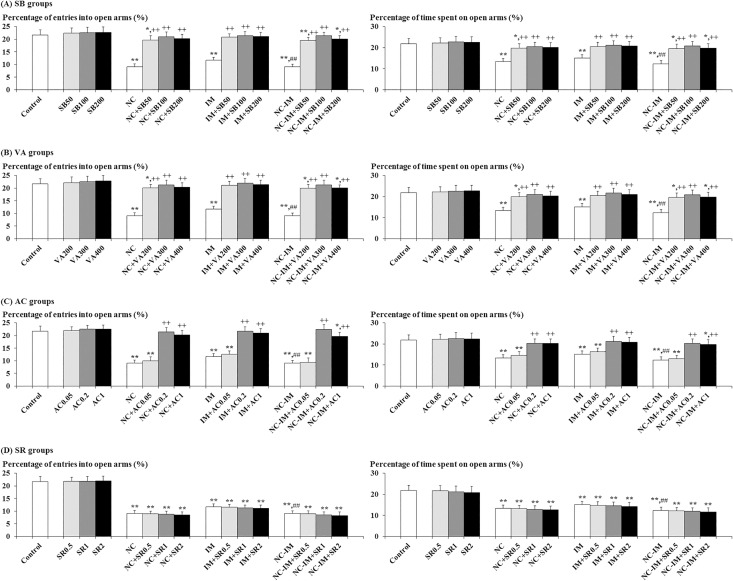
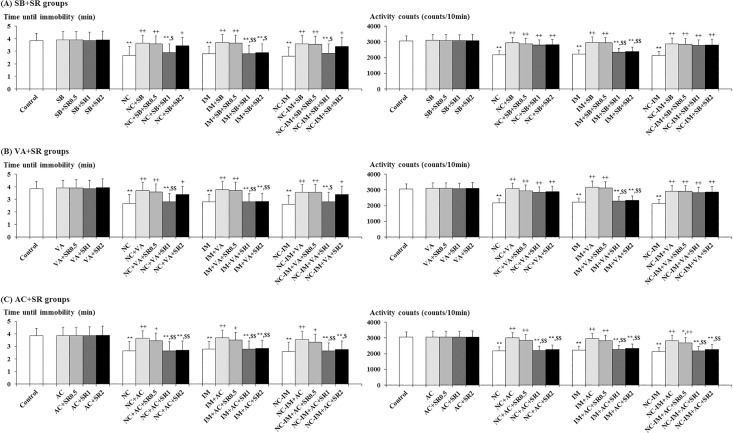
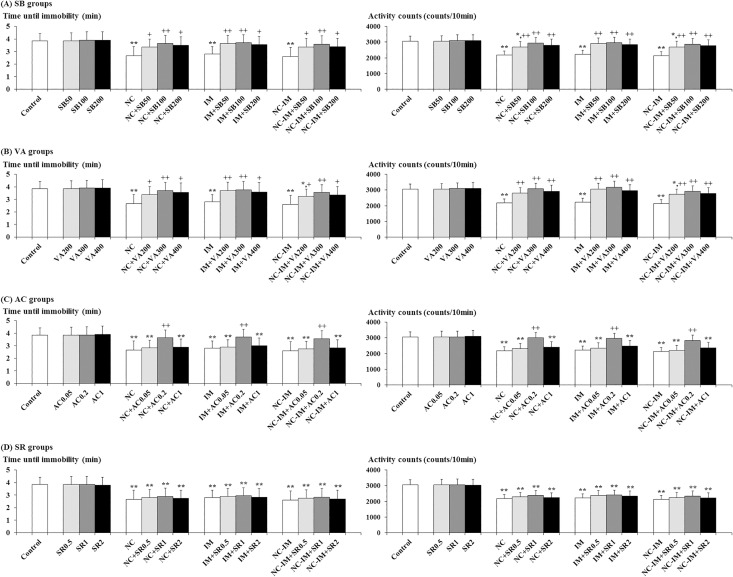
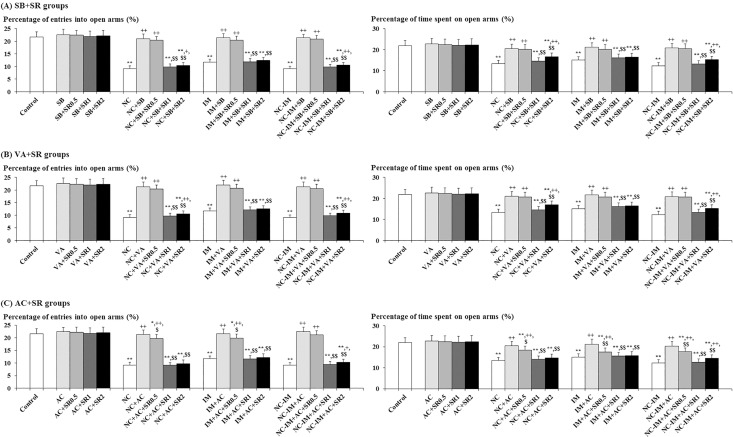
Like various stressors, the addictive use of nicotine (NC) is associated with emotional symptoms such as anxiety and depression, although the underlying mechanisms have not yet been fully elucidated due to the complicated involvement of target neurotransmitter systems. In the elicitation of these emotional symptoms, the fundamental involvement of epigenetic mechanisms such as histone acetylation has recently been suggested. Furthermore, among the interacting neurotransmitter systems implicated in the effects of NC and stressors, the endocannabinoid (ECB) system is considered to contribute indispensably to anxiety and depression. In the present study, the epigenetic involvement of histone acetylation induced by histone deacetylase (HDAC) inhibitors was investigated in anxiety- and depression-related behavioral alterations caused by NC and/or immobilization stress (IM). Moreover, based on the contributing roles of the ECB system, the interacting influence of ECB ligands on the effects of HDAC inhibitors was evaluated in order to examine epigenetic therapeutic interventions. Anxiety-like (elevated plus-maze test) and depression-like (forced swimming test) behaviors, which were observed in mice treated with repeated (4 days) NC (subcutaneous 0.8 mg/kg) and/or IM (10 min), were blocked by the HDAC inhibitors sodium butyrate (SB) and valproic acid (VA). The cannabinoid type 1 (CB1) agonist ACPA (arachidonylcyclopropylamide; AC) also antagonized these behaviors. Conversely, the CB1 antagonist SR 141716A (SR), which counteracted the effects of AC, attenuated the anxiolytic-like effects of the HDAC inhibitors commonly in the NC and/or IM groups. SR also attenuated the antidepressant-like effects of the HDAC inhibitors, most notably in the IM group. From these results, the combined involvement of histone acetylation and ECB system was shown in anxiety- and depression-related behaviors. In the NC treatment groups, the limited influence of SR against the HDAC inhibitor-induced antidepressant-like effects may reflect the characteristic involvement of histone acetylation within the NC-related neurotransmitter systems other than the ECB system.
与各种应激源一样,尼古丁(NC)的成瘾性使用与焦虑和抑郁等情绪症状相关,尽管由于目标神经递质系统的复杂参与,其潜在机制尚未完全阐明。最近有人提出,表观遗传机制如组蛋白乙酰化在这些情绪症状的诱发中起着重要作用。此外,在内源性大麻素(ECB)系统参与NC和应激源作用的相互作用神经递质系统中,ECB系统被认为对焦虑和抑郁起着不可或缺的作用。在本研究中,研究了组蛋白去乙酰化酶(HDAC)抑制剂诱导的组蛋白乙酰化在由NC和/或固定应激(IM)引起的焦虑和抑郁相关行为改变中的表观遗传作用。此外,基于ECB系统的作用,评估了ECB配体对HDAC抑制剂作用的相互影响,以研究表观遗传治疗干预措施。在反复(4天)给予NC(皮下注射0.8mg/kg)和/或IM(10分钟)处理的小鼠中观察到的焦虑样(高架十字迷宫试验)和抑郁样(强迫游泳试验)行为,被HDAC抑制剂丁酸钠(SB)和丙戊酸(VA)阻断。大麻素1型(CB1)激动剂ACPA(花生四烯酸环丙酰胺;AC)也拮抗了这些行为。相反,CB1拮抗剂SR 141716A(SR)抵消了AC的作用,通常在NC和/或IM组中减弱了HDAC抑制剂的抗焦虑样作用。SR还减弱了HDAC抑制剂的抗抑郁样作用,最明显的是在IM组中。从这些结果可以看出,组蛋白乙酰化和ECB系统共同参与了焦虑和抑郁相关行为。在NC治疗组中,SR对HDAC抑制剂诱导的抗抑郁样作用的有限影响可能反映了除ECB系统外,组蛋白乙酰化在NC相关神经递质系统中的特殊作用。