Department of Medicine, Stem Cell Institute at the James Graham Brown Cancer Center, University of Louisville, Louisville, KY 40202, USA.
Leukemia. 2012 Jan;26(1):106-16. doi: 10.1038/leu.2011.185. Epub 2011 Jul 19.
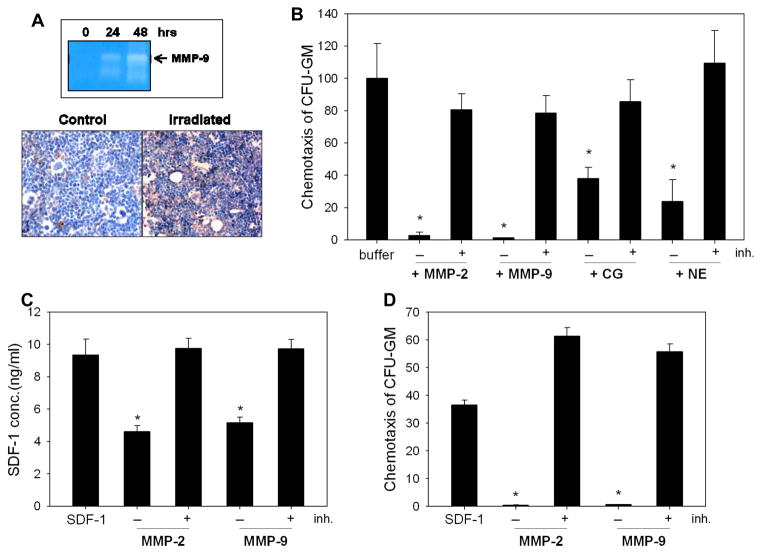
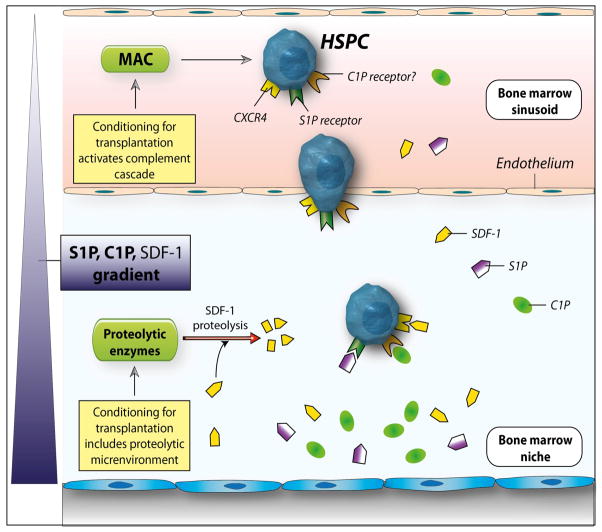
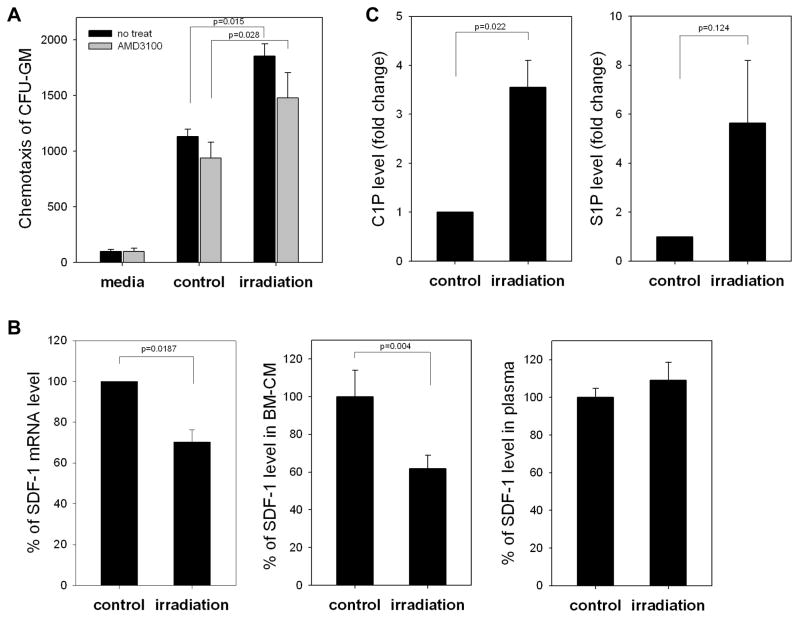
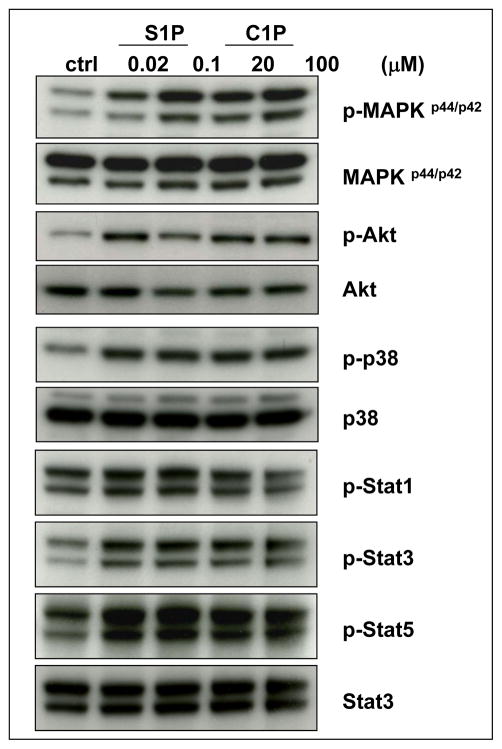
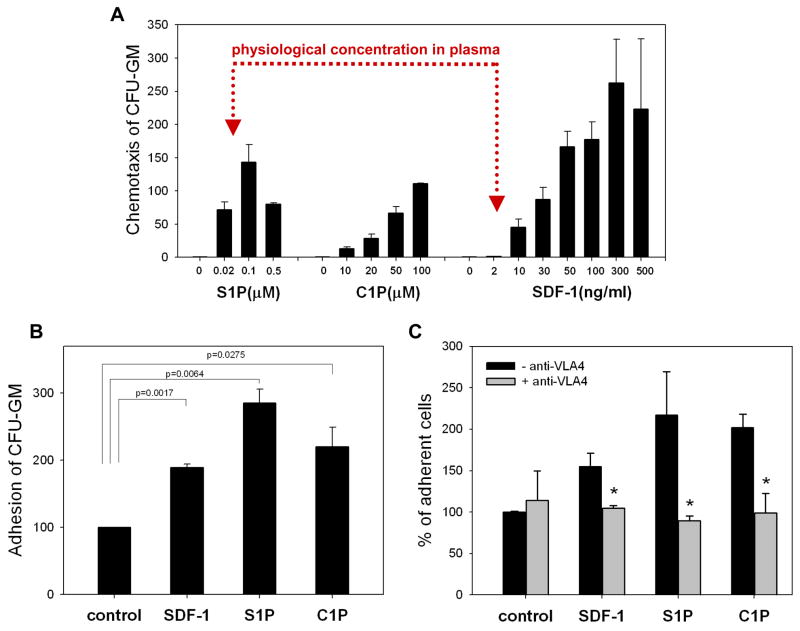
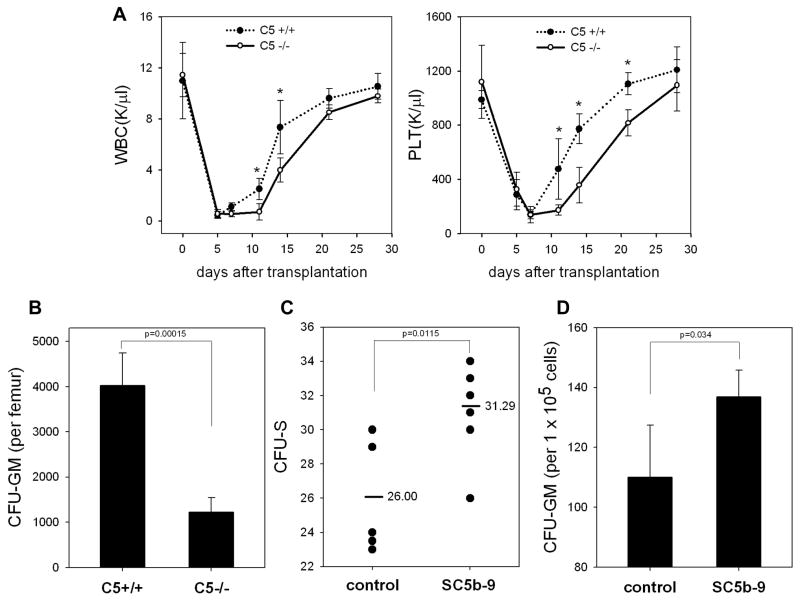
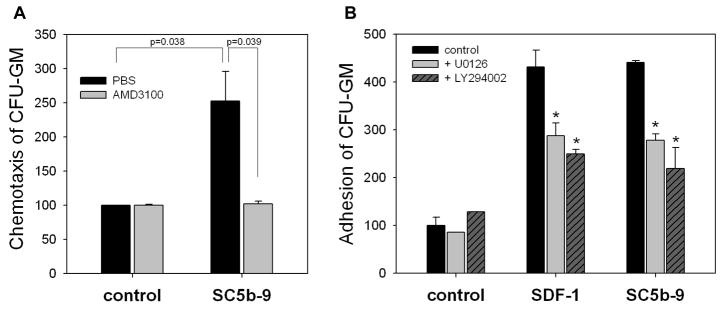
We have observed that conditioning for hematopoietic transplantation by lethal irradiation induces a proteolytic microenvironment in the bone marrow (BM) that activates the complement cascade (CC). As a result, BM is enriched for proteolytic enzymes and the soluble form of the terminal product of CC activation, the membrane attack complex C5b-C9 (MAC). At the same time, proteolytic enzymes induced in irradiated BM impair the chemotactic activity of α-chemokine stromal-derived factor-1 (SDF-1). As SDF-1 is considered a crucial BM chemoattractant for transplanted hematopoietic stem/progenitor cells (HSPCs), we sought to determine whether other factors that are resistant to proteolytic enzymes have a role in this process, focusing on proteolysis-resistant bioactive lipids. We found that the concentrations of sphingosine-1-phosphate (S1P) and ceramide-1-phosphate (C1P) increase in the BM after conditioning for transplantation and that both S1P and, as we show here for the first time, C1P are potent chemoattractants for HSPCs. Next, we observed that C5-deficient mice that do not generate MAC show impaired engraftment of HSPCs. In support of a role for MAC in homing and engraftment, we found that soluble MAC enhances in a CR3 (CD11b/CD18)-dependent manner the adhesion of HSPCs to BM stromal cells and increases the secretion of SDF-1 by BM stroma. We conclude that an increase in BM levels of proteolytic enzyme-resistant S1P and C1P and activation of CC, which leads to the generation of MAC, has an important and previously underappreciated role in the homing of transplanted HSPCs.
我们观察到,致死性照射诱导的造血移植条件作用会在骨髓(BM)中引发蛋白水解微环境,从而激活补体级联反应(CC)。结果,BM 富含蛋白水解酶和 CC 激活的终产物可溶性形式,即膜攻击复合物 C5b-C9(MAC)。同时,照射 BM 中诱导的蛋白水解酶会损害α-趋化因子基质衍生因子-1(SDF-1)的趋化活性。由于 SDF-1 被认为是移植造血干细胞/祖细胞(HSPC)的关键 BM 趋化剂,我们试图确定其他对蛋白水解酶具有抗性的因素在这个过程中是否具有作用,重点是研究对蛋白水解酶具有抗性的生物活性脂质。我们发现,移植条件作用后 BM 中神经鞘氨醇-1-磷酸(S1P)和神经酰胺-1-磷酸(C1P)的浓度增加,并且 S1P 和我们在这里首次展示的 C1P 都是 HSPC 的有效趋化剂。接下来,我们观察到不会产生 MAC 的 C5 缺陷型小鼠 HSPC 的植入能力受损。为了支持 MAC 在归巢和植入中的作用,我们发现可溶性 MAC 以 CR3(CD11b/CD18)依赖性方式增强 HSPC 与 BM 基质细胞的黏附,并增加 BM 基质分泌 SDF-1。我们得出结论,BM 中蛋白水解酶抗性 S1P 和 C1P 水平的增加以及 CC 的激活,导致 MAC 的产生,在移植 HSPC 的归巢中具有重要且以前未被充分认识的作用。