Nishimura Izumi, Oshima Atsushi, Shibuya Kazumoto, Negishi Tadashi
Environmental Science Research Laboratory, Central Research Institute of Electric Power Industry, Chiba, Japan.
Birth Defects Res B Dev Reprod Toxicol. 2011 Oct;92(5):469-77. doi: 10.1002/bdrb.20316. Epub 2011 Jul 18.
A risk assessment of magnetic field (MF) exposure conducted by the World Health Organization indicated the need for biological studies on primary hazard identification and quantitative risk evaluation of intermediate frequency (300 Hz-100 kHz) MFs. Because induction heating cookers generate such MFs for cooking, reproductive and developmental effects are a concern due to the close proximity of the fields' source to a cook's abdomen.
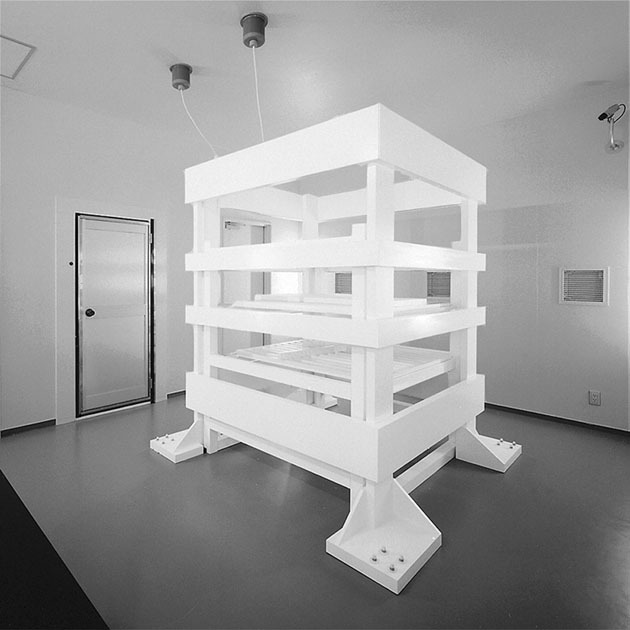
Pregnant Crl:CD(SD) rats (25/group) were exposed to a 20 kHz, 0.2 mT(rms) or 60 kHz, 0.1 mT(rms) sinusoidal MF or sham-exposed for 22 hr/day during organogenesis, and their fetuses were examined for malformations on gestation day 20. All teratological evaluations were conducted in a blind fashion, and experiments were duplicated for each frequency to confirm consistency of experimental outcomes.
No exposure-related changes were found in clinical signs, gross pathology, or number of implantation losses. The number of live fetuses and low-body-weight fetuses as well as the incidence of external, visceral, and skeletal malformations in the fetuses did not indicate significant differences between MF-exposed and sham-exposed groups. Although some fetuses showed isolated changes in sex ratio and skeletal variation and ossification, such changes were neither reproduced in duplicate experiments nor were they common to specific field frequencies.
Exposure of rats to MFs during organogenesis did not show significant reproducible teratogenicity under experimental conditions. Present findings do not support the hypothesis that intermediate frequency MF exposure after implantation carries a significant risk for developing mammalian fetuses.
世界卫生组织进行的一项磁场(MF)暴露风险评估表明,有必要开展生物学研究,以确定中频(300Hz - 100kHz)磁场的主要危害并进行定量风险评估。由于感应式电磁炉在烹饪过程中会产生此类磁场,且磁场源距离厨师腹部较近,因此人们担心其对生殖和发育的影响。
将怀孕的Crl:CD(SD)大鼠(每组25只)在器官形成期每天暴露于20kHz、0.2mT(均方根值)或60kHz、0.1mT(均方根值)的正弦磁场中22小时,或进行假暴露,在妊娠第20天检查其胎儿是否有畸形。所有致畸学评估均采用盲法进行,每个频率的实验均重复进行以确认实验结果的一致性。
在临床症状、大体病理学或着床丢失数量方面未发现与暴露相关的变化。活胎数量、低体重胎儿数量以及胎儿的外部、内脏和骨骼畸形发生率在磁场暴露组和假暴露组之间未显示出显著差异。尽管一些胎儿在性别比例和骨骼变异及骨化方面出现了个别变化,但这些变化在重复实验中均未再现,也并非特定磁场频率所共有。
在实验条件下,大鼠在器官形成期暴露于磁场未显示出显著的可重复性致畸性。目前的研究结果不支持植入后暴露于中频磁场会对哺乳动物胎儿发育带来重大风险这一假设。