Department of Bioinformatics, Friedrich Schiller University Jena, Ernst-Abbe-Platz 2, Jena, Germany.
Mol Syst Biol. 2011 Jul 19;7:515. doi: 10.1038/msb.2011.46.
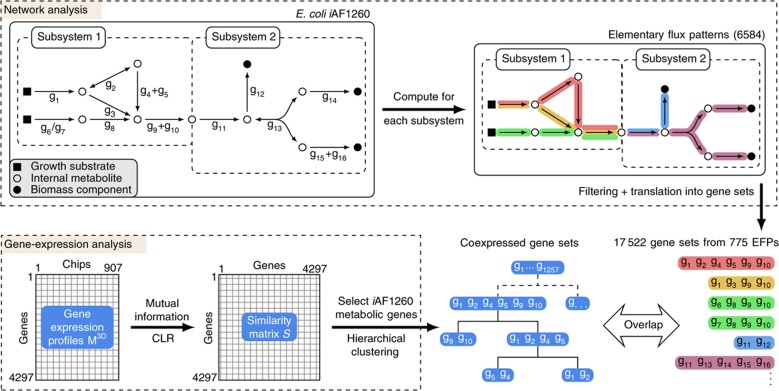
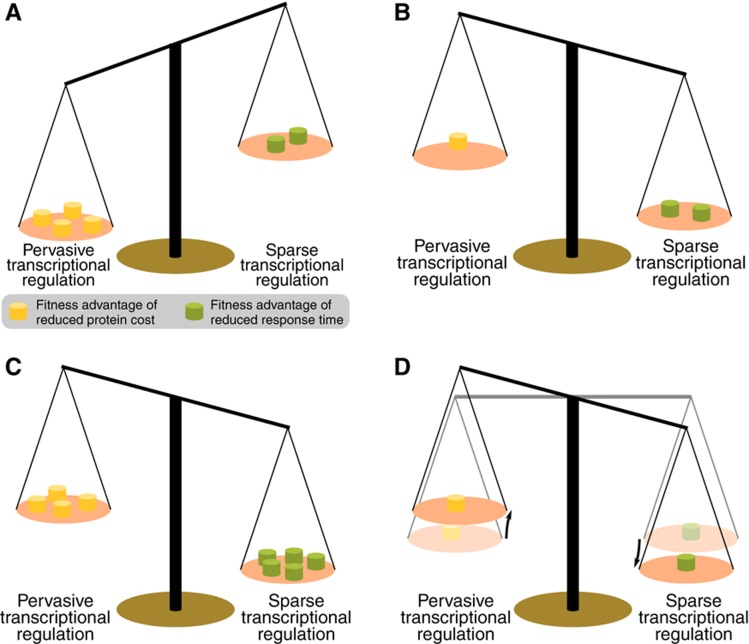
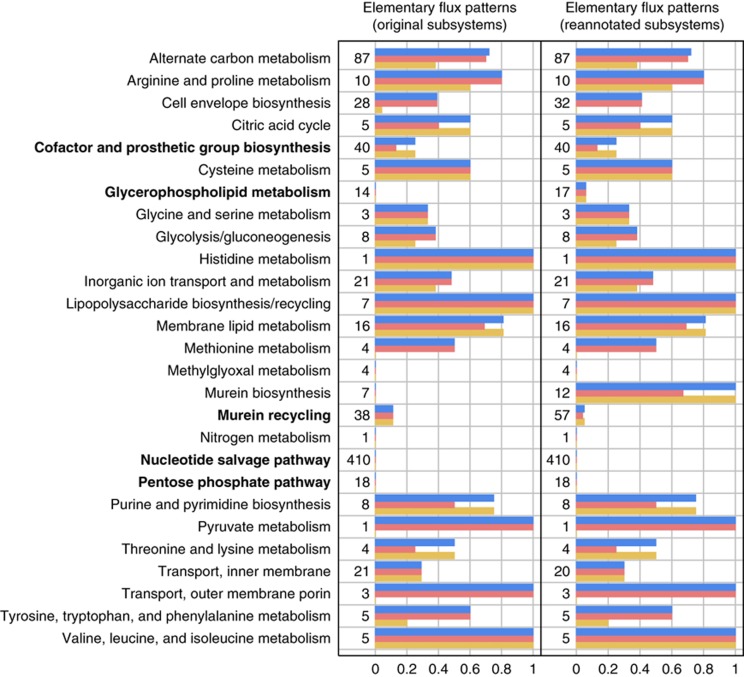
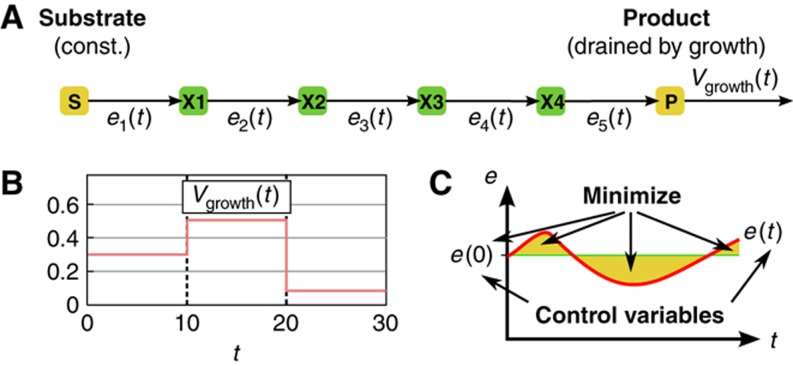
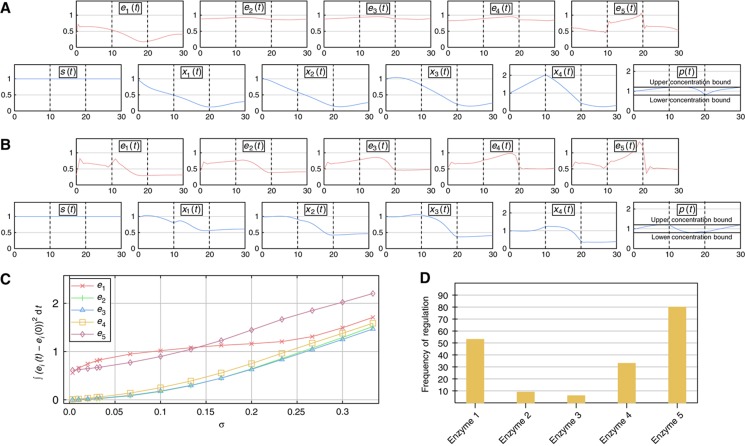
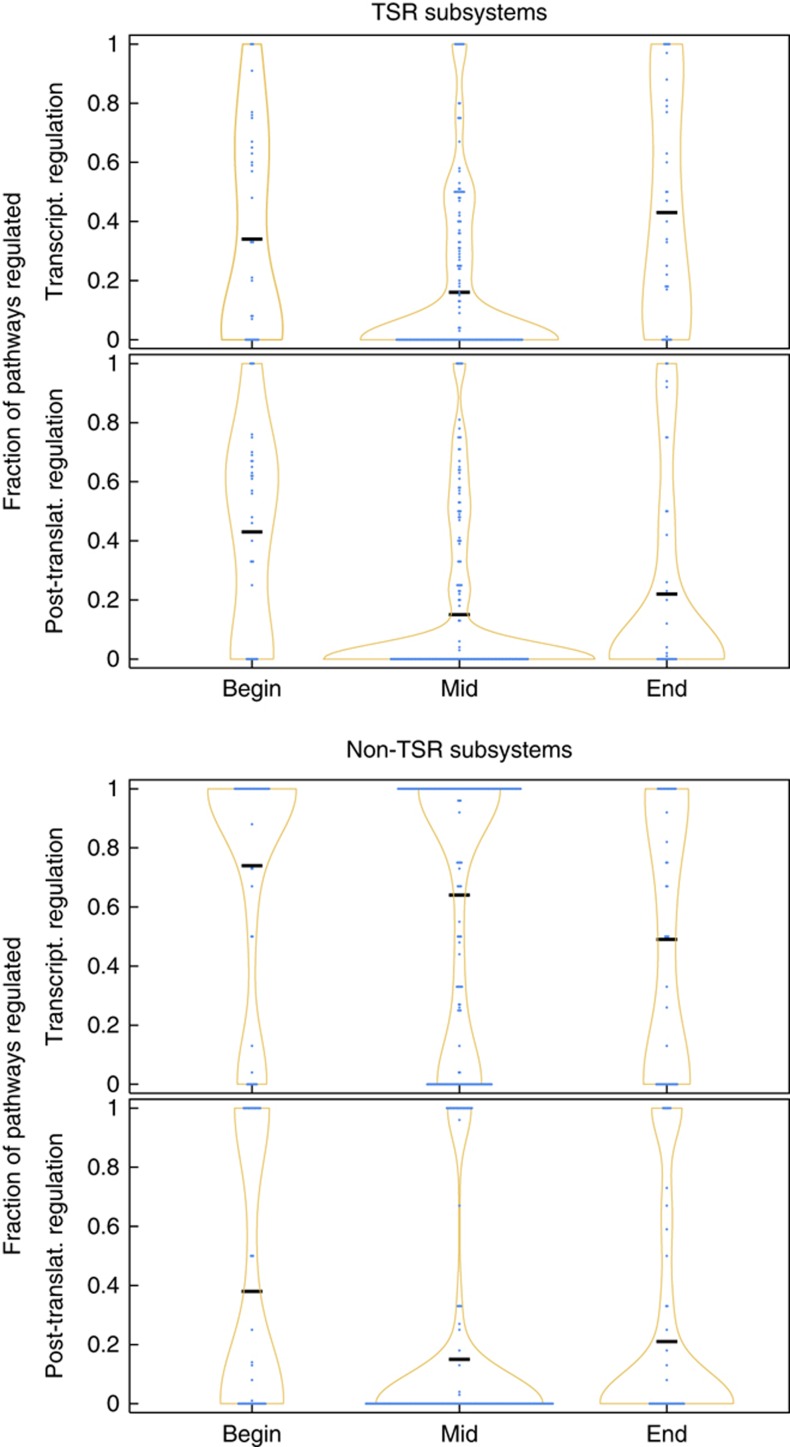
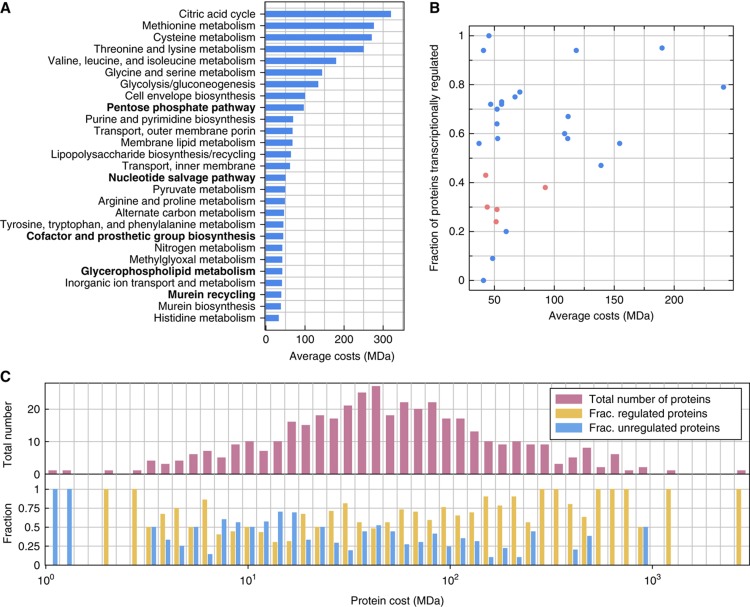
While previous studies have shed light on the link between the structure of metabolism and its transcriptional regulation, the extent to which transcriptional regulation controls metabolism has not yet been fully explored. In this work, we address this problem by integrating a large number of experimental data sets with a model of the metabolism of Escherichia coli. Using a combination of computational tools including the concept of elementary flux patterns, methods from network inference and dynamic optimization, we find that transcriptional regulation of pathways reflects the protein investment into these pathways. While pathways that are associated to a high protein cost are controlled by fine-tuned transcriptional programs, pathways that only require a small protein cost are transcriptionally controlled in a few key reactions. As a reason for the occurrence of these different regulatory strategies, we identify an evolutionary trade-off between the conflicting requirements to reduce protein investment and the requirement to be able to respond rapidly to changes in environmental conditions.
虽然先前的研究已经揭示了代谢结构与其转录调控之间的联系,但转录调控对代谢的控制程度尚未得到充分探索。在这项工作中,我们通过将大量实验数据集与大肠杆菌代谢模型整合来解决这个问题。使用包括基本通量模式概念、网络推断和动态优化方法在内的计算工具,我们发现途径的转录调控反映了蛋白质在这些途径中的投入。虽然与高蛋白质成本相关的途径受到精细调控的转录程序的控制,但仅需要少量蛋白质成本的途径在少数关键反应中受到转录控制。作为出现这些不同调控策略的原因,我们发现了在减少蛋白质投入的要求和对环境条件变化快速响应的要求之间存在的进化权衡。