Department of Chemistry, Key Laboratory for Ultrafine Materials of Ministry of Education, East China University of Science and Technology, P,O, Box 427, 130 Meilong Road, Shanghai, 200237, China.
Nanoscale Res Lett. 2008 May 21;3(5):169-78. doi: 10.1007/s11671-008-9132-6.
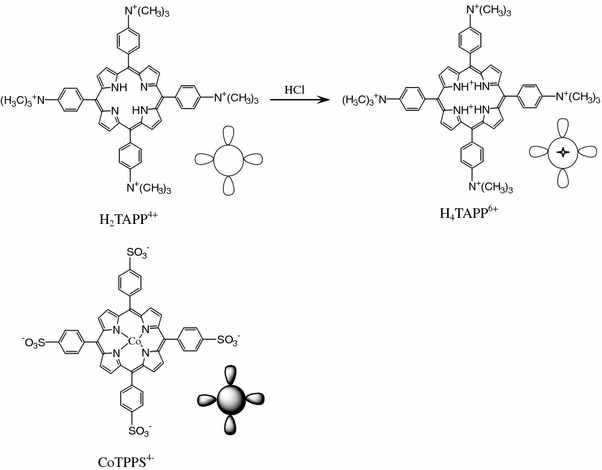
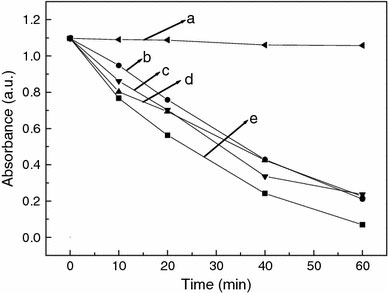
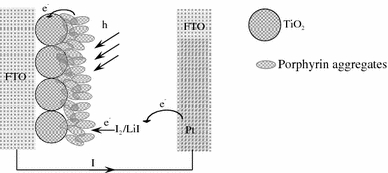
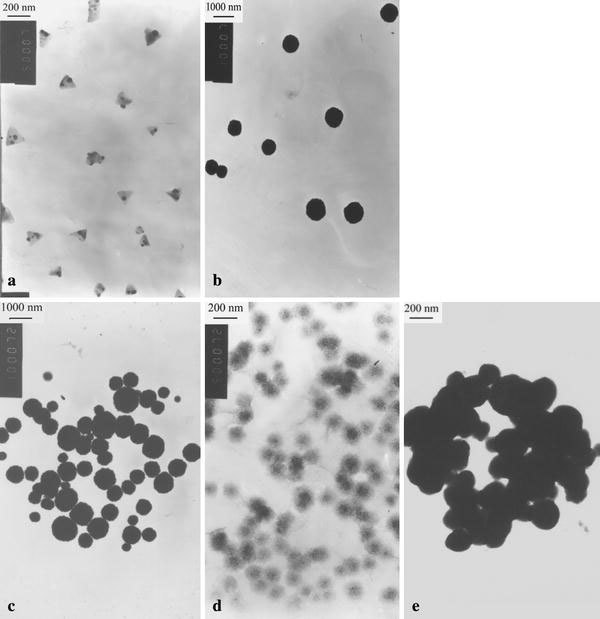
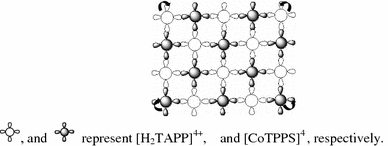
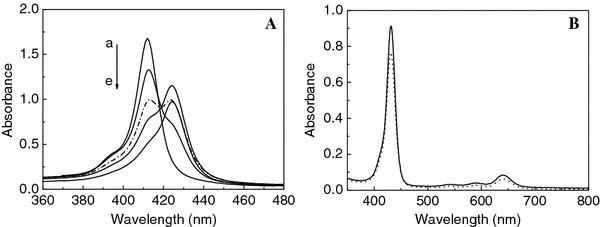
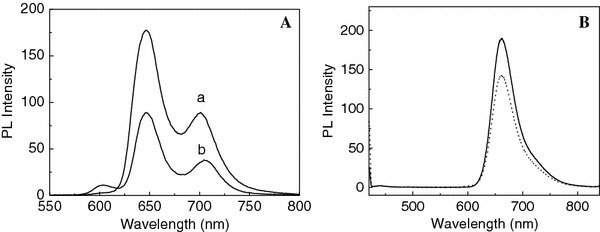
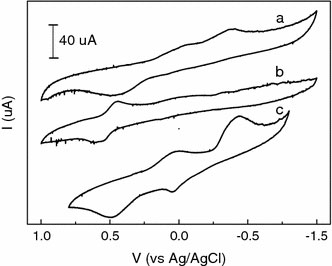
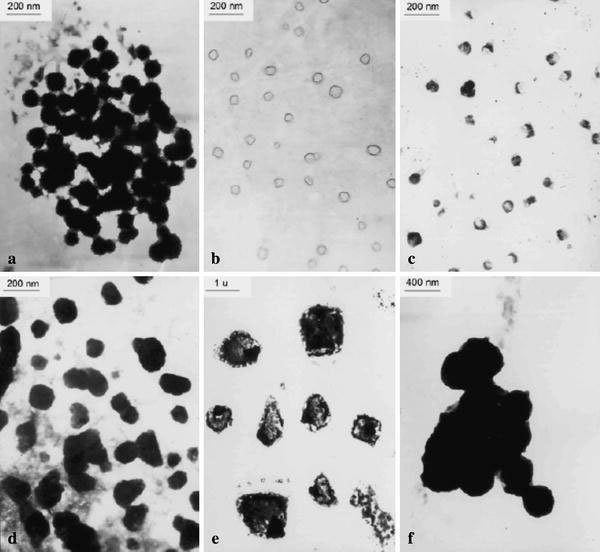
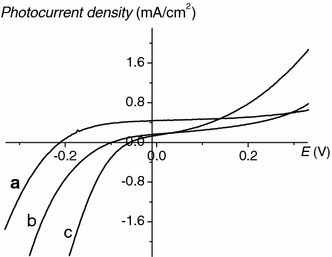
New types of porphyrin nano- and micro-particles composed of J- and H-heteroaggregates were prepared by electrostatic self-assembly of two oppositely charged porphyrins, tetrakis(4-trimethylammoniophenyl)porphyrin (H2TAPP4+) and tetrakis(4-sulfonatophenyl)porphyrin cobalt(II) (CoTPPS4-), in aqueous solutions. Transmission electron microscopy (TEM) images showed novel morphology and size distribution of porphyrin particles fabricated under different experimental conditions. The assembly process of the nano- and micro-particles was monitored by UV-Vis spectra. Fluorescence spectra and UV-Vis spectra provided optical information on the formation of the nano- and micro-particles. Cyclic voltammograms of the porphyrin particles indicated that the electron gain and loss of the H2TAPP4+ion were restrained, and the electron transfer of the CoTPPS4-ion was promoted in the J- and H-type porphyrin heteroaggregates within the particles. The stability and constitution of the nano- and micro-particles were confirmed by UV-light irradiation, heat-treatment, and pH and ionic strength changes. Photoelectrochemical measurements showed that the photoelectron transfer of TiO2modified with the particles was more efficient than that of TiO2sensitized by either monomers. The photoelectronic and photocatalytic properties of the products indicated that the pyramidal or spherical configuration of the nano- and micro-particles was favorable for the absorption and transfer of the energy. It can be found that TiO2sensitized by the porphyrin nano- and micro-particles exhibits significant improvement in energy conversion and photocatalytic activity with reference to pure TiO2.
新型卟啉纳米和微粒子由静电自组装两种带相反电荷的卟啉组成,即四(4-三甲氨基苯基)卟啉(H2TAPP4+)和四(4-磺基苯基)钴卟啉(CoTPPS4-),在水溶液中。透射电子显微镜(TEM)图像显示了在不同实验条件下制备的卟啉粒子的新颖形态和尺寸分布。通过紫外可见光谱监测了纳米和微粒子的组装过程。荧光光谱和紫外可见光谱提供了纳米和微粒子形成的光学信息。卟啉粒子的循环伏安曲线表明,在粒子内的 J-和 H-型卟啉杂聚物中,H2TAPP4+离子的电子得失受到限制,而 CoTPPS4-离子的电子转移得到促进。纳米和微粒子的稳定性和组成通过紫外线照射、热处理以及 pH 值和离子强度变化得到证实。光电化学测量表明,用粒子修饰的 TiO2 的光电子转移比单体敏化的 TiO2 更有效。产物的光电和光催化性能表明,纳米和微粒子的金字塔或球形结构有利于能量的吸收和传递。可以发现,与纯 TiO2 相比,敏化的卟啉纳米和微粒子的 TiO2 表现出显著提高的能量转换和光催化活性。