OSI Pharmaceuticals, Inc., Farmingdale, New York, United States of America.
PLoS One. 2011;6(7):e22290. doi: 10.1371/journal.pone.0022290. Epub 2011 Jul 14.
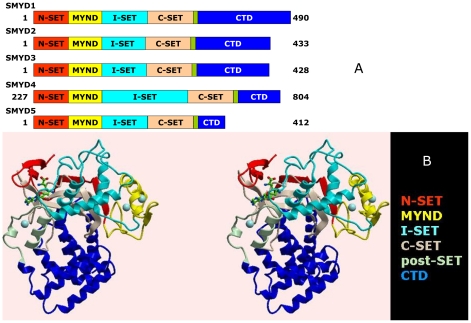
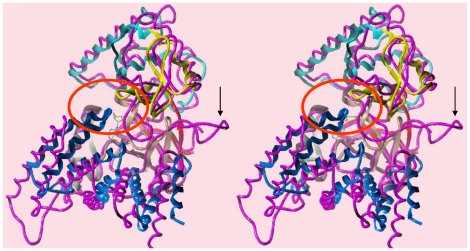
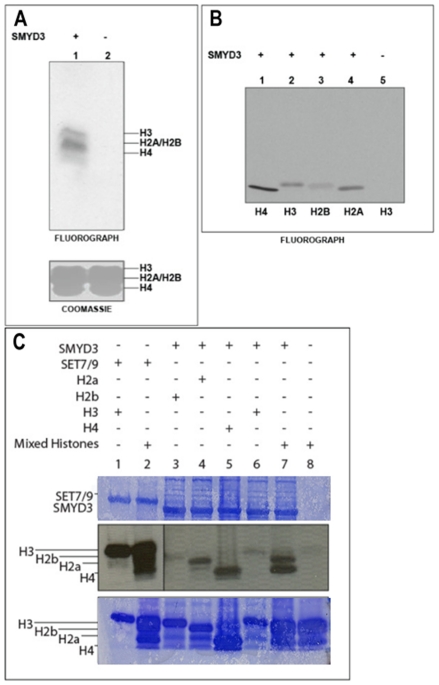
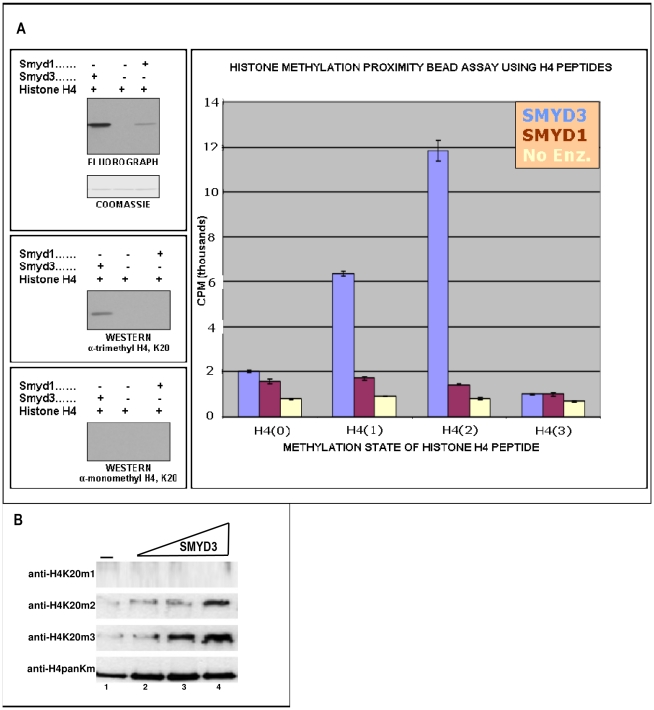
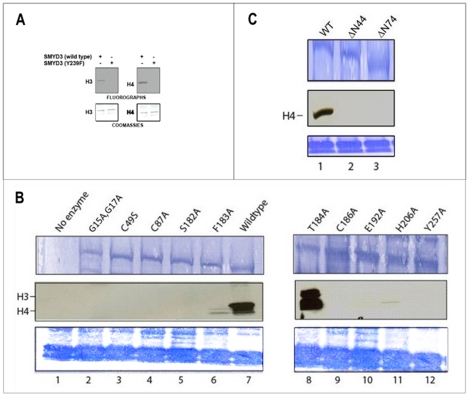
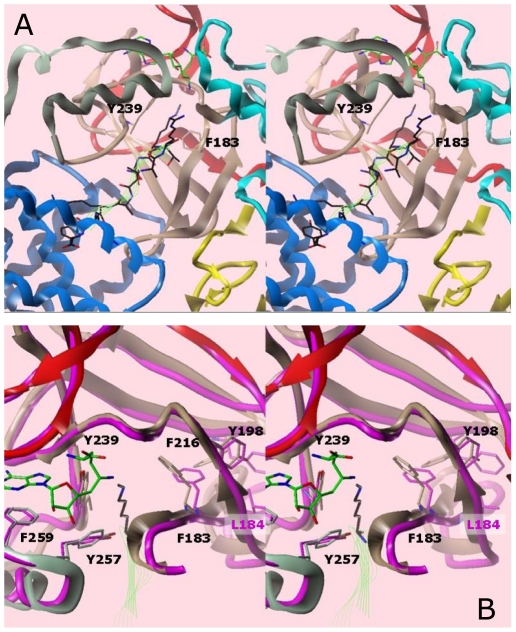
The SET and MYND Domain (SMYD) proteins comprise a unique family of multi-domain SET histone methyltransferases that are implicated in human cancer progression. Here we report an analysis of the crystal structure of the full length human SMYD3 in a complex with an analog of the S-adenosyl methionine (SAM) methyl donor cofactor. The structure revealed an overall compact architecture in which the "split-SET" domain adopts a canonical SET domain fold and closely assembles with a Zn-binding MYND domain and a C-terminal superhelical 9 α-helical bundle similar to that observed for the mouse SMYD1 structure. Together, these structurally interlocked domains impose a highly confined binding pocket for histone substrates, suggesting a regulated mechanism for its enzymatic activity. Our mutational and biochemical analyses confirm regulatory roles of the unique structural elements both inside and outside the core SET domain and establish a previously undetected preference for trimethylation of H4K20.
SET 和 MYND 结构域(SMYD)蛋白包含一个独特的多结构域 SET 组蛋白甲基转移酶家族,其与人类癌症进展有关。在这里,我们报告了全长人 SMYD3 与 S-腺苷甲硫氨酸(SAM)甲基供体辅因子类似物复合物的晶体结构分析。该结构揭示了一个整体紧凑的架构,其中“分裂 SET”结构域采用典型的 SET 结构域折叠,并与 Zn 结合的 MYND 结构域和 C 末端超螺旋 9α-螺旋束紧密组装,类似于观察到的小鼠 SMYD1 结构。这些结构上相互锁定的结构域为组蛋白底物施加了一个高度受限的结合口袋,这表明其酶活性存在受调控的机制。我们的突变和生化分析证实了核心 SET 结构域内外独特结构元素的调节作用,并确定了以前未检测到的对 H4K20 三甲基化的偏好。