• 文献检索
  • 文档翻译
  • 深度研究
  • 学术资讯
  • Suppr Zotero 插件Zotero 插件
  • 邀请有礼
  • 套餐&价格
  • 历史记录
应用&插件
Suppr Zotero 插件Zotero 插件浏览器插件Mac 客户端Windows 客户端微信小程序
定价
高级版会员购买积分包购买API积分包
服务
文献检索文档翻译深度研究API 文档MCP 服务
关于我们
关于 Suppr公司介绍联系我们用户协议隐私条款
关注我们

Suppr 超能文献

核心技术专利:CN118964589B侵权必究
粤ICP备2023148730 号-1Suppr @ 2026

文献检索

告别复杂PubMed语法,用中文像聊天一样搜索,搜遍4000万医学文献。AI智能推荐,让科研检索更轻松。

立即免费搜索

文件翻译

保留排版,准确专业,支持PDF/Word/PPT等文件格式,支持 12+语言互译。

免费翻译文档

深度研究

AI帮你快速写综述,25分钟生成高质量综述,智能提取关键信息,辅助科研写作。

立即免费体验

靶向赖氨酸甲基转移酶家族 SMYD 成员介导的表观遗传变化。

Targeting Epigenetic Changes Mediated by Members of the SMYD Family of Lysine Methyltransferases.

机构信息

Department of Biomedical Sciences, Colorado State University, Fort Collins, CO 80523-1617, USA.

Department of Chemistry, Colorado State University, Fort Collins, CO 80523-1872, USA.

出版信息

Molecules. 2023 Feb 20;28(4):2000. doi: 10.3390/molecules28042000.

DOI:10.3390/molecules28042000
PMID:36838987
原文链接:https://pmc.ncbi.nlm.nih.gov/articles/PMC9967872/
Abstract

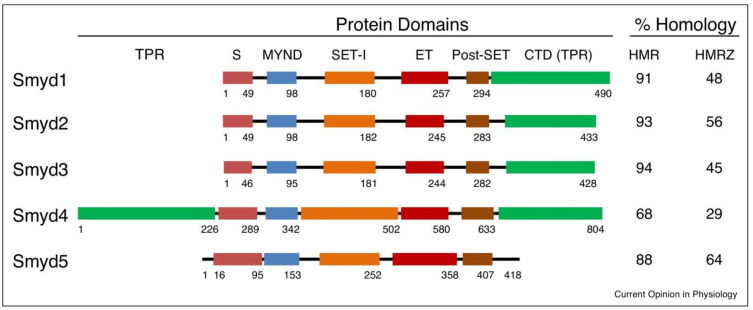
A comprehensive understanding of the mechanisms involved in epigenetic changes in gene expression is essential to the clinical management of diseases linked to the SMYD family of lysine methyltransferases. The five known SMYD enzymes catalyze the transfer of donor methyl groups from S-adenosylmethionine (SAM) to specific lysines on histones and non-histone substrates. SMYDs family members have distinct tissue distributions and tissue-specific functions, including regulation of development, cell differentiation, and embryogenesis. Diseases associated with SMYDs include the repressed transcription of SMYD1 genes needed for the formation of ion channels in the heart leading to heart failure, SMYD2 overexpression in esophageal squamous cell carcinoma (ESCC) or p53-related cancers, and poor prognosis associated with SMYD3 overexpression in more than 14 types of cancer including breast cancer, colon cancer, prostate cancer, lung cancer, and pancreatic cancer. Given the importance of epigenetics in various pathologies, the development of epigenetic inhibitors has attracted considerable attention from the pharmaceutical industry. The pharmacologic development of the inhibitors involves the identification of molecules regulating both functional SMYD SET (Suppressor of variegation, Enhancer of Zeste, Trithorax) and MYND (Myeloid-Nervy-DEAF1) domains, a process facilitated by available X-ray structures for SMYD1, SMYD2, and SMYD3. Important leads for potential pharmaceutical agents have been reported for SMYD2 and SMYD3 enzymes, and six epigenetic inhibitors have been developed for drugs used to treat myelodysplastic syndrome (Vidaza, Dacogen), cutaneous T-cell lymphoma (Zoinza, Isrodax), and peripheral T-cell lymphoma (Beleodag, Epidaza). The recently demonstrated reversal of SMYD histone methylation suggests that reversing the epigenetic effects of SMYDs in cancerous tissues may be a desirable target for pharmacological development.

摘要

全面了解表观遗传变化在基因表达中的机制对于与赖氨酸甲基转移酶 SMYD 家族相关疾病的临床管理至关重要。已知的五种 SMYD 酶催化供体甲基从 S-腺苷甲硫氨酸(SAM)转移到组蛋白和非组蛋白底物上的特定赖氨酸。SMYDs 家族成员具有不同的组织分布和组织特异性功能,包括调节发育、细胞分化和胚胎发生。与 SMYDs 相关的疾病包括心脏离子通道形成所需的 SMYD1 基因转录受到抑制导致心力衰竭,食管鳞状细胞癌(ESCC)或与 p53 相关的癌症中 SMYD2 过表达,以及超过 14 种癌症(包括乳腺癌、结肠癌、前列腺癌、肺癌和胰腺癌)中 SMYD3 过表达与预后不良相关。鉴于表观遗传学在各种病理学中的重要性,表观遗传抑制剂的开发引起了制药行业的极大关注。抑制剂的药理开发涉及鉴定调节 SMYD SET(变异性抑制物、增强子、Trithorax)和 MYND(骨髓神经缺失-DEAF1)结构域功能的分子,这一过程得益于可用的 SMYD1、SMYD2 和 SMYD3 的 X 射线结构。已经报道了针对 SMYD2 和 SMYD3 酶的潜在药物制剂的重要先导化合物,并且已经开发了六种用于治疗骨髓增生异常综合征(Vidaza、Dacogen)、皮肤 T 细胞淋巴瘤(Zoinza、Isrodax)和外周 T 细胞淋巴瘤(Beleodag、Epidaza)的药物的表观遗传抑制剂。最近证明的 SMYD 组蛋白甲基化逆转表明,逆转癌症组织中 SMYDs 的表观遗传效应可能是药理学开发的理想目标。
https://cdn.ncbi.nlm.nih.gov/pmc/blobs/cc6f/9967872/8aa238573b7a/molecules-28-02000-g011.jpg
https://cdn.ncbi.nlm.nih.gov/pmc/blobs/cc6f/9967872/5438a58a3607/molecules-28-02000-g001.jpg
https://cdn.ncbi.nlm.nih.gov/pmc/blobs/cc6f/9967872/5d87b6c3c730/molecules-28-02000-sch001.jpg
https://cdn.ncbi.nlm.nih.gov/pmc/blobs/cc6f/9967872/d3b9f0c9be2e/molecules-28-02000-g002.jpg
https://cdn.ncbi.nlm.nih.gov/pmc/blobs/cc6f/9967872/4c0925e58654/molecules-28-02000-g003.jpg
https://cdn.ncbi.nlm.nih.gov/pmc/blobs/cc6f/9967872/d35d43389b7d/molecules-28-02000-g004.jpg
https://cdn.ncbi.nlm.nih.gov/pmc/blobs/cc6f/9967872/650a4b4167bc/molecules-28-02000-g005.jpg
https://cdn.ncbi.nlm.nih.gov/pmc/blobs/cc6f/9967872/8ce10c624e8e/molecules-28-02000-g006.jpg
https://cdn.ncbi.nlm.nih.gov/pmc/blobs/cc6f/9967872/08561e35cd8a/molecules-28-02000-g007.jpg
https://cdn.ncbi.nlm.nih.gov/pmc/blobs/cc6f/9967872/08feb494f30e/molecules-28-02000-sch002.jpg
https://cdn.ncbi.nlm.nih.gov/pmc/blobs/cc6f/9967872/712e0c9c5be4/molecules-28-02000-sch003.jpg
https://cdn.ncbi.nlm.nih.gov/pmc/blobs/cc6f/9967872/52f00f972ca6/molecules-28-02000-g008.jpg
https://cdn.ncbi.nlm.nih.gov/pmc/blobs/cc6f/9967872/c350d417b755/molecules-28-02000-sch004.jpg
https://cdn.ncbi.nlm.nih.gov/pmc/blobs/cc6f/9967872/b0f8ea684385/molecules-28-02000-g009.jpg
https://cdn.ncbi.nlm.nih.gov/pmc/blobs/cc6f/9967872/05c86f9e6963/molecules-28-02000-sch005.jpg
https://cdn.ncbi.nlm.nih.gov/pmc/blobs/cc6f/9967872/9ff53058eac5/molecules-28-02000-g010.jpg
https://cdn.ncbi.nlm.nih.gov/pmc/blobs/cc6f/9967872/8aa238573b7a/molecules-28-02000-g011.jpg
https://cdn.ncbi.nlm.nih.gov/pmc/blobs/cc6f/9967872/5438a58a3607/molecules-28-02000-g001.jpg
https://cdn.ncbi.nlm.nih.gov/pmc/blobs/cc6f/9967872/5d87b6c3c730/molecules-28-02000-sch001.jpg
https://cdn.ncbi.nlm.nih.gov/pmc/blobs/cc6f/9967872/d3b9f0c9be2e/molecules-28-02000-g002.jpg
https://cdn.ncbi.nlm.nih.gov/pmc/blobs/cc6f/9967872/4c0925e58654/molecules-28-02000-g003.jpg
https://cdn.ncbi.nlm.nih.gov/pmc/blobs/cc6f/9967872/d35d43389b7d/molecules-28-02000-g004.jpg
https://cdn.ncbi.nlm.nih.gov/pmc/blobs/cc6f/9967872/650a4b4167bc/molecules-28-02000-g005.jpg
https://cdn.ncbi.nlm.nih.gov/pmc/blobs/cc6f/9967872/8ce10c624e8e/molecules-28-02000-g006.jpg
https://cdn.ncbi.nlm.nih.gov/pmc/blobs/cc6f/9967872/08561e35cd8a/molecules-28-02000-g007.jpg
https://cdn.ncbi.nlm.nih.gov/pmc/blobs/cc6f/9967872/08feb494f30e/molecules-28-02000-sch002.jpg
https://cdn.ncbi.nlm.nih.gov/pmc/blobs/cc6f/9967872/712e0c9c5be4/molecules-28-02000-sch003.jpg
https://cdn.ncbi.nlm.nih.gov/pmc/blobs/cc6f/9967872/52f00f972ca6/molecules-28-02000-g008.jpg
https://cdn.ncbi.nlm.nih.gov/pmc/blobs/cc6f/9967872/c350d417b755/molecules-28-02000-sch004.jpg
https://cdn.ncbi.nlm.nih.gov/pmc/blobs/cc6f/9967872/b0f8ea684385/molecules-28-02000-g009.jpg
https://cdn.ncbi.nlm.nih.gov/pmc/blobs/cc6f/9967872/05c86f9e6963/molecules-28-02000-sch005.jpg
https://cdn.ncbi.nlm.nih.gov/pmc/blobs/cc6f/9967872/9ff53058eac5/molecules-28-02000-g010.jpg
https://cdn.ncbi.nlm.nih.gov/pmc/blobs/cc6f/9967872/8aa238573b7a/molecules-28-02000-g011.jpg

相似文献

1
Targeting Epigenetic Changes Mediated by Members of the SMYD Family of Lysine Methyltransferases.靶向赖氨酸甲基转移酶家族 SMYD 成员介导的表观遗传变化。
Molecules. 2023 Feb 20;28(4):2000. doi: 10.3390/molecules28042000.
2
Structure of human lysine methyltransferase Smyd2 reveals insights into the substrate divergence in Smyd proteins.人赖氨酸甲基转移酶 Smyd2 的结构揭示了 Smyd 蛋白在底物分歧中的作用机制。
J Mol Cell Biol. 2011 Oct;3(5):293-300. doi: 10.1093/jmcb/mjr015. Epub 2011 Jul 1.
3
Functions of SMYD proteins in biological processes: What do we know? An updated review.SMYD 蛋白在生物过程中的功能:我们了解多少?更新综述。
Arch Biochem Biophys. 2021 Nov 15;712:109040. doi: 10.1016/j.abb.2021.109040. Epub 2021 Sep 20.
4
Structure and function of SET and MYND domain-containing proteins.含SET和MYND结构域蛋白的结构与功能
Int J Mol Sci. 2015 Jan 8;16(1):1406-28. doi: 10.3390/ijms16011406.
5
Expression patterns and the prognostic value of the SMYD family members in human breast carcinoma using integrative bioinformatics analysis.利用整合生物信息学分析SMYD家族成员在人乳腺癌中的表达模式及预后价值。
Oncol Lett. 2019 Apr;17(4):3851-3861. doi: 10.3892/ol.2019.10054. Epub 2019 Feb 19.
6
The lysine methyltransferases SET and MYND domain containing 2 (Smyd2) and Enhancer of Zeste 2 (Ezh2) co-regulate osteoblast proliferation and mineralization.赖氨酸甲基转移酶 SET 和 MYND 结构域包含蛋白 2(Smyd2)和增强子的锌指蛋白 2(Ezh2)共同调节成骨细胞的增殖和矿化。
Gene. 2023 Jan 30;851:146928. doi: 10.1016/j.gene.2022.146928. Epub 2022 Sep 30.
7
Proteomic analyses of the SMYD family interactomes identify HSP90 as a novel target for SMYD2.蛋白质组学分析表明,SMYD 家族相互作用组中的 HSP90 是 SMYD2 的一个新靶点。
J Mol Cell Biol. 2011 Oct;3(5):301-8. doi: 10.1093/jmcb/mjr025.
8
The SMYD family proteins in immunology: An update of their obvious and non-obvious relations with the immune system.免疫学中的SMYD家族蛋白:其与免疫系统明显及不明显关系的最新进展
Heliyon. 2021 Jun 24;7(6):e07387. doi: 10.1016/j.heliyon.2021.e07387. eCollection 2021 Jun.
9
Histone methyltransferase SMYD2: ubiquitous regulator of disease.组蛋白甲基转移酶 SMYD2:疾病的普遍调节因子。
Clin Epigenetics. 2019 Aug 1;11(1):112. doi: 10.1186/s13148-019-0711-4.
10
Lysine methyltransferase Smyd2 regulates Hsp90-mediated protection of the sarcomeric titin springs and cardiac function.赖氨酸甲基转移酶Smyd2调节热休克蛋白90介导的肌节肌联蛋白弹簧保护和心脏功能。
Biochim Biophys Acta. 2013 Apr;1833(4):812-22. doi: 10.1016/j.bbamcr.2012.09.012. Epub 2012 Oct 6.

引用本文的文献

1
Lysine Methyltransferases SMYD2 and SMYD3: Emerging Targets in Kidney Diseases.赖氨酸甲基转移酶SMYD2和SMYD3:肾脏疾病中的新兴靶点
Kidney Dis (Basel). 2025 Jul 1;11(1):518-529. doi: 10.1159/000547202. eCollection 2025 Jan-Dec.
2
Identification of SMYD2 as a candidate diagnostic and prognostic biomarker for gastric cancer.鉴定SMYD2作为胃癌的候选诊断和预后生物标志物。
Front Oncol. 2025 Jul 24;15:1617971. doi: 10.3389/fonc.2025.1617971. eCollection 2025.
3
Effects of Environmental Non-Essential Toxic Heavy Metals on Epigenetics During Development.

本文引用的文献

1
The lysine methyltransferases SET and MYND domain containing 2 (Smyd2) and Enhancer of Zeste 2 (Ezh2) co-regulate osteoblast proliferation and mineralization.赖氨酸甲基转移酶 SET 和 MYND 结构域包含蛋白 2(Smyd2)和增强子的锌指蛋白 2(Ezh2)共同调节成骨细胞的增殖和矿化。
Gene. 2023 Jan 30;851:146928. doi: 10.1016/j.gene.2022.146928. Epub 2022 Sep 30.
2
Discovery of the 4-aminopiperidine-based compound EM127 for the site-specific covalent inhibition of SMYD3.发现基于 4-氨基哌啶的化合物 EM127 可特异性地共价抑制 SMYD3。
Eur J Med Chem. 2022 Dec 5;243:114683. doi: 10.1016/j.ejmech.2022.114683. Epub 2022 Sep 8.
3
环境中非必需有毒重金属对发育过程中表观遗传学的影响。
Toxics. 2025 Feb 27;13(3):167. doi: 10.3390/toxics13030167.
4
Editorial: Community series in early life stress and depression, Volume II.社论:早期生活压力与抑郁的社区系列,第二卷。
Front Psychiatry. 2025 Feb 17;16:1408329. doi: 10.3389/fpsyt.2025.1408329. eCollection 2025.
5
Direct lysine dimethylation of IRF3 by the methyltransferase SMYD3 attenuates antiviral innate immunity.甲基转移酶SMYD3对IRF3进行直接赖氨酸二甲基化会减弱抗病毒天然免疫。
Proc Natl Acad Sci U S A. 2025 Jan 21;122(3):e2320644122. doi: 10.1073/pnas.2320644122. Epub 2025 Jan 15.
6
Hsf1 is essential for proteotoxic stress response in smyd1b-deficient embryos and fish survival under heat shock.Hsf1对于smyd1b缺陷型胚胎中的蛋白毒性应激反应以及热休克条件下鱼类的存活至关重要。
FASEB J. 2025 Jan 15;39(1):e70283. doi: 10.1096/fj.202401875R.
7
SMYD family in cancer: epigenetic regulation and molecular mechanisms of cancer proliferation, metastasis, and drug resistance.癌症中的SMYD家族:癌症增殖、转移和耐药性的表观遗传调控及分子机制
Exp Mol Med. 2024 Nov;56(11):2325-2336. doi: 10.1038/s12276-024-01326-8. Epub 2024 Nov 1.
8
SMYD1 modulates the proliferation of multipotent cardiac progenitor cells derived from human pluripotent stem cells during myocardial differentiation through GSK3β/β-catenin&ERK signaling.SMYD1 通过 GSK3β/β-catenin&ERK 信号通路调节人多能干细胞来源的多能心脏祖细胞在心肌分化过程中的增殖。
Stem Cell Res Ther. 2024 Oct 8;15(1):350. doi: 10.1186/s13287-024-03899-7.
STUB1-SMYD2 Axis Regulates Drug Resistance in Glioma cells.
STUB1-SMYD2 轴调控胶质瘤细胞的耐药性。
J Mol Neurosci. 2022 Sep;72(9):2030-2044. doi: 10.1007/s12031-022-02051-5. Epub 2022 Aug 8.
4
Oleocanthal Attenuates Metastatic Castration-Resistant Prostate Cancer Progression and Recurrence by Targeting SMYD2.油橄榄苦素通过靶向SMYD2减轻转移性去势抵抗性前列腺癌的进展和复发。
Cancers (Basel). 2022 Jul 21;14(14):3542. doi: 10.3390/cancers14143542.
5
Histone Lysine Methylation Modification and Its Role in Vascular Calcification.组蛋白赖氨酸甲基化修饰及其在血管钙化中的作用。
Front Endocrinol (Lausanne). 2022 Jun 16;13:863708. doi: 10.3389/fendo.2022.863708. eCollection 2022.
6
Unique SMYD5 Structure Revealed by AlphaFold Correlates with Its Functional Divergence.独特的 SMYD5 结构由 AlphaFold 揭示,与其功能分化相关。
Biomolecules. 2022 Jun 3;12(6):783. doi: 10.3390/biom12060783.
7
SMYD5 catalyzes histone H3 lysine 36 trimethylation at promoters.SMYD5 催化组蛋白 H3 赖氨酸 36 在启动子上的三甲基化。
Nat Commun. 2022 Jun 9;13(1):3190. doi: 10.1038/s41467-022-30940-1.
8
SMYD5 acts as a potential biomarker for hepatocellular carcinoma.SMYD5作为肝细胞癌的一种潜在生物标志物。
Exp Cell Res. 2022 May 15;414(2):113076. doi: 10.1016/j.yexcr.2022.113076. Epub 2022 Feb 24.
9
SMYD5 is a histone H3-specific methyltransferase mediating mono-methylation of histone H3 lysine 36 and 37.SMYD5 是一种组蛋白 H3 特异性甲基转移酶,介导组蛋白 H3 赖氨酸 36 和 37 的单甲基化。
Biochem Biophys Res Commun. 2022 Apr 9;599:142-147. doi: 10.1016/j.bbrc.2022.02.043. Epub 2022 Feb 12.
10
Structural Analysis of SMYD3 Lysine Methyltransferase for the Development of Competitive and Specific Enzyme Inhibitors.用于开发竞争性和特异性酶抑制剂的SMYD3赖氨酸甲基转移酶的结构分析
Diseases. 2021 Dec 29;10(1):4. doi: 10.3390/diseases10010004.