Institute of Plant Science and Resources, Okayama University, Japan.
Proc Jpn Acad Ser B Phys Biol Sci. 2011;87(7):377-85. doi: 10.2183/pjab.87.377.
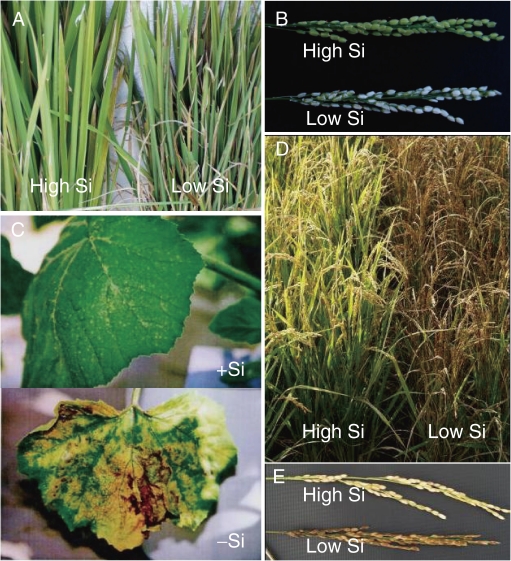
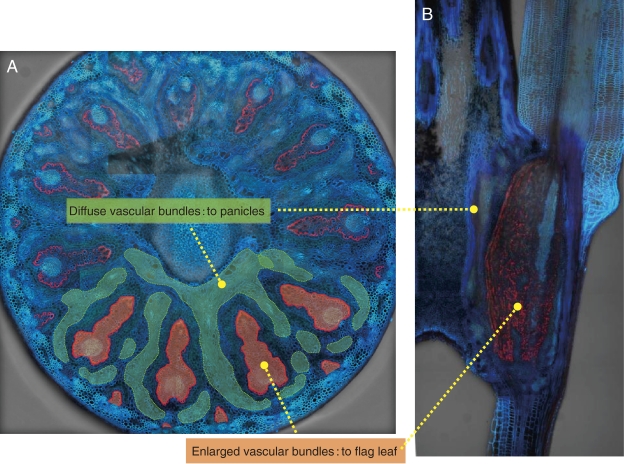
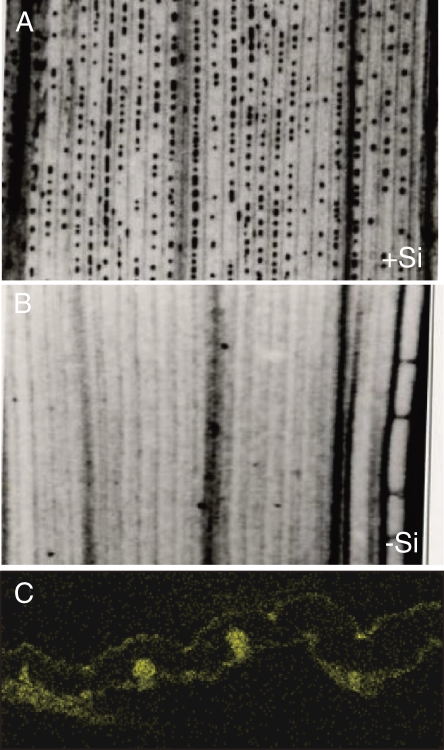
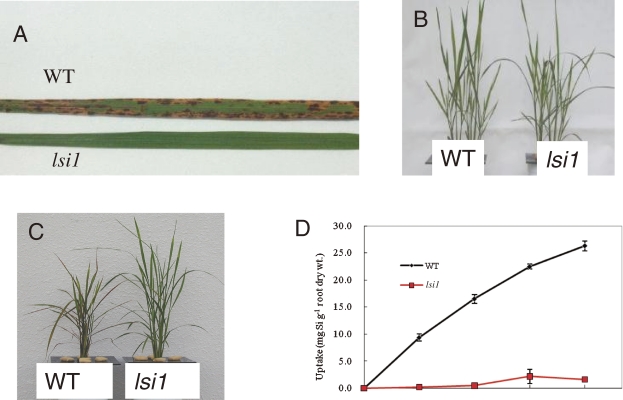
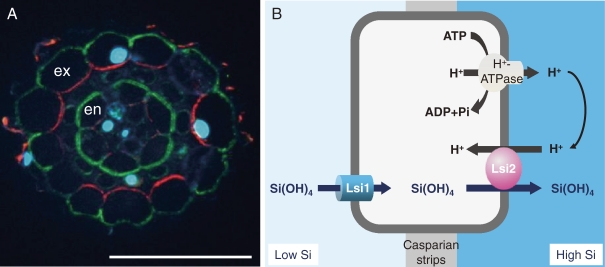
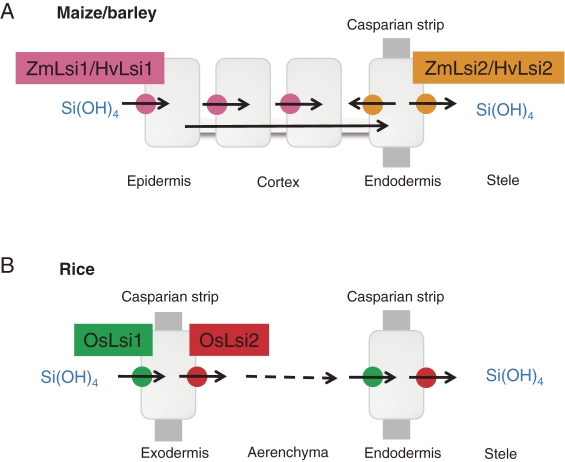
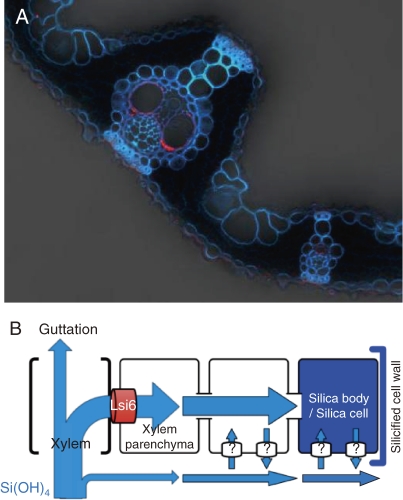
Silicon (Si) is the most abundant minerals in soil and exerts beneficial effects on plant growth by alleviating various stresses. The transport of Si from soil to the panicles is mediated by different transporters. Lsi1, belonging to a NIP group of the aquaporin family, is responsible for the uptake of Si from soil into the root cells in both dicots and monocots although its expression patterns and cellular localization differ with plant species. The subsequent transport of Si out of the root cells towards the stele is medicated by an active efflux transporter, Lsi2. Lsi1 and Lsi2 are polarly localized at the distal and proximal sides, respectively, of both exodermis and endodermis in rice root. Silicon in the xylem sap is presented in the form of monosilicic acid and is unloaded by Lsi6, a homolog of Lsi1 in rice. Lsi6 is also involved in the inter-vascular transfer of Si at the node, which is necessary for preferential Si distribution to the panicles.
硅(Si)是土壤中含量最丰富的矿物质,通过缓解各种胁迫对植物生长发挥有益作用。Si 从土壤向穗的运输是由不同的转运蛋白介导的。Lsi1 属于水通道蛋白家族的 NIP 组,负责将 Si 从土壤吸收到双子叶植物和单子叶植物的根细胞中,尽管其表达模式和细胞定位因植物物种而异。随后,Si 由活性外排转运蛋白 Lsi2 从根细胞向中柱运输。Lsi1 和 Lsi2 在水稻根的外向和内向皮层的远端和近端分别呈极性定位。木质部汁液中的 Si 以单硅酸的形式存在,并由 Lsi6 卸载,Lsi6 是水稻中 Lsi1 的同源物。Lsi6 还参与节点处的 Si 跨脉转移,这对于 Si 优先分配到穗中是必要的。