G. B. Pant Institute of Himalayan Environment and Development, Kosi-Katarmal, Almora-263 643, Uttarakhand, India.
Evid Based Complement Alternat Med. 2011;2011:512787. doi: 10.1093/ecam/neq055. Epub 2011 Mar 17.
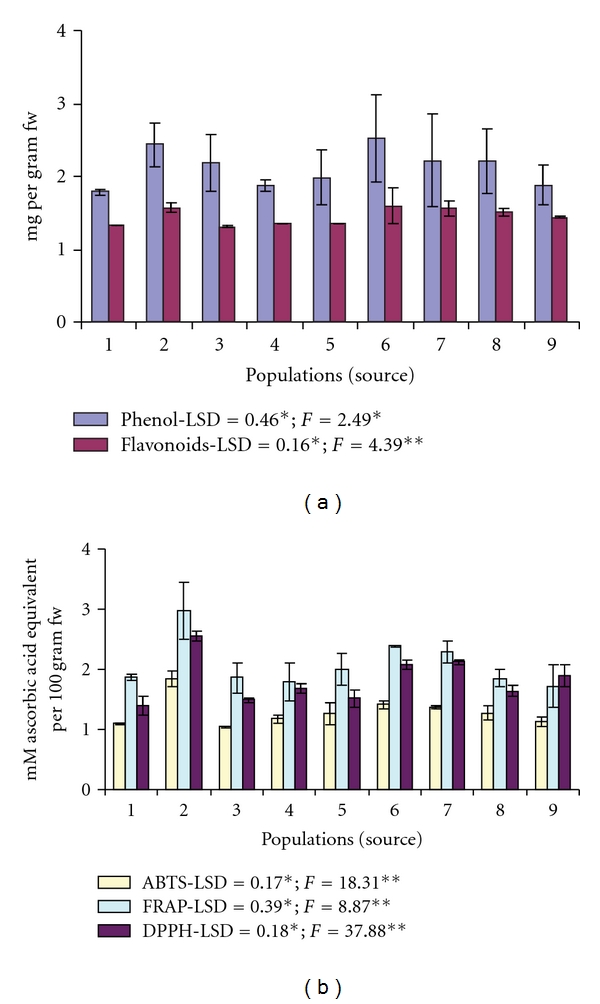
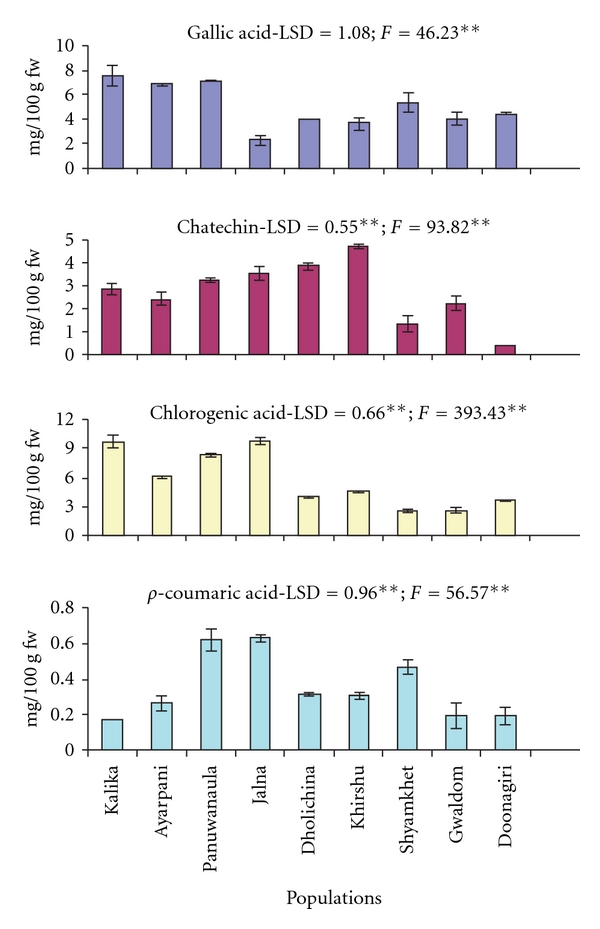
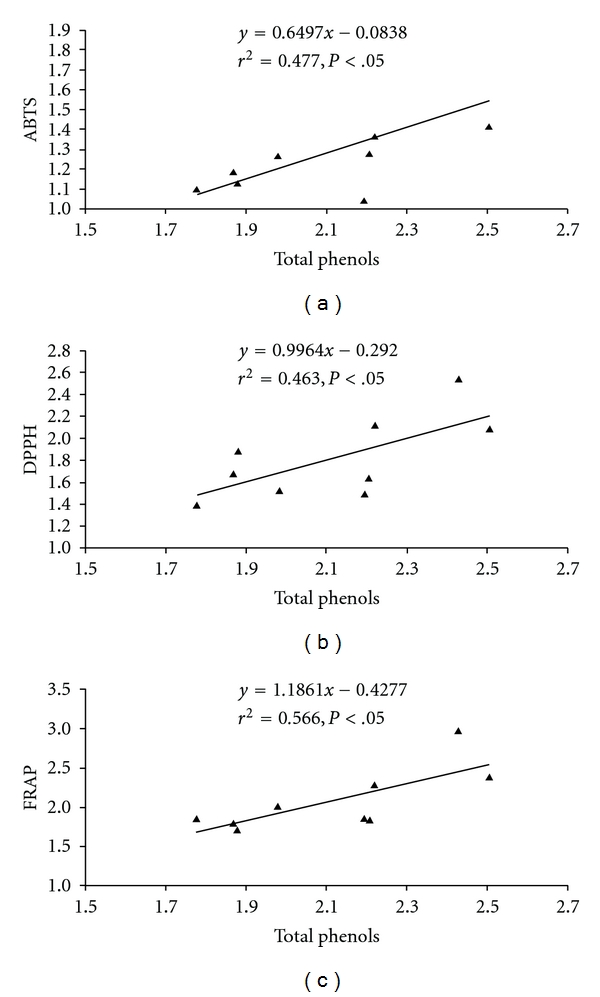
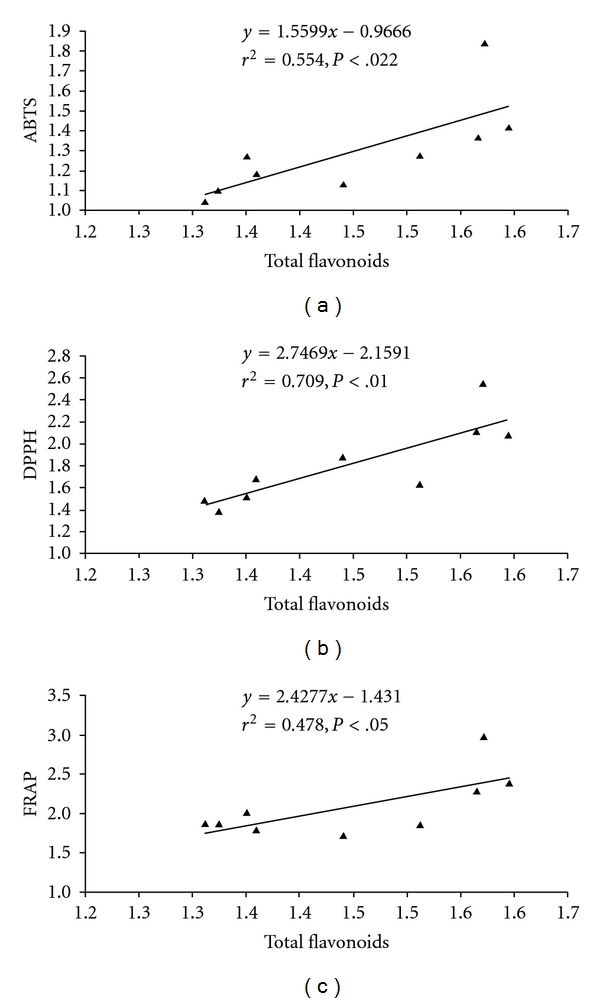
Crude extract of Myrica esculenta fruits, a wild edible species of Indian Himalayan Region, was evaluated for phenolic compounds and antioxidant properties. Results revealed significant variation in total phenolic and flavonoid contents across populations. Among populations, total phenolic content varied between 1.78 and 2.51 mg gallic acid equivalent/g fresh weight (fw) of fruits and total flavonoids ranged between 1.31 and 1.59 mg quercetin equivalent/g fw. Antioxidant activity determined by 2,2'-azinobis(3-ethylbenzothiazoline-6-sulphonic acid) radical scavenging, 1,1-diphenyl-2-picrylhydrazyl radical scavenging and ferric reducing antioxidant power (FRAP) exhibited considerable antioxidant potential and showed significant positive correlation with total phenolic and total flavonoids content. High performance liquid chromatography analysis revealed significant variation (P < .01) in phenolic compounds (i.e., gallic acid, catechin, hydroxybenzioc acid and ρ-coumaric acid) across populations. This study provides evidences to establish that consumption of M. esculenta fruits while providing relished taste would also help in reduction of free radicals. Therefore, this wild edible species deserves promotion in the region through horticulture and forestry interventions.
杨梅果实的粗提取物,一种印度喜马拉雅地区的野生食用物种,被评估了其酚类化合物和抗氧化特性。结果表明,总酚和类黄酮含量在不同种群之间存在显著差异。在种群中,总酚含量在 1.78 到 2.51 mg 没食子酸当量/g 鲜果重之间变化,总类黄酮含量在 1.31 到 1.59 mg 槲皮素当量/g 鲜果重之间变化。通过 2,2'-联氮双(3-乙基苯并噻唑啉-6-磺酸)自由基清除、1,1-二苯基-2-苦基肼自由基清除和铁还原抗氧化能力 (FRAP) 测定的抗氧化活性表现出相当大的抗氧化潜力,并与总酚和总类黄酮含量呈显著正相关。高效液相色谱分析显示,不同种群之间的酚类化合物(即没食子酸、儿茶素、羟基苯甲酸和 ρ-香豆酸)存在显著差异(P < 0.01)。本研究提供的证据表明,食用杨梅果实不仅可以提供美味,还有助于减少自由基。因此,这种野生食用物种值得通过园艺和林业干预在该地区推广。