Konold Timm, Bone Gemma E, Simmons Marion M
Pathology & Host Susceptibility, Neuropathology, Animal Health and Veterinary Laboratories Agency Weybridge, New Haw, Addlestone, KT15 3NB, UK.
BMC Res Notes. 2011 Jul 25;4:259. doi: 10.1186/1756-0500-4-259.
Heart rate variability (HRV) analysis is a method to assess the function of the autonomic nervous system. Brainstem nuclei that influence HRV are affected by vacuolar changes and accumulation of disease-associated prion protein (PrPd) in bovine spongiform encephalopathy (BSE) resulting in clinical signs suggestive of an increased parasympathetic tone. It was hypothesised that BSE in cattle causes changes in the autonomic nervous system; this was tested by comparing HRV indices derived from 1048 electrocardiograms, which were recorded from 51 naturally or experimentally infected cattle with BSE confirmed by postmortem tests, 321 clinical suspect cases or cattle inoculated with potentially infectious tissue without disease confirmation and 78 BSE-free control cattle.
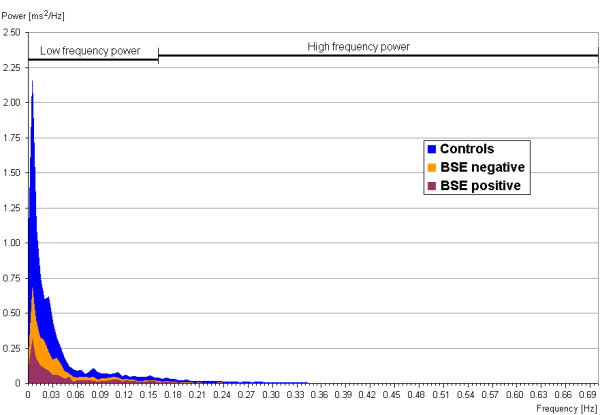
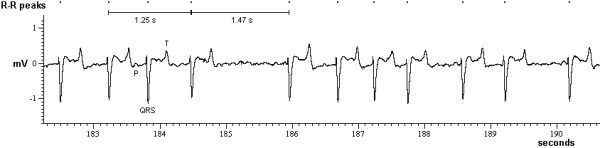
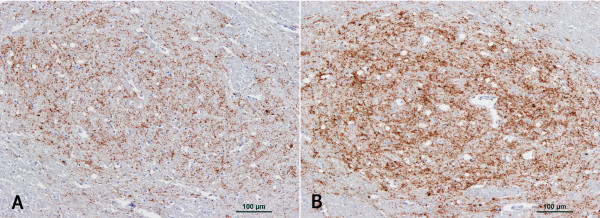
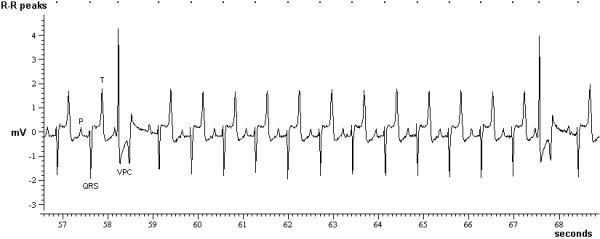
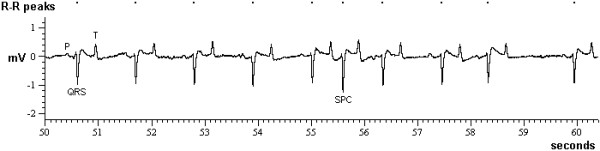
Statistically significant differences were found for low or high frequency power, their normalised values and ratio when the last recording prior to cull or repeated recordings were compared but only between male and female cattle of the three groups and not between groups of the same gender, even though BSE cases of each gender appeared to be more nervous during the recording. The same findings were made for heart rate, deviation from the mean RR interval and vasovagal tonus index when repeated recordings were compared. BSE cases with severe vacuolar changes in the parasympathetic nucleus of the vagus nerve had a significantly lower low:high frequency power ratio but not a lower heart rate than BSE cases with mild vacuolation, whereas severity of vacuolar changes in the solitary tract nucleus or intensity of PrPd accumulation in both nuclei did not appear to have any affect on either index. Abnormalities in the electrocardiogram were detected in 3% of the recordings irrespective of the BSE status; sinus arrhythmia was present in 93% of the remaining recordings.
HRV analysis was not useful to distinguish BSE-positive from BSE-negative cattle grouped by gender, and HRV indices appeared to be mainly influenced by gender. There is agreement with earlier studies that vacuolar changes in the brainstem may be associated with an increased parasympathetic tone in BSE and that abnormalities in an electrocardiogram can be detected in cattle without evidence of heart disease.
心率变异性(HRV)分析是一种评估自主神经系统功能的方法。在牛海绵状脑病(BSE)中,影响HRV的脑干核受到空泡变化和疾病相关朊病毒蛋白(PrPd)积累的影响,导致出现提示副交感神经张力增加的临床症状。据推测,牛的BSE会引起自主神经系统的变化;通过比较从1048份心电图得出的HRV指标对此进行了验证,这些心电图记录自51头经死后检测确诊为自然感染或实验感染BSE的牛、321例临床疑似病例或接种了潜在感染性组织但未确诊疾病的牛,以及78头无BSE的对照牛。
当比较宰杀前的最后一次记录或重复记录时,低频或高频功率、其标准化值及比值存在统计学显著差异,但仅在三组的公牛和母牛之间存在差异,同一性别组之间无差异,尽管每组性别的BSE病例在记录过程中似乎更紧张。比较重复记录时,心率、平均RR间期偏差和迷走血管张力指数也有相同的结果。迷走神经副交感核有空泡严重变化的BSE病例,其低频与高频功率比值显著低于空泡变化较轻的BSE病例,但心率并不更低,而孤束核的空泡变化严重程度或两个核中PrPd的积累强度似乎对这两个指标均无影响。无论BSE状态如何,3%的记录中检测到心电图异常;其余记录中有93%存在窦性心律失常。
HRV分析对于按性别区分BSE阳性和BSE阴性牛并无用处,HRV指标似乎主要受性别影响。与早期研究一致的是,脑干中的空泡变化可能与BSE中副交感神经张力增加有关,并且在无心脏病证据的牛中可检测到心电图异常。