Department of Vaccinology and Applied Microbiology, Helmholtz Centre for Infection Research, Braunschweig, Germany.
PLoS One. 2011;6(7):e18032. doi: 10.1371/journal.pone.0018032. Epub 2011 Jul 18.
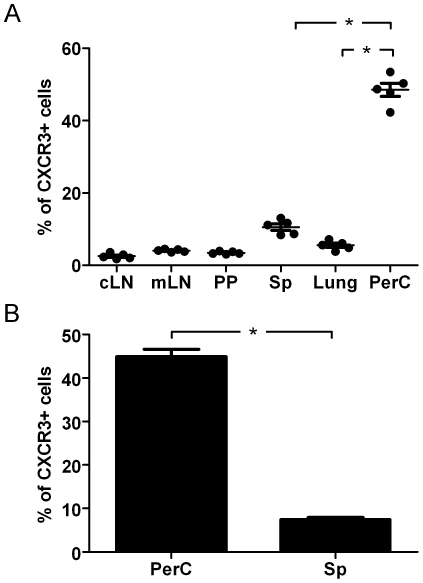
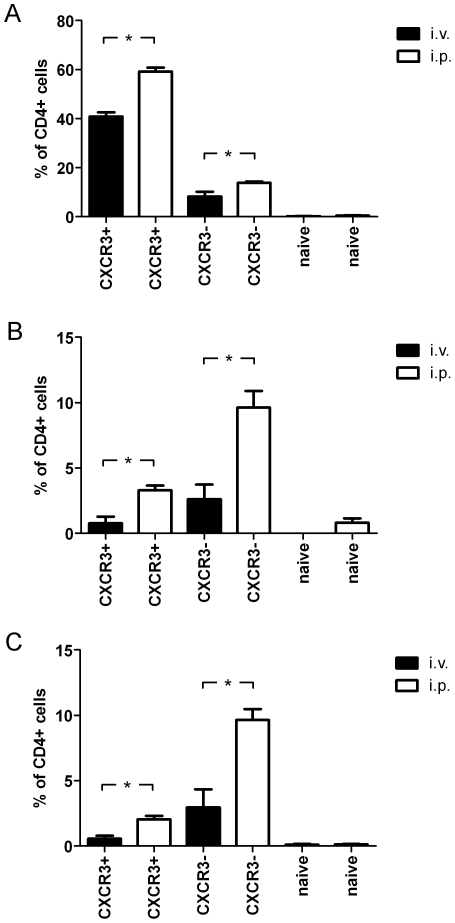
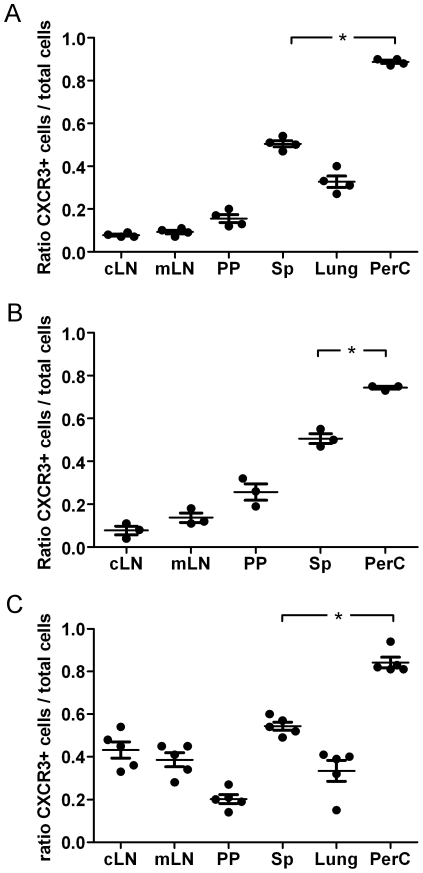
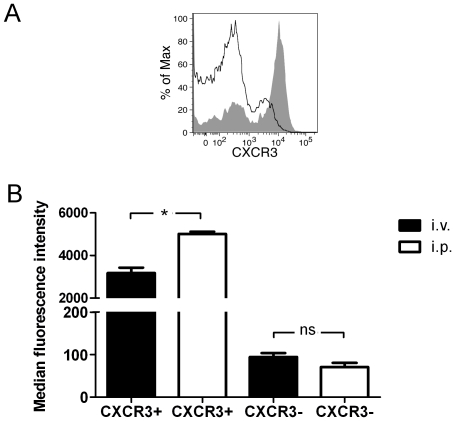
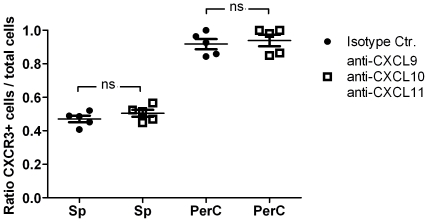
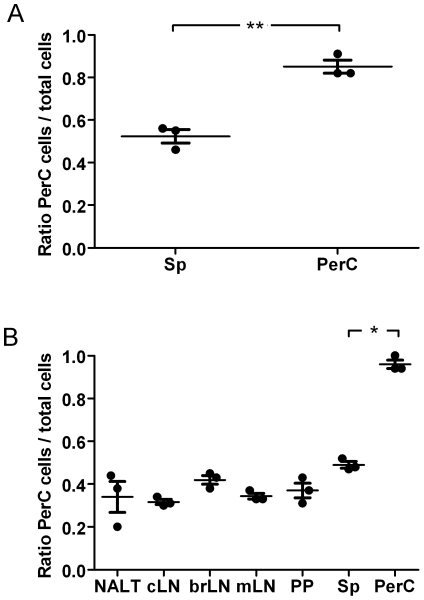
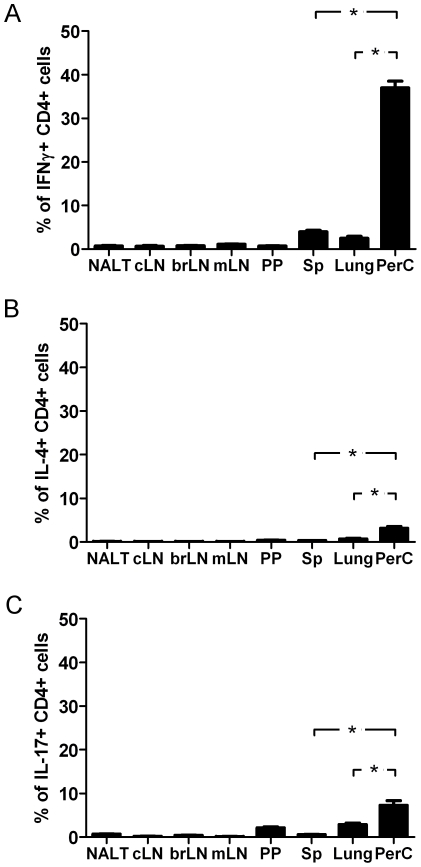
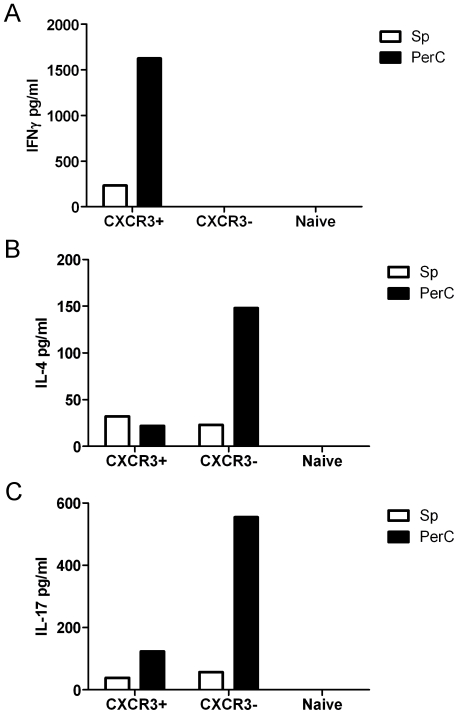
The chemokine receptor CXCR3, which was shown to take part in many inflammatory processes, is considered as a Th1 specific marker. Here, we show in a mouse model that CXCR3 expressing CD4(+) cells preferentially migrate to the peritoneal cavity under steady-state conditions. The peritoneal cavity milieu leads to an up-regulated expression of CXCR3. However, blocking of known ligands of this chemokine receptor did not alter the preferential migration. The peritoneal cavity environment also results in an increased percentage of memory cells producing cytokines. Up-regulation of IFNγ production occurs mostly in CXCR3(+) cells considered as Th1, whereas the up-regulation of IL-4 affects mostly in CXCR3(-) cells which are considered as Th2. We conclude that the peritoneal cavity does not change the Th-lineage of the cells, but that domination of this anatomic niche by Th1 cells rather results from preferential migration to this compartment.
趋化因子受体 CXCR3 参与许多炎症过程,被认为是 Th1 特异性标志物。在这里,我们在小鼠模型中表明,在稳态条件下,表达 CXCR3 的 CD4(+)细胞优先迁移到腹腔。腹腔环境导致 CXCR3 的表达上调。然而,阻断该趋化因子受体的已知配体并没有改变优先迁移。腹腔环境还导致产生细胞因子的记忆细胞百分比增加。IFNγ产生的上调主要发生在被认为是 Th1 的 CXCR3(+)细胞中,而 IL-4 的上调主要影响被认为是 Th2 的 CXCR3(-)细胞。我们得出结论,腹腔不会改变细胞的 Th 谱系,但 Th1 细胞对这个解剖部位的优势主要是由于向这个隔室的优先迁移所致。