Research Unit Molecular Biology, Leibniz Institute for Farm Animal Biology, Dummerstorf, Germany.
PLoS One. 2011;6(7):e21691. doi: 10.1371/journal.pone.0021691. Epub 2011 Jul 18.
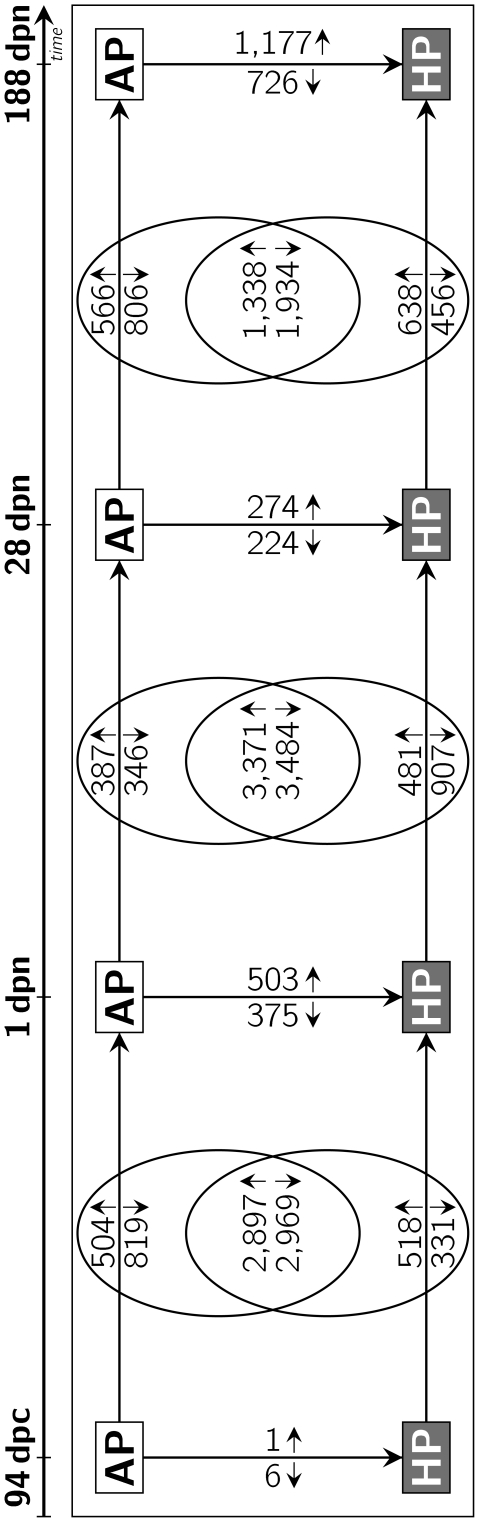
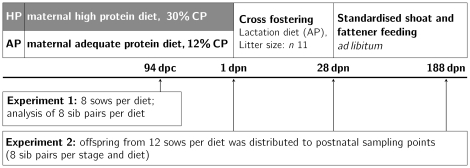
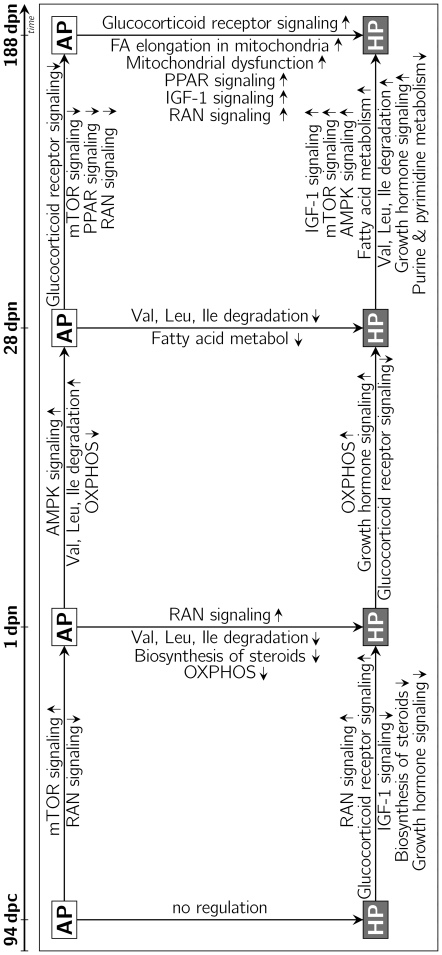
In rodent models and in humans the impact of gestational diets on the offspring's phenotype was shown experimentally and epidemiologically. The underlying programming of fetal development was shown to be associated with an increased risk of degenerative diseases in adulthood, including the metabolic syndrome. There are clues that diet-dependent modifications of the metabolism during fetal life can persist until adulthood. This leads to the hypothesis that the offspring's transcriptomes show short-term and long-term changes depending on the maternal diet. To this end pregnant German landrace gilts were fed either a high protein diet (HP, 30% CP) or an adequate protein diet (AP, 12% CP) throughout pregnancy. Hepatic transcriptome profiles of the offspring were analyzed at prenatal (94 dpc) and postnatal stages (1, 28, 188 dpn). Depending on the gestational dietary exposure, mRNA expression levels of genes related to energy metabolism, N-metabolism, growth factor signaling pathways, lipid metabolism, nucleic acid metabolism and stress/immune response were affected either in a short-term or in a long-term manner. Gene expression profiles at fetal stage 94 dpc were almost unchanged between the diets. The gestational HP diet affected the hepatic expression profiles at prenatal and postnatal stages. The effects encompassed a modulation of the genome in terms of an altered responsiveness of energy and nutrient sensing pathways. Differential expression of genes related to energy production and nutrient utilization contribute to the maintenance of development and growth performance within physiological norms, however the modulation of these pathways may be accompanied by a predisposition for metabolic disturbances up to adult stages.
在啮齿动物模型和人类中,实验和流行病学研究表明,妊娠期饮食对后代表型的影响。胎儿发育的编程被证明与成年后患退行性疾病的风险增加有关,包括代谢综合征。有线索表明,胎儿期代谢的饮食依赖性改变可以持续到成年期。这就提出了一个假设,即后代的转录组根据母体饮食表现出短期和长期的变化。为此,实验中用高蛋白饮食(HP,30% CP)或适当蛋白饮食(AP,12% CP)喂养怀孕的德国兰德瑞斯母猪。分析了后代的肝转录组谱在产前(94 dpc)和产后阶段(1、28、188 dpn)。根据妊娠期饮食暴露情况,与能量代谢、N 代谢、生长因子信号通路、脂质代谢、核酸代谢和应激/免疫反应相关的基因的 mRNA 表达水平在短期或长期受到影响。两种饮食之间,胎儿阶段 94 dpc 的基因表达谱几乎没有变化。妊娠期 HP 饮食影响产前和产后阶段的肝表达谱。这些影响包括对基因组的调节,表现为能量和营养感应途径的反应性改变。与能量产生和营养利用相关的基因的差异表达有助于在生理范围内维持发育和生长性能,但是这些途径的调节可能伴随着代谢紊乱的倾向,直至成年阶段。