Biological Mimetics, Inc., Frederick, Maryland, United States of America.
PLoS One. 2011;6(7):e20130. doi: 10.1371/journal.pone.0020130. Epub 2011 Jul 22.
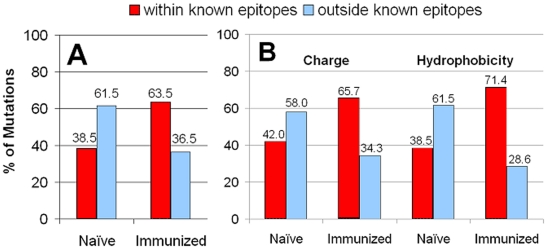
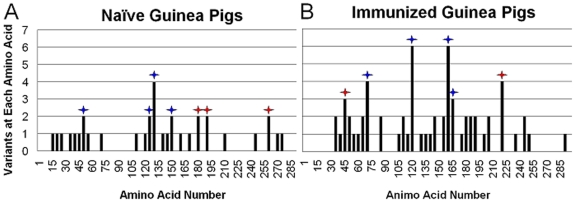
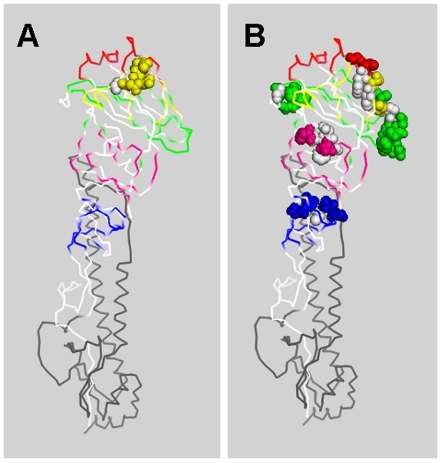
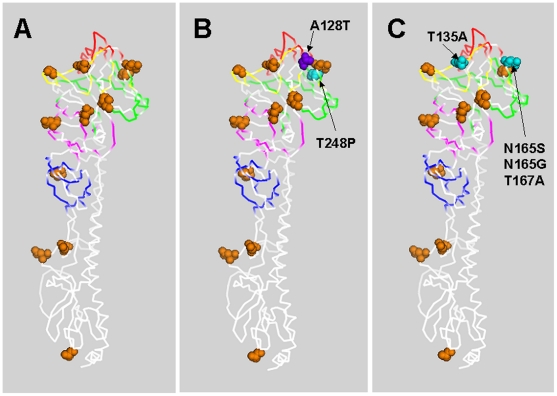
Studies of influenza virus evolution under controlled experimental conditions can provide a better understanding of the consequences of evolutionary processes with and without immunological pressure. Characterization of evolved strains assists in the development of predictive algorithms for both the selection of subtypes represented in the seasonal influenza vaccine and the design of novel immune refocused vaccines. To obtain data on the evolution of influenza in a controlled setting, naïve and immunized Guinea pigs were infected with influenza A/Wyoming/2003 (H3N2). Virus progeny from nasal wash samples were assessed for variation in the dominant and other epitopes by sequencing the hemagglutinin (HA) gene to quantify evolutionary changes. Viral RNA from the nasal washes from infection of naïve and immune animals contained 6% and 24.5% HA variant sequences, respectively. Analysis of mutations relative to antigenic epitopes indicated that adaptive immunity played a key role in virus evolution. HA mutations in immunized animals were associated with loss of glycosylation and changes in charge and hydrophobicity in and near residues within known epitopes. Four regions of HA-1 (75-85, 125-135, 165-170, 225-230) contained residues of highest variability. These sites are adjacent to or within known epitopes and appear to play an important role in antigenic variation. Recognition of the role of these sites during evolution will lead to a better understanding of the nature of evolution which help in the prediction of future strains for selection of seasonal vaccines and the design of novel vaccines intended to stimulated broadened cross-reactive protection to conserved sites outside of dominant epitopes.
在受控实验条件下研究流感病毒的进化可以更好地了解在有免疫压力和无免疫压力的情况下进化过程的后果。进化株的特征有助于开发预测算法,用于选择季节性流感疫苗中代表的亚型和设计新型免疫重定向疫苗。为了在受控环境中获得流感进化的数据,用流感 A/Wyoming/2003(H3N2)对未感染和免疫的豚鼠进行感染。通过对血凝素(HA)基因进行测序来评估鼻洗液样本中病毒后代在主要表位和其他表位的变异情况,以量化进化变化。来自感染未感染和免疫动物的鼻洗液的病毒 RNA 分别含有 6%和 24.5%的 HA 变异序列。与抗原表位相关的突变分析表明,适应性免疫在病毒进化中起关键作用。免疫动物中的 HA 突变与糖基化丧失以及已知表位内和附近残基的电荷和疏水性变化有关。HA-1 的四个区域(75-85、125-135、165-170、225-230)包含最高变异性的残基。这些位点紧邻或位于已知表位内,似乎在抗原变异中起重要作用。在进化过程中认识到这些位点的作用将有助于更好地了解进化的性质,从而有助于预测未来用于选择季节性疫苗的菌株,并设计旨在刺激对保守表位之外的主要表位进行广泛交叉反应保护的新型疫苗。