Li Wei, Lebrun Drake G, Li Min
College of Medicine, Shandong University of Traditional Chinese Medicine, Jinan, Shandong 250355, P. R. China.
Chin J Cancer. 2011 Aug;30(8):540-50. doi: 10.5732/cjc.011.10197.
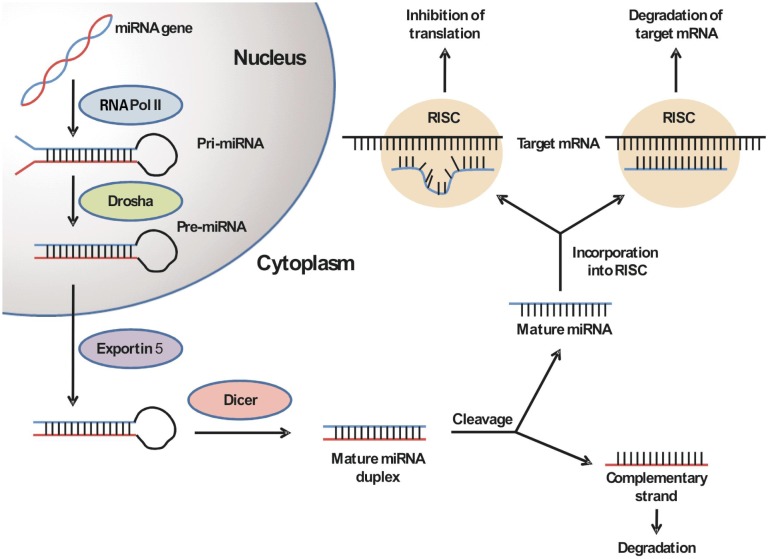
Pancreatic adenocarcinoma and hepatocellular carcinoma are devastating human malignancies that are characterized by poor prognosis, late onset, and a lack of known biomarkers. New diagnostic and therapeutic molecular targets are desperately needed to develop novel and effective treatment strategies. MicroRNAs (miRNAs) are an emerging class of molecules with roles in various cellular processes, including growth, survival, and apoptosis. Most importantly, aberrant expression of miRNAs has been implicated in cancer pathogenesis. miRNA expression profiles of pancreatic adenocarcinoma and hepatocellular carcinoma indicate selective overexpression of oncogenic miRNAs and down-regulation of tumor suppressive miRNAs in these cancers. This review summarizes results from key studies conducted to characterize the miRNA expression profiles of pancreatic adenocarcinoma and hepatocellular carcinoma and describes the potential mechanisms by which some oncogenic or tumor suppressive miRNAs act. Furthermore, this review outlines novel therapeutic strategies for targeting miRNAs.
胰腺腺癌和肝细胞癌是极具破坏性的人类恶性肿瘤,其特点是预后差、发病晚且缺乏已知的生物标志物。迫切需要新的诊断和治疗分子靶点来开发新颖有效的治疗策略。微小RNA(miRNA)是一类新兴分子,在包括生长、存活和凋亡在内的各种细胞过程中发挥作用。最重要的是,miRNA的异常表达与癌症发病机制有关。胰腺腺癌和肝细胞癌的miRNA表达谱表明,这些癌症中致癌miRNA选择性过表达,而肿瘤抑制性miRNA下调。本综述总结了为表征胰腺腺癌和肝细胞癌的miRNA表达谱而进行的关键研究结果,并描述了一些致癌或肿瘤抑制性miRNA发挥作用的潜在机制。此外,本综述概述了针对miRNA的新型治疗策略。