Key Laboratory of Tea Science of Ministry of Education and Hunan Provincial Key Laboratory of Crop Germplasm Innovation and Utilization, Hunan Agricultural University, Changsha, Hunan 410128, People's Republic of China.
Proteome Sci. 2011 Aug 2;9:44. doi: 10.1186/1477-5956-9-44.
White leaf No.1 is a typical albino tea cultivar grown in China and it has received increased attention in recent years due to the fact that white leaves containing a high level of amino acids, which are very important components affecting the quality of tea drink. According to the color of its leaves, the development of this tea cultivar is divided into three stages: the pre-albinistic stage, the albinistic stage and the regreening stage. To understand the intricate mechanism of periodic albinism, a comparative proteomic approach based on two-dimensional electrophoresis (2-DE) and mass spectrometry was adopted first time to identify proteins that changed in abundance during the three developmental periods.
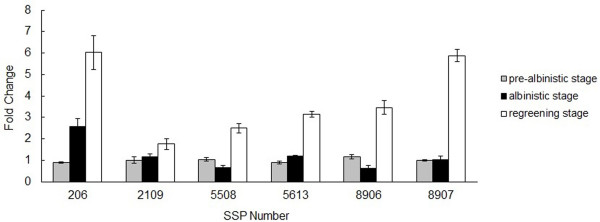
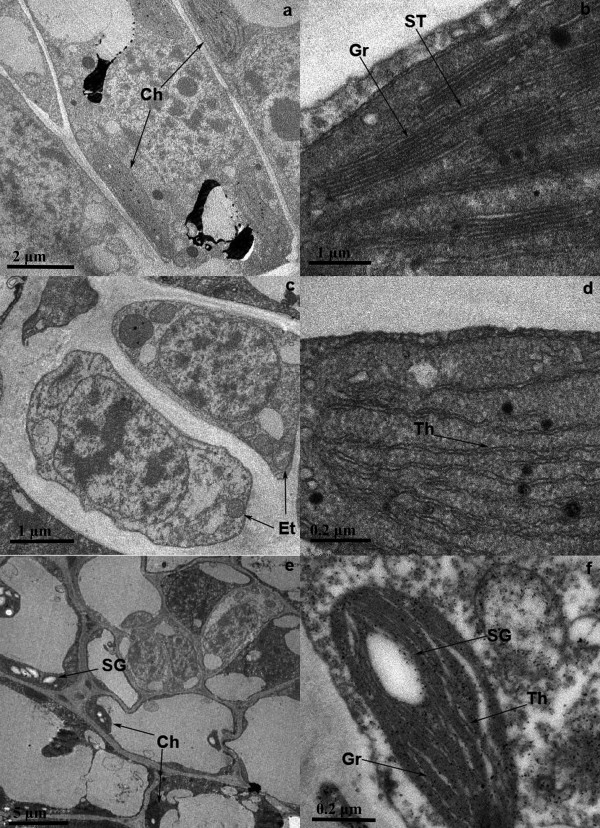
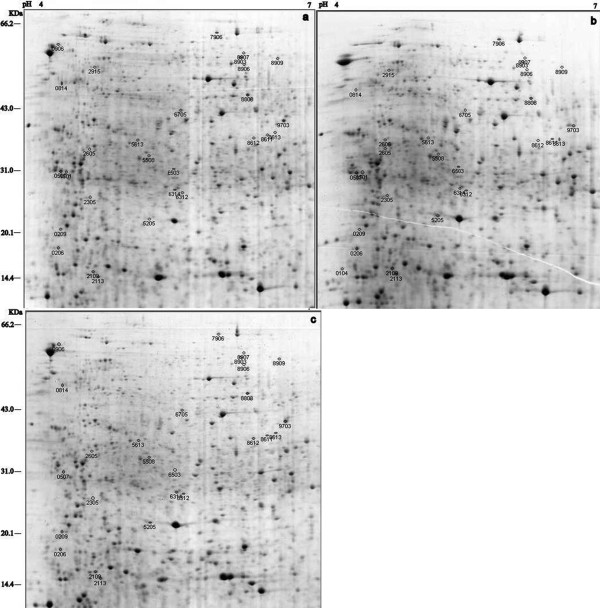
The 2-DE results showed that the expression level of 61 protein spots varied markedly during the three developmental stages. To analyze the functions of the significantly differentially expressed protein spots, 30 spots were excised from gels and analyzed by matrix-assisted laser desorption ionization-time of flight-tandem mass spectrometry. Of these, 26 spots were successfully identified. All identified protein spots were involved in metabolism of carbon, nitrogen and sulfur, photosynthesis, protein processing, stress defense and RNA processing, indicating these physiological processes may play crucial roles in the periodic albinism. Quantitative real-time RT-PCR analysis was used to assess the transcriptional level of differentially expressed proteins. In addition, the ultrastructural studies revealed that the etioplast-chloroplast transition in the leaf cell of White leaf No. 1 was inhibited and the grana in the chloroplast was destroyed at the albinistic stage.
In this work, the proteomic analysis revealed that some proteins may have important roles in the molecular events involved in periodic albinism of White leaf No. 1 and identificated many attractive candidates for further investigation. In addition, the ultrastructural studies revealed that the change in leaf color of White leaf No. 1 might be a consequence of suppression of the etioplast-chloroplast transition and damage to grana in the chloroplast induced by temperature. These results provide much useful information to improve our understanding of the mechanism of albinism in the albino tea cultivar.
白叶 1 号是中国特有的白化茶树品种,近年来受到越来越多的关注,因为其叶片含有高水平的氨基酸,这些氨基酸是影响茶叶品质的重要成分。根据叶片颜色的变化,该茶树品种的发育过程可分为白化前、白化和返绿三个阶段。为了了解周期性白化的复杂机制,首次采用基于二维电泳(2-DE)和质谱的比较蛋白质组学方法,鉴定了在三个发育阶段中丰度变化的蛋白质。
2-DE 结果表明,在三个发育阶段,61 个蛋白点的表达水平变化显著。为了分析差异表达蛋白点的功能,从凝胶中切取 30 个蛋白点,通过基质辅助激光解吸电离飞行时间串联质谱分析。其中 26 个蛋白点成功鉴定。所有鉴定的蛋白点均参与碳、氮和硫代谢、光合作用、蛋白质加工、应激防御和 RNA 加工,表明这些生理过程可能在周期性白化中发挥关键作用。实时定量 RT-PCR 分析用于评估差异表达蛋白的转录水平。此外,超微结构研究表明,在白化阶段,白叶 1 号叶片细胞中的前质体-叶绿体转变被抑制,叶绿体中的基粒被破坏。
本研究通过蛋白质组学分析揭示了一些蛋白质可能在白叶 1 号周期性白化的分子事件中具有重要作用,并鉴定了许多有吸引力的候选蛋白,可供进一步研究。此外,超微结构研究表明,白叶 1 号叶片颜色的变化可能是由于温度诱导的前质体-叶绿体转变抑制和叶绿体基粒破坏所致。这些结果为深入了解白化茶树白化机制提供了有价值的信息。