State Key Laboratory of Hybrid Rice, College of Life Sciences, Wuhan University, Wuhan, People's Republic of China.
PLoS One. 2011;6(7):e22132. doi: 10.1371/journal.pone.0022132. Epub 2011 Jul 21.
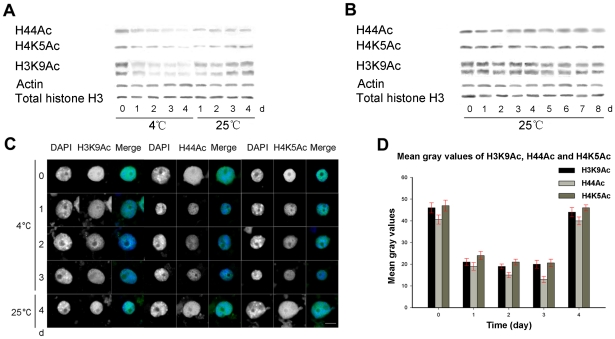
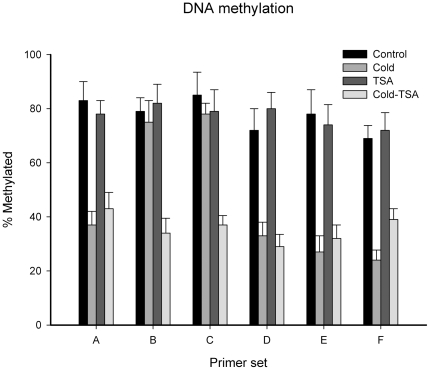
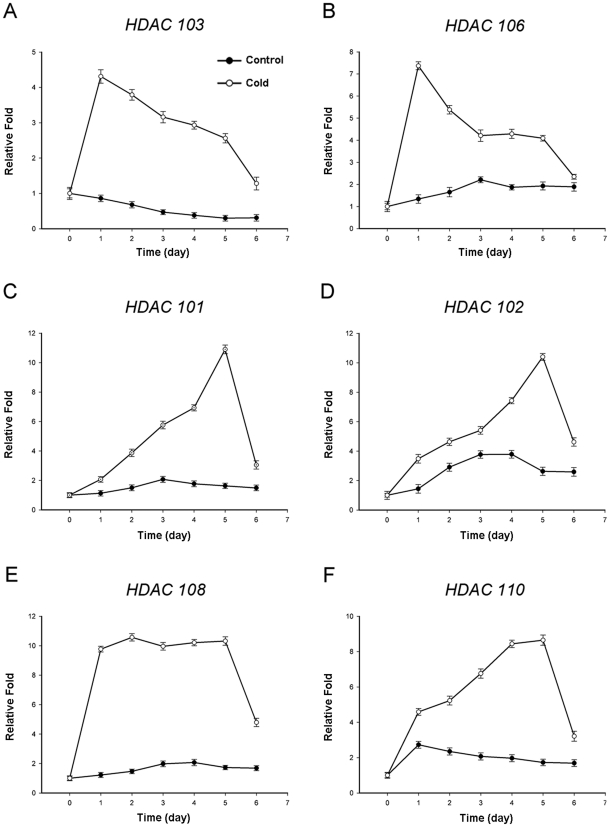
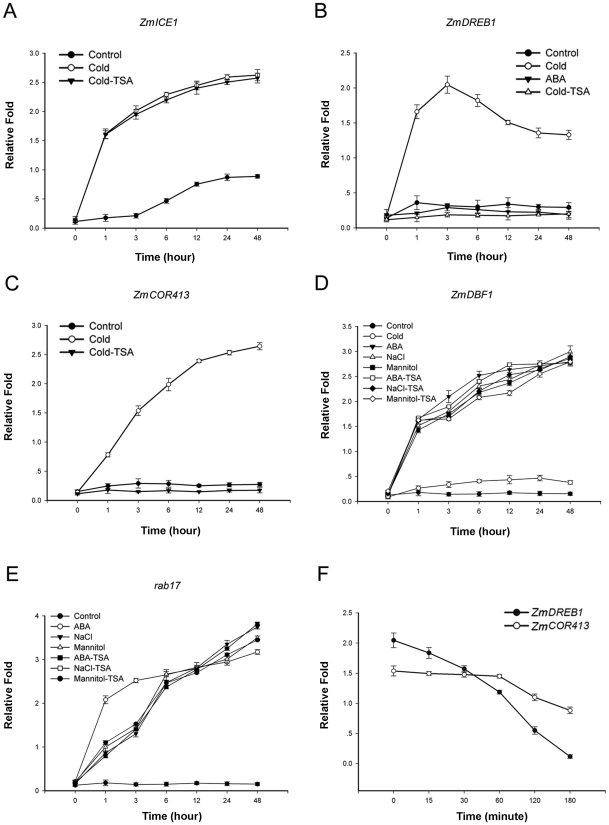
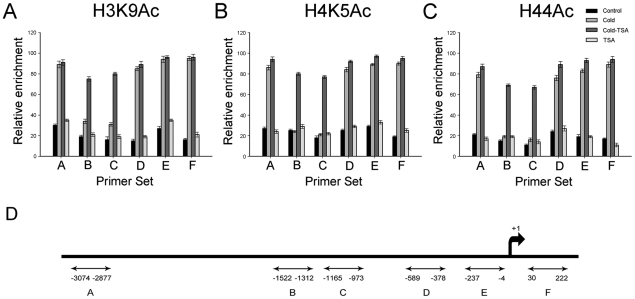
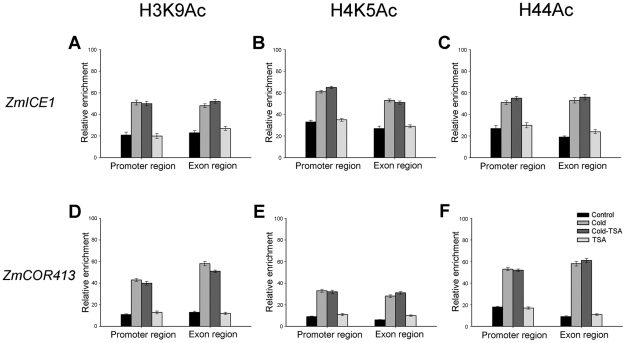
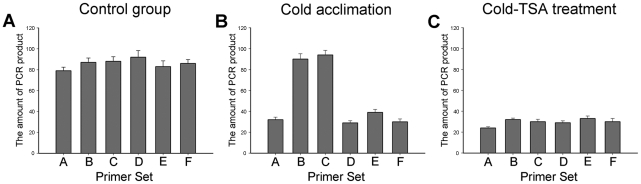
Post-translational modifications of histone proteins play a crucial role in responding to environmental stresses. Histone deacetylases (HDACs) catalyze the removal of an acetyl group from histones and are generally believed to be a transcriptional repressor. In this paper, we report that cold treatment highly induces the up-regulation of HDACs, leading to global deacetylation of histones H3 and H4. Treatment of maize with the HDAC inhibitor trichostatin A (TSA) under cold stress conditions strongly inhibits induction of the maize cold-responsive genes ZmDREB1 and ZmCOR413. However, up-regulation of the ZmICE1 gene in response to cold stress is less affected. The expression of drought and salt induced genes, ZmDBF1 and rab17, is almost unaffected by TSA treatment. Thus, these observations show that HDACs may selectively activate transcription. The time course of TSA effects on the expression of ZmDREB1 and ZmCOR413 genes indicates that HDACs appear to directly activate the ZmDREB1 gene, which in turn modulates ZmCOR413 expression. After cold treatment, histone hyperacetylation and DNA demethylation occurs in the ICE1 binding region, accompanied by an increase in accessibility to micrococcal nuclease (MNase). The two regions adjacent to the ICE1 binding site remain hypoacetylated and methylated. However, during cold acclimation, TSA treatment increases the acetylation status and accessibility of MNase and decreases DNA methylation at these two regions. However, TSA treatment does not affect histone hyperacetylation and DNA methylation levels at the ICE1 binding regions of the ZmDREB1 gene. Altogether, our findings indicate that HDACs positively regulate the expression of the cold-induced ZmDREB1 gene through histone modification and chromatin conformational changes and that this activation is both gene and site selective.
组蛋白蛋白的翻译后修饰在响应环境胁迫中起着至关重要的作用。组蛋白去乙酰化酶(HDACs)催化从组蛋白上去除乙酰基,通常被认为是转录抑制剂。在本文中,我们报告冷处理高度诱导 HDACs 的上调,导致组蛋白 H3 和 H4 的整体去乙酰化。在冷胁迫条件下,用组蛋白去乙酰化酶抑制剂曲古抑菌素 A(TSA)处理玉米强烈抑制玉米冷响应基因 ZmDREB1 和 ZmCOR413 的诱导。然而,冷胁迫下 ZmICE1 基因的上调受 TSA 处理的影响较小。干旱和盐诱导基因 ZmDBF1 和 rab17 的表达几乎不受 TSA 处理的影响。因此,这些观察结果表明 HDACs 可能选择性地激活转录。TSA 对 ZmDREB1 和 ZmCOR413 基因表达的时间过程表明,HDACs 似乎直接激活 ZmDREB1 基因,进而调节 ZmCOR413 的表达。冷处理后,ICE1 结合区发生组蛋白乙酰化和 DNA 去甲基化,伴随着微球菌核酸酶(MNase)的可及性增加。ICE1 结合位点的两个相邻区域仍保持低乙酰化和甲基化状态。然而,在冷驯化过程中,TSA 处理增加了 MNase 的乙酰化状态和可及性,并降低了这两个区域的 DNA 甲基化。然而,TSA 处理不影响 ZmDREB1 基因 ICE1 结合区的组蛋白乙酰化和 DNA 甲基化水平。总之,我们的研究结果表明,HDACs 通过组蛋白修饰和染色质构象变化正向调节冷诱导的 ZmDREB1 基因的表达,这种激活是基因和位点选择性的。