The Molecular Biology Program, New Mexico State University, Las Cruces, New Mexico, United States of America.
PLoS One. 2011;6(7):e22573. doi: 10.1371/journal.pone.0022573. Epub 2011 Jul 27.
The fat body is the main organ of intermediary metabolism in insects and the principal source of hemolymph proteins. As part of our ongoing efforts to understand mosquito fat body physiology and to identify novel targets for insect control, we have conducted a transcriptome analysis of the fat body of Aedes aegypti before and in response to blood feeding.
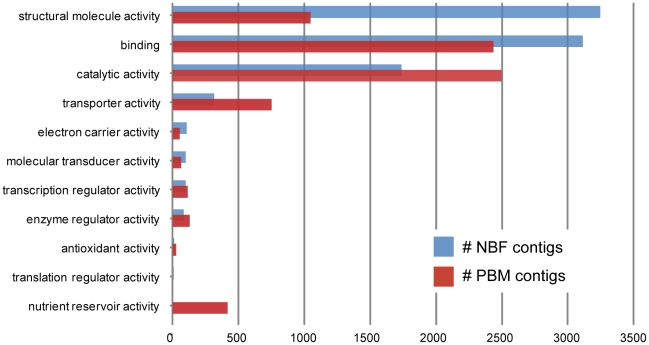
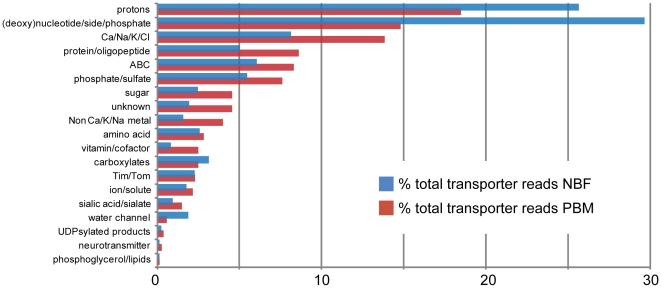
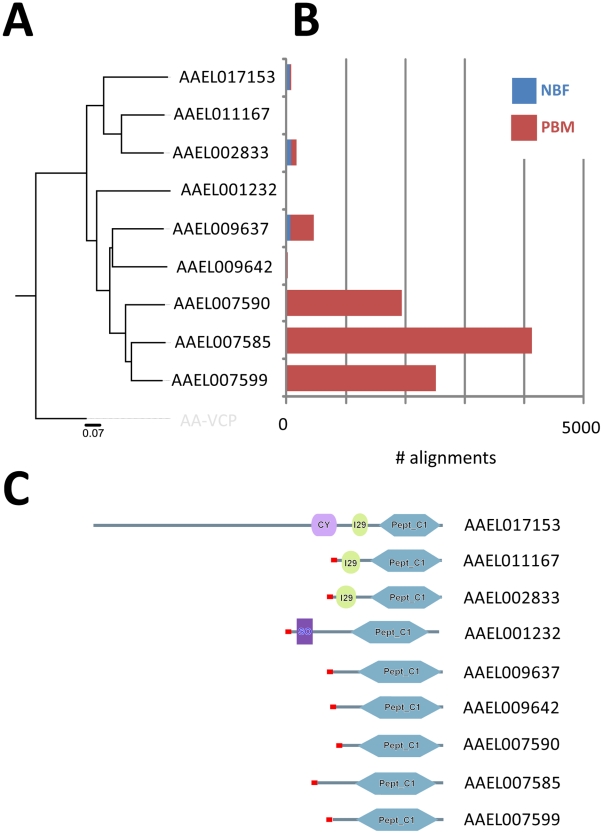
We created two fat body non-normalized EST libraries, one from mosquito fat bodies non-blood fed (NBF) and another from mosquitoes 24 hrs post-blood meal (PBM). 454 pyrosequencing of the non-normalized libraries resulted in 204,578 useable reads from the NBF sample and 323,474 useable reads from the PBM sample. Alignment of reads to the existing reference Ae. aegypti transcript libraries for analysis of differential expression between NBF and PBM samples revealed 116,912 and 115,051 matches, respectively. De novo assembly of the reads from the NBF sample resulted in 15,456 contigs, and assembly of the reads from the PBM sample resulted in 15,010 contigs. Collectively, 123 novel transcripts were identified within these contigs. Prominently expressed transcripts in the NBF fat body library were represented by transcripts encoding ribosomal proteins. Thirty-five point four percent of all reads in the PBM library were represented by transcripts that encode yolk proteins. The most highly expressed were transcripts encoding members of the cathepsin b, vitellogenin, vitellogenic carboxypeptidase, and vitelline membrane protein families.
The two fat body transcriptomes were considerably different from each other in terms of transcript expression in terms of abundances of transcripts and genes expressed. They reflect the physiological shift of the pre-feeding fat body from a resting state to vitellogenic gene expression after feeding.
脂肪体是昆虫中间代谢的主要器官,也是血淋巴蛋白的主要来源。作为我们正在进行的了解蚊子脂肪体生理学并确定昆虫控制新目标的努力的一部分,我们对未吸血和吸血后 24 小时的埃及伊蚊脂肪体进行了转录组分析。
我们构建了两个脂肪体非标准化 EST 文库,一个来自未吸血的蚊子脂肪体(NBF),另一个来自吸血后 24 小时的蚊子脂肪体(PBM)。对非标准化文库进行 454 焦磷酸测序,从 NBF 样品中获得了 204578 个可用读段,从 PBM 样品中获得了 323474 个可用读段。将读段与现有的埃及伊蚊参考转录文库进行比对,以分析 NBF 和 PBM 样品之间的差异表达,分别发现了 116912 和 115051 个匹配。对 NBF 样品读段进行从头组装产生了 15456 个重叠群,对 PBM 样品读段进行组装产生了 15010 个重叠群。在这些重叠群中,共鉴定出 123 个新转录本。NBF 脂肪体文库中表达丰度较高的转录本由核糖体蛋白编码。PBM 文库中 35.4%的所有读段由编码卵黄蛋白的转录本组成。表达量最高的是编码组织蛋白酶 b、卵黄原蛋白、卵黄生成羧肽酶和卵黄膜蛋白家族成员的转录本。
从转录本丰度和表达基因的角度来看,这两个脂肪体转录组在转录表达方面有很大的不同。它们反映了未进食脂肪体从静止状态到进食后卵黄生成基因表达的生理转变。