Department of Pathology, Emory University, Atlanta, GA, USA.
Mod Pathol. 2011 Dec;24(12):1612-9. doi: 10.1038/modpathol.2011.113. Epub 2011 Aug 5.
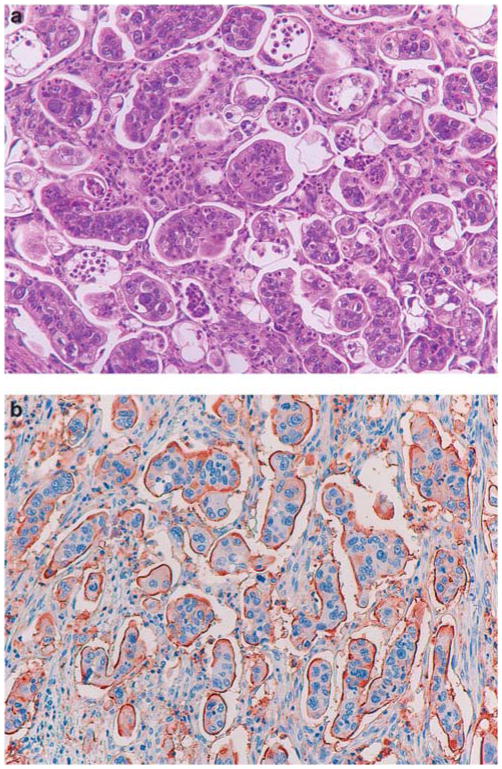
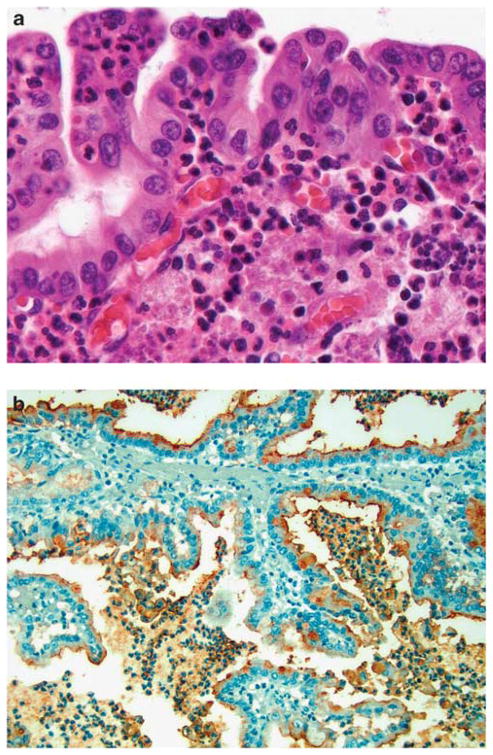
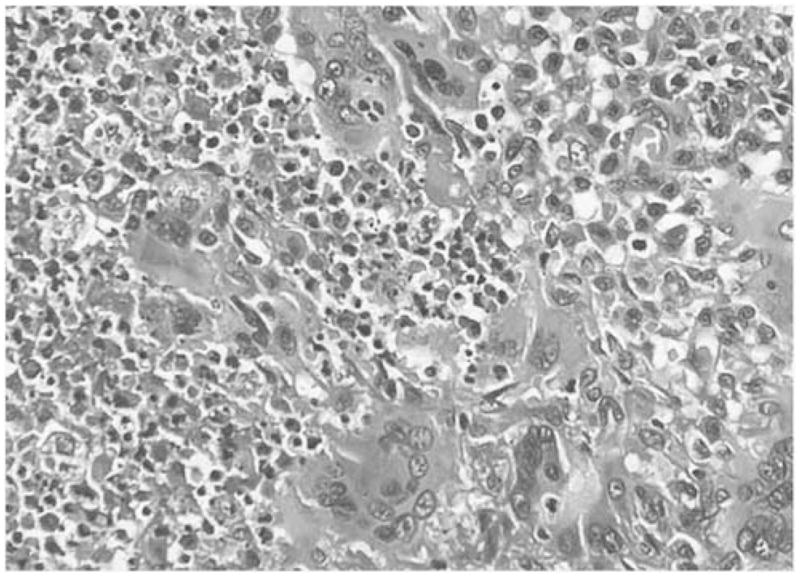
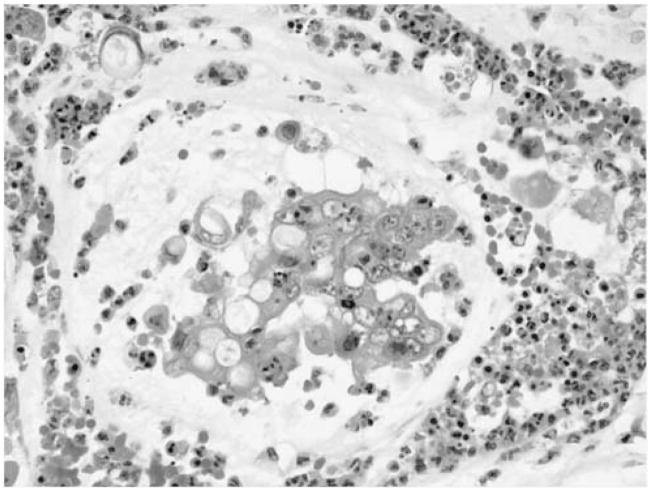
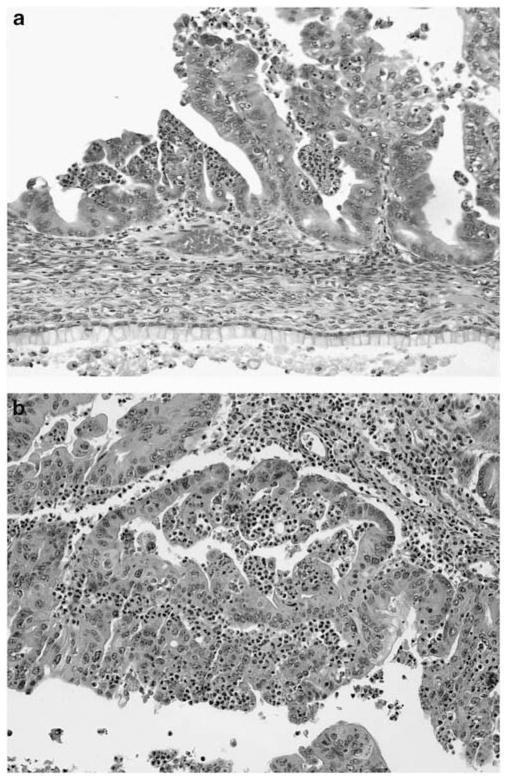
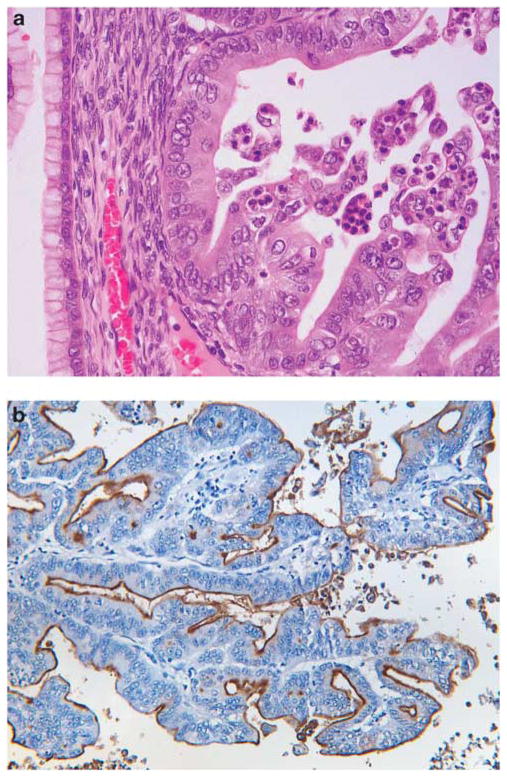
The interaction between tumor cells and inflammatory cells has an important role in cancer initiation and progression; however, this interaction has not been systematically investigated in pancreatic neoplasia. In this study, the presence of tumor-infiltrating neutrophils within and/or adjacent to neoplastic cells was investigated in pancreatic neoplasms. Areas with >10 tumor-infiltrating neutrophils/100 epithelial cells were arbitrarily classified as positive. Those with 11-15 tumor-infiltrating neutrophils were considered 'borderline' while those with >15 tumor-infiltrating neutrophils were considered 'significant'. Among 363 invasive ductal carcinomas, 15 showed significant tumor-infiltrating neutrophils (8 were micropapillary carcinomas and 7 were undifferentiated carcinomas). Of 19 mucinous cystic neoplasms with a carcinomatous high-grade papillary component, 11 showed significant tumor-infiltrating neutrophils (mean, 25; range, 14-63 tumor-infiltrating neutrophils). Among intraductal papillary mucinous neoplasms, significant tumor-infiltrating neutrophils were identified in 4/16 pancreatobiliary type, but were uncommon in other types (1/11 oncocytic and 1/23 intestinal types had borderline tumor-infiltrating neutrophils, and 0/10 gastric type had tumor-infiltrating neutrophils). Non-carcinomatous (low-grade and non-papillary) components of these neoplasms did not have tumor-infiltrating neutrophils. Tumor-infiltrating neutrophils were not striking in neuroendocrine tumors (40), serous cystadenomas (18), acinar cell carcinomas (9) or solid-pseudopapillary neoplasms (8). In conclusion, significant tumor-infiltrating neutrophils are uncommon in pancreatic ductal adenocarcinoma, and when they occur it is typically in the micropapillary and undifferentiated types with a known poor prognosis. Among pre-invasive neoplasia, tumor-infiltrating neutrophils show a predilection for papillary in-situ carcinomas of mucinous cystic neoplasms, or less commonly, pancreatobiliary-type intraductal papillary mucinous neoplasms (both of which express cell surface-associated mucin 1 (MUC1)). MUC1 expression by these tumors may have biologic implications, considering its recently established relationship with inflammatory cells in carcinogenesis, and the differential expression of mucins in pancreatic neoplasia. Larger studies are needed to investigate the association between tumor-infiltrating neutrophils and pancreatic neoplasms and their role in their clinical behavior.
肿瘤细胞与炎症细胞的相互作用在癌症的发生和发展中起着重要作用;然而,这种相互作用在胰腺肿瘤中尚未得到系统研究。在这项研究中,研究了肿瘤浸润性中性粒细胞在肿瘤细胞内和/或附近的存在。肿瘤浸润性中性粒细胞/100 个上皮细胞>10 个的区域被任意分类为阳性。有 11-15 个肿瘤浸润性中性粒细胞的被认为是“边界”,而>15 个肿瘤浸润性中性粒细胞的被认为是“显著”。在 363 例浸润性导管癌中,有 15 例显示显著的肿瘤浸润性中性粒细胞(8 例为微乳头状癌,7 例为未分化癌)。在 19 例具有癌性高级别乳头状成分的黏液性囊腺瘤中,有 11 例显示显著的肿瘤浸润性中性粒细胞(平均 25 个;范围,14-63 个肿瘤浸润性中性粒细胞)。在导管内乳头状黏液性肿瘤中,4/16 例胰胆管型有显著的肿瘤浸润性中性粒细胞,但其他类型(1/11 例嗜酸细胞型和 1/23 例肠型有边界性肿瘤浸润性中性粒细胞,0/10 例胃型无肿瘤浸润性中性粒细胞)则不常见。这些肿瘤的非癌性(低级别和非乳头状)成分没有肿瘤浸润性中性粒细胞。神经内分泌肿瘤(40 例)、浆液性囊腺瘤(18 例)、腺泡细胞癌(9 例)或实性假乳头状肿瘤(8 例)中,肿瘤浸润性中性粒细胞并不明显。总之,在胰腺导管腺癌中,显著的肿瘤浸润性中性粒细胞并不常见,当发生时,通常是在微乳头状和未分化型中,这些类型具有已知的不良预后。在癌前病变中,肿瘤浸润性中性粒细胞倾向于黏液性囊腺瘤的原位癌,或较少见于胰胆管型导管内乳头状黏液性肿瘤(两者均表达细胞表面相关黏蛋白 1(MUC1))。这些肿瘤的 MUC1 表达可能具有生物学意义,因为其最近在癌症发生中的炎症细胞中建立了关系,以及胰腺肿瘤中黏蛋白的差异表达。需要更大的研究来研究肿瘤浸润性中性粒细胞与胰腺肿瘤之间的关系及其在临床行为中的作用。