Guruprasad K P, Mascarenhas Roshan, Gopinath P M, Satyamoorthy K
Division of Biotechnology, Manipal Life Sciences Center, Manipal University, Planetarium Complex, Manipal, Karnataka, India.
J Ayurveda Integr Med. 2010 Jan;1(1):40-4. doi: 10.4103/0975-9476.59826.
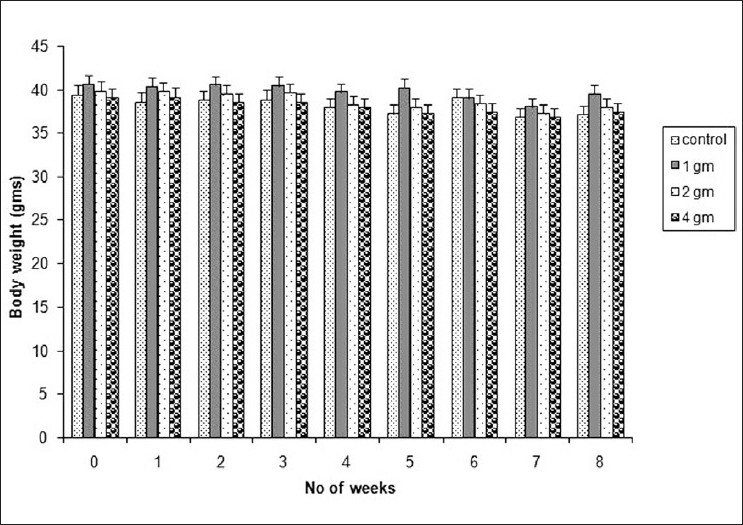
Ayurveda, the Indian holistic healthcare system encompasses traditional medicines with a principle of creating harmony and maintaining balance within the natural rhythms of the body. Rasayana is one of the branches of Ayurveda frequently used as rejuvenant therapy to overcome many discomforts and prevent diseases. It has been reported that rasayanas have immunomodulatory, antioxidant and antitumor functions. However, the genotoxic potential of many rasayanas remains to be evaluated. The present study was undertaken to assess the role of Brahma rasayana(BR) on genotoxicity in vivo in a mouse test system. The older mice (9 months) were orally fed with rasayana for 8 weeks. The treated groups showed no signs of dose-dependent toxicity at the dosage levels tested. The body weight loss/gain and feed consumption were unaffected at tested doses. Furthermore, sperm abnormalities and chromosomal aberrations were insignificant in the treatment group when compared to controls. However, there was a marginal increase in sperm count in the BR treated animals. These findings clearly indicate that there are no observed adverse genotoxic effects elicited by BR in experimental animals such as mice.
阿育吠陀,即印度整体医疗保健系统,涵盖了传统医学,其原则是在身体的自然节律内创造和谐并维持平衡。rasayana是阿育吠陀的分支之一,常被用作恢复活力的疗法,以克服许多不适并预防疾病。据报道,rasayana具有免疫调节、抗氧化和抗肿瘤功能。然而,许多rasayana的遗传毒性潜力仍有待评估。本研究旨在评估梵天rasayana(BR)在小鼠试验系统中对体内遗传毒性的作用。将老年小鼠(9个月)口服给予rasayana 8周。在测试的剂量水平下,治疗组未显示出剂量依赖性毒性的迹象。在测试剂量下,体重减轻/增加和饲料消耗未受影响。此外,与对照组相比,治疗组的精子异常和染色体畸变不明显。然而,BR处理的动物精子数量略有增加。这些发现清楚地表明,在小鼠等实验动物中,未观察到BR引发的不良遗传毒性效应。