Department of Plant Pathology, University of Arkansas, Fayetteville, Arkansas, United States of America.
PLoS Pathog. 2011 Jul;7(7):e1002113. doi: 10.1371/journal.ppat.1002113. Epub 2011 Jul 28.
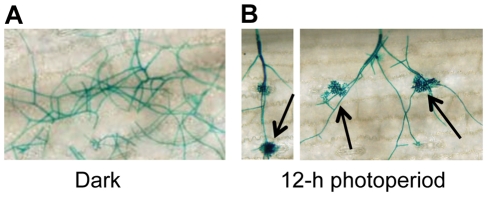
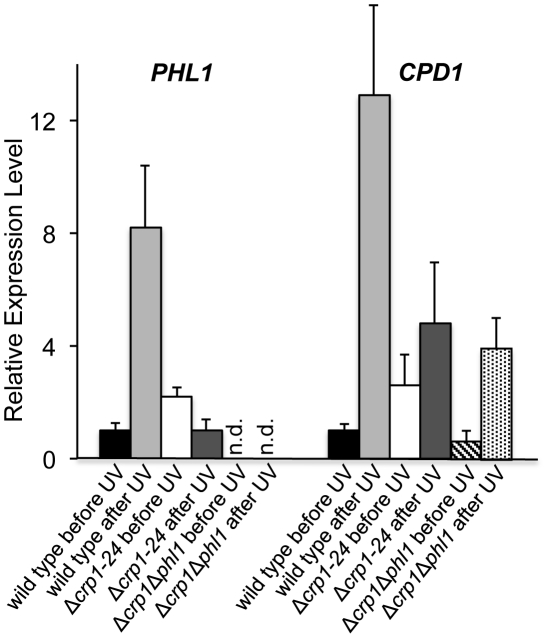
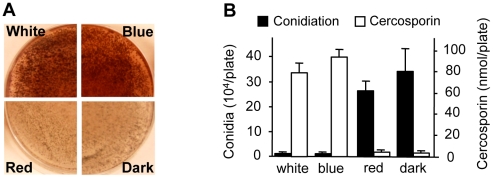
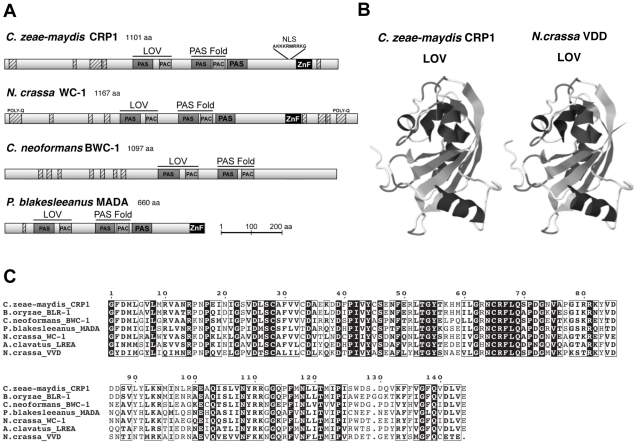
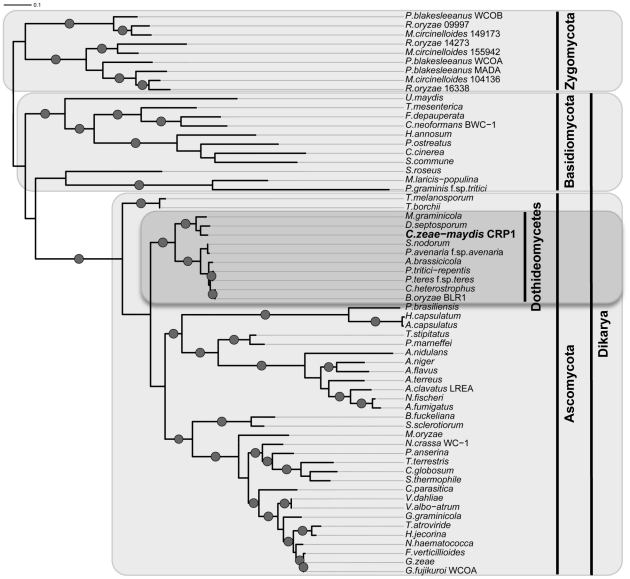
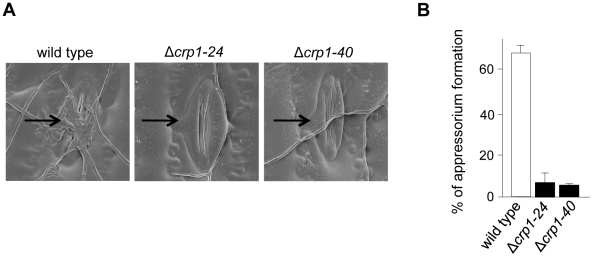
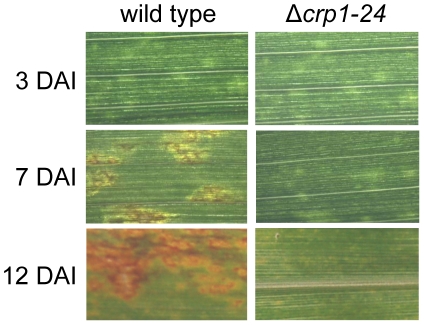
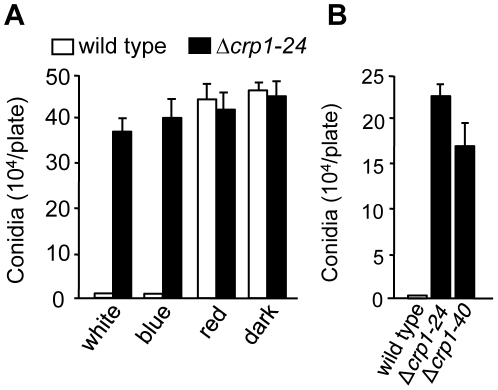
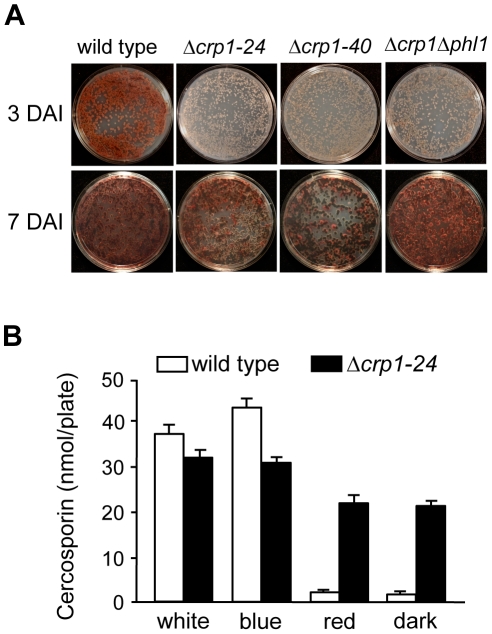
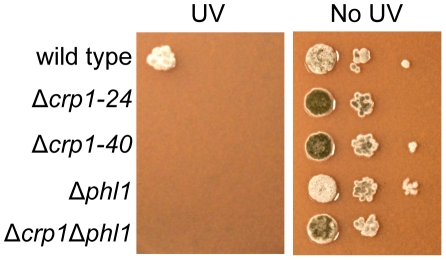
Cercospora zeae-maydis causes gray leaf spot of maize, which has become one of the most widespread and destructive diseases of maize in the world. C. zeae-maydis infects leaves through stomata, which is predicated on the ability of the pathogen to perceive stomata and reorient growth accordingly. In this study, the discovery that light was required for C. zeae-maydis to perceive stomata and infect leaves led to the identification of CRP1, a gene encoding a putative blue-light photoreceptor homologous to White Collar-1 (WC-1) of Neurospora crassa. Disrupting CRP1 via homologous recombination revealed roles in multiple aspects of pathogenesis, including tropism of hyphae to stomata, the formation of appressoria, conidiation, and the biosynthesis of cercosporin. CRP1 was also required for photoreactivation after lethal doses of UV exposure. Intriguingly, putative orthologs of CRP1 are central regulators of circadian clocks in other filamentous fungi, raising the possibility that C. zeae-maydis uses light as a key environmental input to coordinate pathogenesis with maize photoperiodic responses. This study identified a novel molecular mechanism underlying stomatal tropism in a foliar fungal pathogen, provides specific insight into how light regulates pathogenesis in C. zeae-maydis, and establishes a genetic framework for the molecular dissection of infection via stomata and the integration of host and pathogen responses to photoperiod.
玉米尾孢菌引起玉米灰斑病,该病已成为世界上分布最广、破坏性最强的玉米病害之一。玉米尾孢菌通过气孔感染叶片,这取决于病原体感知气孔并相应调整生长的能力。在这项研究中,发现光对于玉米尾孢菌感知气孔和感染叶片是必需的,这导致了 CRP1 的发现,CRP1 是一个编码假定蓝光感受器的基因,与粗糙脉孢菌的 White Collar-1(WC-1)同源。通过同源重组破坏 CRP1 揭示了其在多个致病方面的作用,包括菌丝对气孔的趋向性、附着胞的形成、分生孢子的形成和尾孢菌素的生物合成。CRP1 对于致死剂量的 UV 暴露后的光修复也很重要。有趣的是,CRP1 的假定同源物是其他丝状真菌生物钟的中央调节剂,这增加了玉米尾孢菌可能将光作为协调与玉米光周期反应相关的致病作用的关键环境输入的可能性。本研究鉴定了叶部真菌病原体中气孔趋向性的新分子机制,为了解光如何调节玉米尾孢菌的致病作用提供了具体的见解,并为通过气孔进行感染的分子剖析以及宿主和病原体对光周期的反应整合建立了遗传框架。