Faculty of Agriculture and Life Science, Hirosaki University, Hirosaki, Aomori, Japan.
PLoS Genet. 2011 Aug;7(8):e1002188. doi: 10.1371/journal.pgen.1002188. Epub 2011 Aug 4.
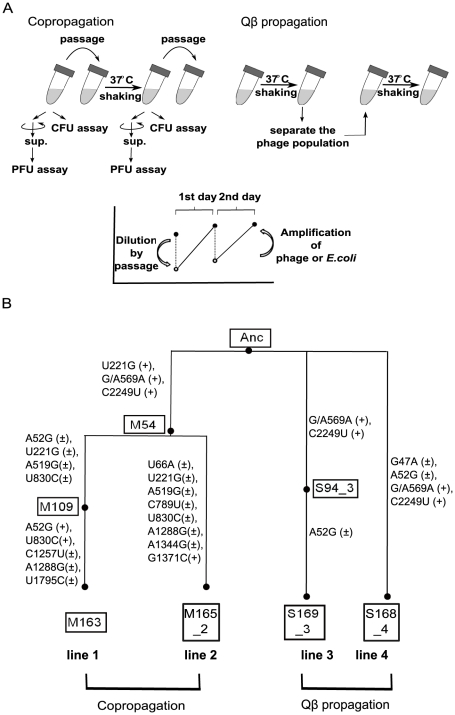
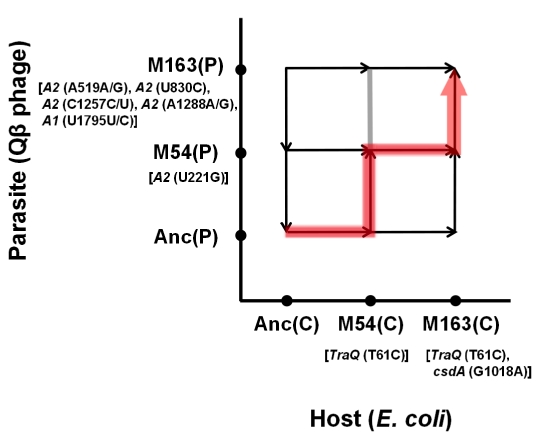
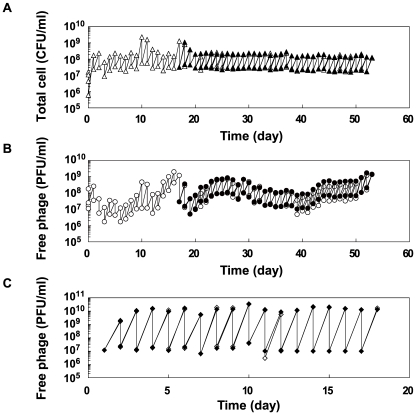
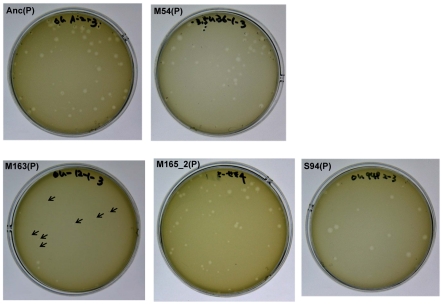
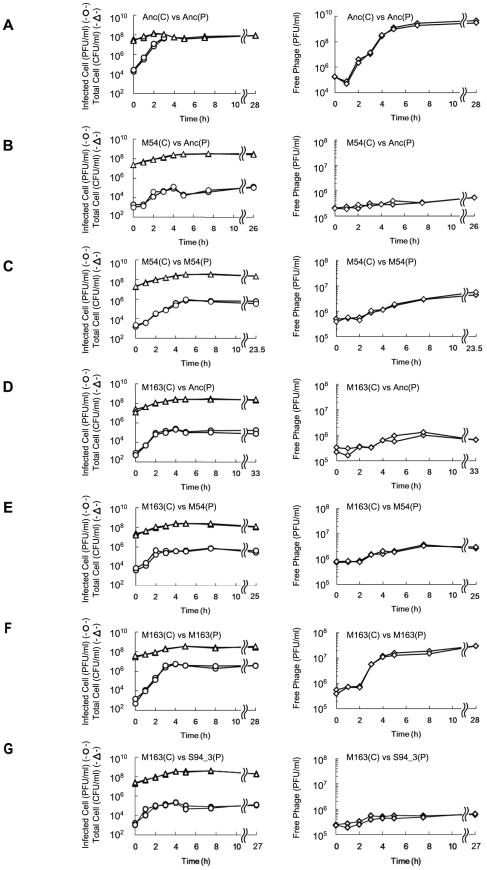
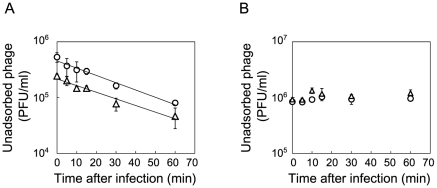
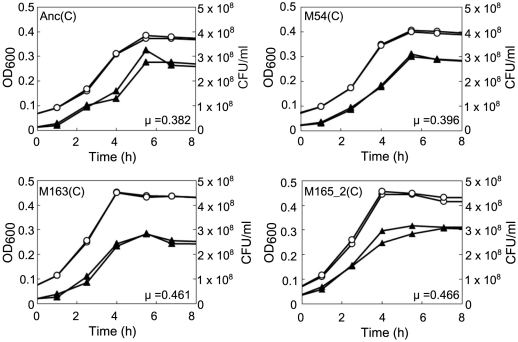
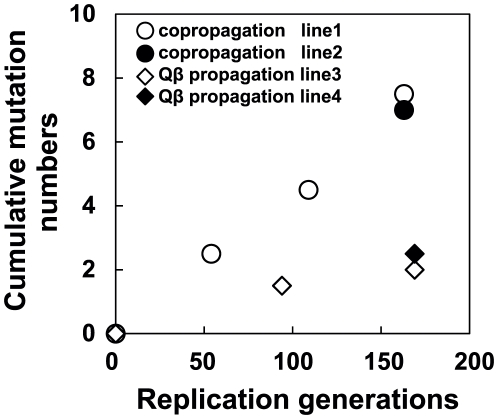
According to the Red Queen hypothesis or arms race dynamics, coevolution drives continuous adaptation and counter-adaptation. Experimental models under simplified environments consisting of bacteria and bacteriophages have been used to analyze the ongoing process of coevolution, but the analysis of both parasites and their hosts in ongoing adaptation and counter-adaptation remained to be performed at the levels of population dynamics and molecular evolution to understand how the phenotypes and genotypes of coevolving parasite-host pairs change through the arms race. Copropagation experiments with Escherichia coli and the lytic RNA bacteriophage Qβ in a spatially unstructured environment revealed coexistence for 54 days (equivalent to 163-165 replication generations of Qβ) and fitness analysis indicated that they were in an arms race. E. coli first adapted by developing partial resistance to infection and later increasing specific growth rate. The phage counter-adapted by improving release efficiency with a change in host specificity and decrease in virulence. Whole-genome analysis indicated that the phage accumulated 7.5 mutations, mainly in the A2 gene, 3.4-fold faster than in Qβ propagated alone. E. coli showed fixation of two mutations (in traQ and csdA) faster than in sole E. coli experimental evolution. These observations suggest that the virus and its host can coexist in an evolutionary arms race, despite a difference in genome mutability (i.e., mutations per genome per replication) of approximately one to three orders of magnitude.
根据红皇后假说或军备竞赛动态,共同进化驱动持续的适应和反适应。简化环境下的细菌和噬菌体实验模型已被用于分析共同进化的持续过程,但寄生虫及其宿主的持续适应和反适应的分析仍有待在种群动态和分子进化水平上进行,以了解共同进化的寄生虫-宿主对的表型和基因型如何通过军备竞赛发生变化。在无空间结构的环境中,用大肠杆菌和裂解性 RNA 噬菌体 Qβ进行共繁殖实验,结果表明它们共存在了 54 天(相当于 Qβ 复制 163-165 代),适应性分析表明它们处于军备竞赛中。大肠杆菌首先通过对感染产生部分抗性来适应,然后提高特定生长率。噬菌体通过改变宿主特异性和降低毒性来提高释放效率进行反适应。全基因组分析表明,噬菌体在 A2 基因中积累了 7.5 个突变,比单独在 Qβ中传播时快 3.4 倍。大肠杆菌表现出两个突变(traQ 和 csdA)的固定速度比单独在大肠杆菌实验进化中更快。这些观察结果表明,尽管基因组突变率(即每个基因组每次复制的突变)相差约一到三个数量级,但病毒及其宿主可以在进化的军备竞赛中共存。