Unidad Hepática, Hospital General Universitario, Alicante, Spain.
PLoS One. 2011;6(7):e23037. doi: 10.1371/journal.pone.0023037. Epub 2011 Jul 29.
Gut is the major source of endogenous bacteria causing infections in advanced cirrhosis. Intestinal barrier dysfunction has been described in cirrhosis and account for an increased bacterial translocation rate.
We hypothesize that microbiota composition may be affected and change along with the induction of experimental cirrhosis, affecting the inflammatory response.
Progressive liver damage was induced in Balb/c mice by weight-controlled oral administration of carbon tetrachloride. Laparotomies were performed at weeks 6, 10, 13 and 16 in a subgroup of treated mice (n = 6/week) and control animals (n = 4/week). Liver tissue specimens, mesenteric lymph nodes, intestinal content and blood were collected at laparotomies. Fibrosis grade, pro-fibrogenic genes expression, gut bacterial composition, bacterial translocation, host's specific butyrate-receptor GPR-43 and serum cytokine levels were measured.
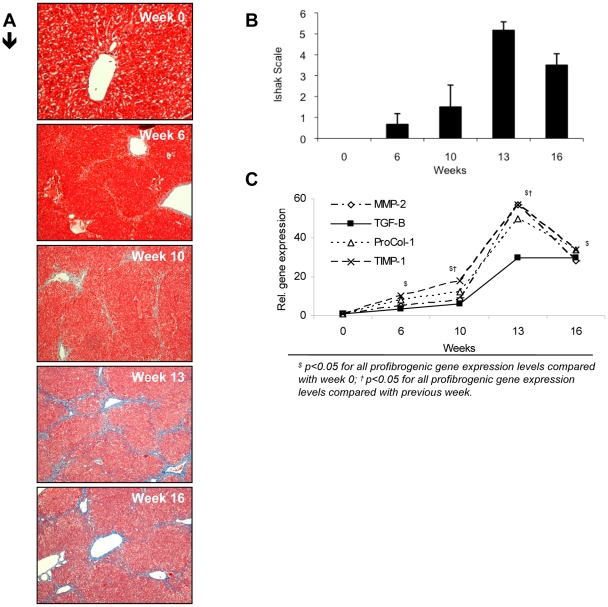
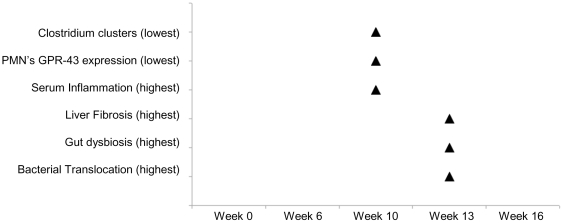
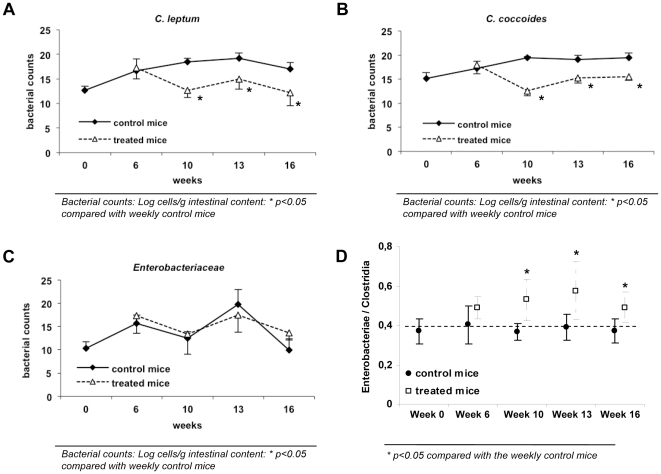
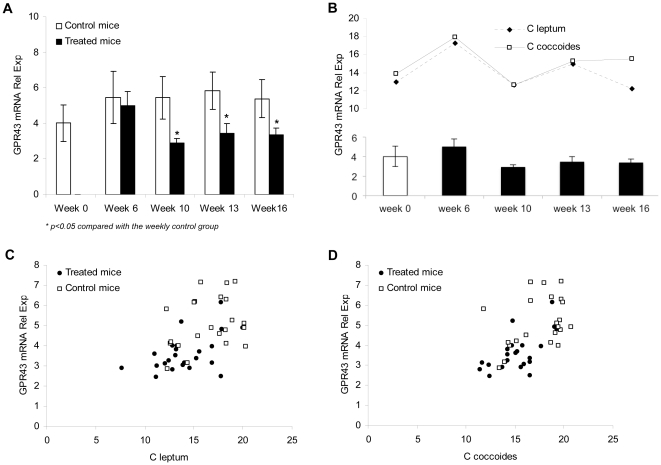
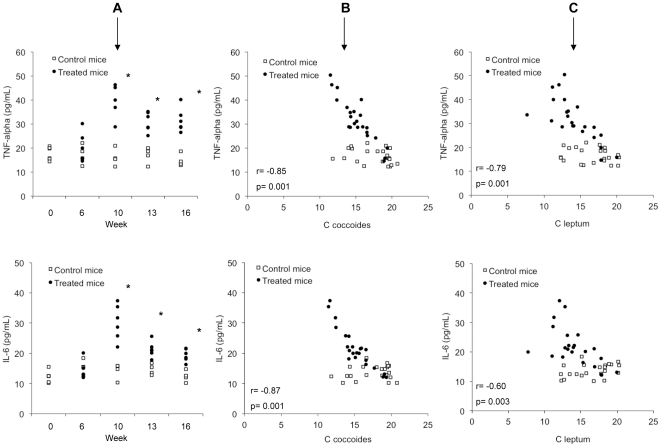
Expression of pro-fibrogenic markers was significantly increased compared with control animals and correlated with the accumulated dose of carbon tetrachloride. Bacterial translocation episodes were less frequent in control mice than in treated animals. Gram-positive anaerobic Clostridia spp count was decreased in treated mice compared with control animals and with other gut common bacterial species, altering the aerobic/anaerobic ratio. This fact was associated with a decreased gene expression of GPR43 in neutrophils of treated mice and inversely correlated with TNF-alpha and IL-6 up-regulation in serum of treated mice along the study protocol. This pro-inflammatory scenario favoured blood bacterial translocation in treated animals, showing the highest bacterial translocation rate and aerobic/anaerobic ratio at the same weeks.
Gut microbiota alterations are associated with the development of an inflammatory environment, fibrosis progression and bacterial translocation in carbon tetrachloride-treated mice.
肠道是引起肝硬化患者感染的主要内源性细菌来源。肠屏障功能障碍在肝硬化中已有描述,并导致细菌易位率增加。
我们假设微生物群落的组成可能会受到影响,并随着实验性肝硬化的诱导而发生变化,从而影响炎症反应。
通过体重控制的口服四氯化碳对 Balb/c 小鼠进行渐进性肝损伤诱导。在实验组(n = 6/周)和对照组(n = 4/周)的一部分治疗小鼠中,在第 6、10、13 和 16 周进行剖腹术。在剖腹术中收集肝组织标本、肠系膜淋巴结、肠内容物和血液。测量纤维化程度、促纤维化基因表达、肠道细菌组成、细菌易位、宿主特异性丁酸盐受体 GPR-43 和血清细胞因子水平。
与对照组相比,促纤维化标志物的表达明显增加,且与四氯化碳的累积剂量相关。与治疗组相比,对照组中细菌易位的发生频率较低。与对照组和其他肠道常见细菌相比,治疗组的革兰氏阳性厌氧梭菌 Clostridia spp 计数减少,改变了需氧/厌氧比例。这一事实与治疗组中性粒细胞中 GPR43 基因表达降低有关,且与治疗组小鼠血清中 TNF-α和 IL-6 的上调呈负相关。这种促炎情况有利于治疗组的血液细菌易位,在相同的周中显示出最高的细菌易位率和需氧/厌氧比例。
在四氯化碳处理的小鼠中,肠道微生物群的改变与炎症环境的发展、纤维化进展和细菌易位有关。