Department of Biochemistry and Molecular Biology, Louisiana State University Health Sciences Center, Shreveport, Louisiana, United States of America.
PLoS One. 2011;6(8):e22183. doi: 10.1371/journal.pone.0022183. Epub 2011 Aug 4.
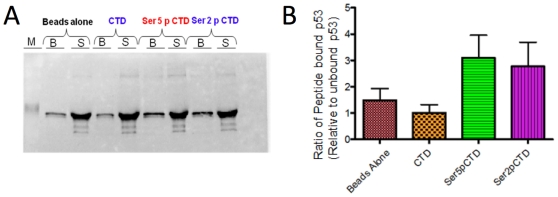
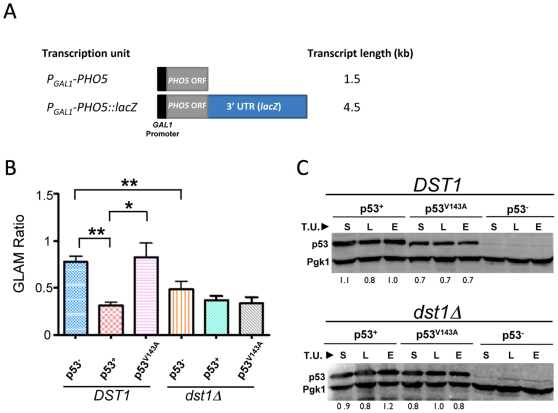
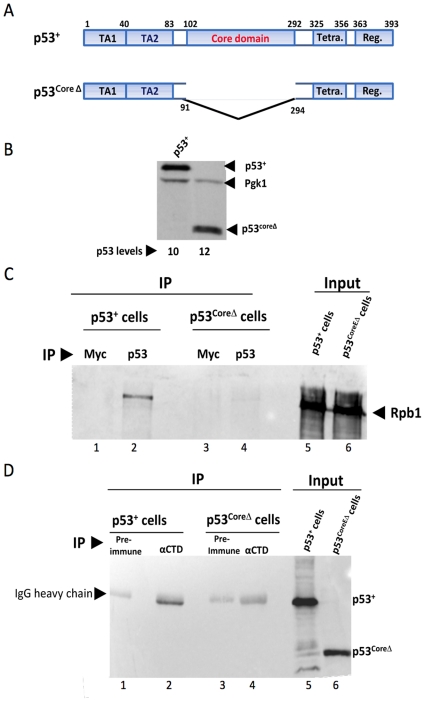
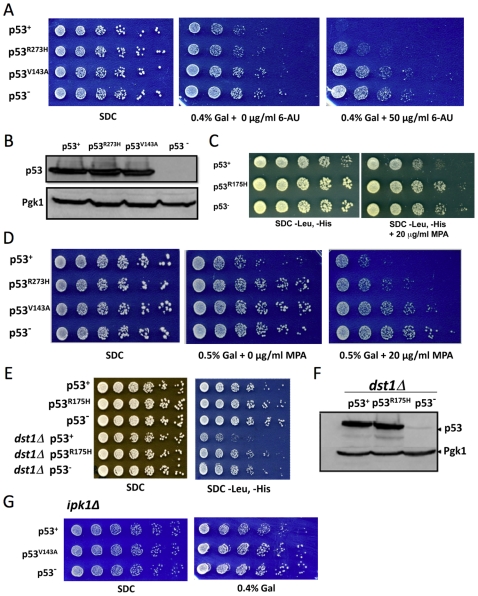
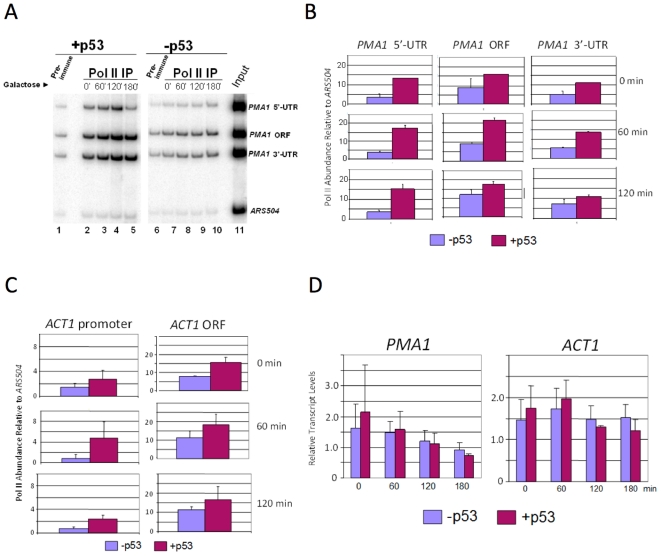
The tumor suppressor p53 principally functions as a gene-specific transcription factor. p53 triggers a variety of anti-proliferative programs by activating or repressing the transcription of effector genes in response to genotoxic stress. To date, much effort has been placed on understanding p53's ability to affect transcription in the context of its DNA-binding activity. How p53 regulates transcriptional output independent of DNA binding is less well understood. Here we provide evidence that human p53 can physically interact with the large subunit of RNA polymerase II (Pol II) both in in vitro interaction assays and in whole cell extracts, and that this interaction is mediated (at least in part) through p53's core DNA-binding domain and the Ser5-phosphorylated CTD of Pol II. Ectopic expression of p53, combined with mutations in transcription elongation factors or exposure to drugs that inhibit Pol II elongation, elicit sickness or lethality in yeast cells. These phenotypes are suppressed by oncogenic point mutations within p53's core domain. The growth phenotypes raise the possibility that p53 impairs Pol II elongation. Consistent with this, a p53-dependent increase in Pol II density is seen at constitutively expressed genes without a concomitant increase in transcript accumulation. Additionally, p53-expressing yeast strains exhibit reduced transcriptional processivity at an episomal reporter gene; this inhibitory activity is abolished by a core domain point mutation. Our results suggest a novel mechanism by which p53 can regulate gene transcription, and a new biological function for its core domain that is susceptible to inactivation by oncogenic point mutations.
肿瘤抑制因子 p53 主要作为一种基因特异性转录因子发挥作用。p53 通过响应遗传毒性应激激活或抑制效应基因的转录,触发各种抗增殖程序。迄今为止,人们已经投入大量精力来理解 p53 在其 DNA 结合活性的背景下影响转录的能力。p53 如何独立于 DNA 结合来调节转录输出,这一点还不太清楚。在这里,我们提供的证据表明,人 p53 可以在体外相互作用测定和整个细胞提取物中与 RNA 聚合酶 II(Pol II)的大亚基物理相互作用,并且这种相互作用至少部分通过 p53 的核心 DNA 结合域和 Pol II 的 Ser5 磷酸化 CTD 介导。p53 的异位表达,加上转录延伸因子的突变或暴露于抑制 Pol II 延伸的药物,会在酵母细胞中引起疾病或致死。这些表型被 p53 核心结构域内的致癌点突变所抑制。生长表型提出了 p53 损害 Pol II 延伸的可能性。与此一致的是,在组成型表达基因中观察到 p53 依赖性 Pol II 密度增加,而转录物积累没有相应增加。此外,表达 p53 的酵母菌株在一个附加型报告基因上表现出转录过程性降低;这种抑制活性被核心结构域点突变所消除。我们的结果表明了 p53 可以调节基因转录的一种新机制,以及其核心结构域的新生物学功能,容易被致癌点突变失活。