Departamento de Clínica Médica, Faculdade de Ciências Médicas, Universidade Estadual de Campinas, Campinas, São Paulo, Brasil.
PLoS One. 2011;6(8):e22681. doi: 10.1371/journal.pone.0022681. Epub 2011 Aug 2.
Recently, studies have demonstrated that the addition of bevacizumab to chemotherapy could be associated with better outcomes in patients with advanced non-small cell lung cancer (NSCLC). However, the benefit seems to be dependent on the drugs used in the chemotherapy regimens. This systematic review evaluated the strength of data on efficacy of the addition of bevacizumab to chemotherapy in advanced NSCLC.
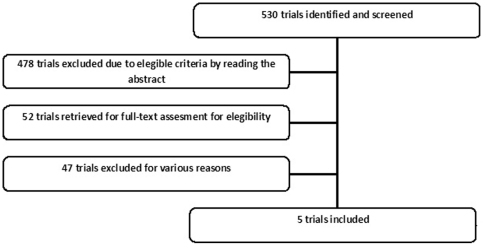
PubMed, EMBASE, and Cochrane databases were searched. Eligible studies were randomized clinical trials (RCTs) that evaluated chemotherapy with or without bevacizumab in patients with advanced NSCLC. The outcomes included overall survival (OS), progression-free survival (PFS), response rate (RR), toxicities and treatment related mortality. Hazard ratios (HR) and odds ratios (OR) were used for the meta-analysis and were expressed with 95% confidence intervals (CI).
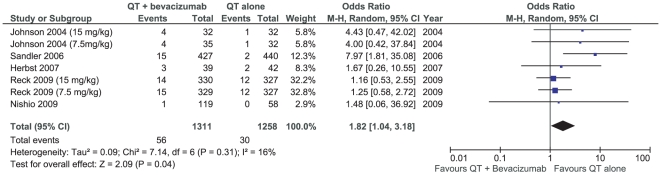
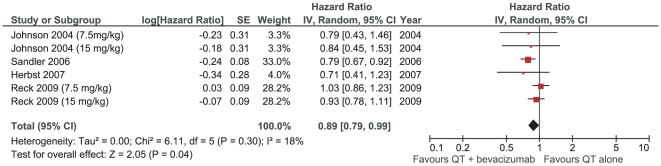
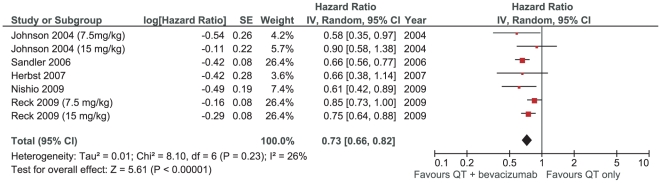
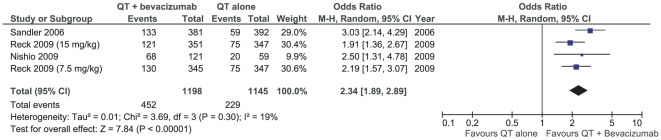
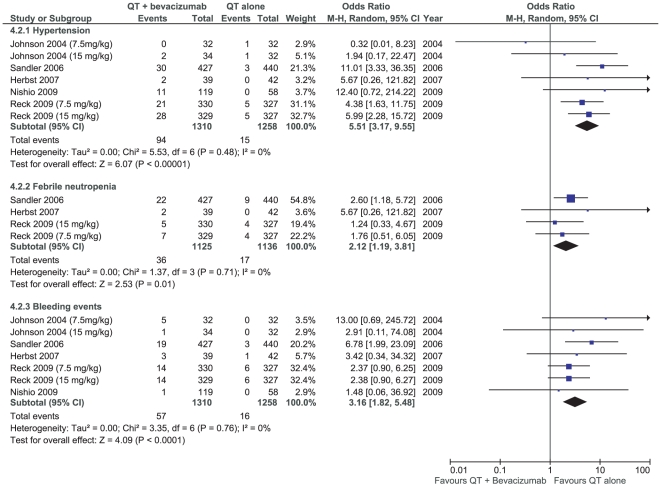
We included results reported from five RCTs, with a total of 2,252 patients included in the primary analysis, all of them using platinum-based chemotherapy regimens. Compared to chemotherapy alone, the addition of bevacizumab to chemotherapy resulted in a significant longer OS (HR 0.89; 95% CI 0.79 to 0.99; p = 0.04), longer PFS (HR 0.73; 95% CI 0.66 to 0.82; p<0.00001) and higher response rates (OR 2.34; 95% CI 1.89 to 2.89; p<0.00001). We found no heterogeneity between trials, in all comparisons. There was a slight increase in toxicities in bevacizumab group, as well as an increased rate of treatment-related mortality.
The addition of bevacizumab to chemotherapy in patients with advanced NSCLC prolongs OS, PFS and RR. Considering the toxicities added, and the small absolute benefits found, bevacizumab plus platinum-based chemotherapy can be considered an option in selected patients with advanced NSCLC. However, risks and benefits should be discussed with patients before decision making.
最近的研究表明,贝伐珠单抗联合化疗可改善晚期非小细胞肺癌(NSCLC)患者的预后。然而,这种获益似乎依赖于化疗方案中使用的药物。本系统评价评估了贝伐珠单抗联合化疗治疗晚期 NSCLC 的疗效数据强度。
检索了 PubMed、EMBASE 和 Cochrane 数据库。纳入评估晚期 NSCLC 患者化疗联合或不联合贝伐珠单抗的随机临床试验(RCT)。结局指标包括总生存期(OS)、无进展生存期(PFS)、缓解率(RR)、毒性和治疗相关死亡率。采用风险比(HR)和优势比(OR)进行荟萃分析,并以 95%置信区间(CI)表示。
共纳入 5 项 RCT 的结果,共有 2252 例患者纳入主要分析,均使用铂类化疗方案。与单纯化疗相比,贝伐珠单抗联合化疗可显著延长 OS(HR 0.89;95%CI 0.79 至 0.99;p = 0.04)、PFS(HR 0.73;95%CI 0.66 至 0.82;p<0.00001)和 RR(OR 2.34;95%CI 1.89 至 2.89;p<0.00001)。所有比较均未发现试验间存在异质性。贝伐珠单抗组毒性增加,治疗相关死亡率增加。
贝伐珠单抗联合化疗治疗晚期 NSCLC 可延长 OS、PFS 和 RR。考虑到增加的毒性和发现的微小绝对获益,贝伐珠单抗联合铂类化疗可作为晚期 NSCLC 患者的选择之一。然而,在做出决策之前,应与患者讨论风险和获益。