Department of Physics, The Network Biology Research Laboratories and The Russell Berrie Nanotechnology Institute, Technion-Israel Institute of Technology, 32000 Haifa, Israel.
Eur Biophys J. 2011 Sep;40(9):1013-27. doi: 10.1007/s00249-011-0741-0. Epub 2011 Aug 11.
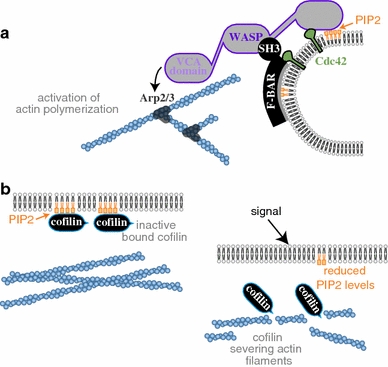
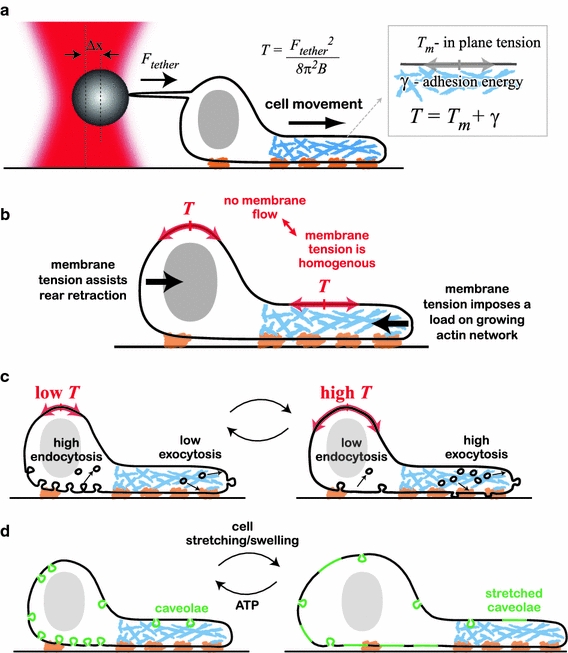
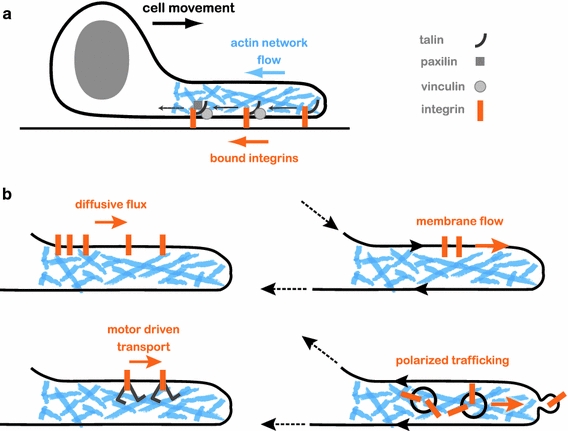
The plasma membrane is of central importance in the motility process. It defines the boundary separating the intracellular and extracellular environments, and mediates the interactions between a motile cell and its environment. Furthermore, the membrane serves as a dynamic platform for localization of various components which actively participate in all aspects of the motility process, including force generation, adhesion, signaling, and regulation. Membrane transport between internal membranes and the plasma membrane, and in particular polarized membrane transport, facilitates continuous reorganization of the plasma membrane and is thought to be involved in maintaining polarity and recycling of essential components in some motile cell types. Beyond its biochemical composition, the mechanical characteristics of the plasma membrane and, in particular, membrane tension are of central importance in cell motility; membrane tension affects the rates of all the processes which involve membrane deformation including edge extension, endocytosis, and exocytosis. Most importantly, the mechanical characteristics of the membrane and its biochemical composition are tightly intertwined; membrane tension and local curvature are largely determined by the biochemical composition of the membrane and the biochemical reactions taking place; at the same time, curvature and tension affect the localization of components and reaction rates. This review focuses on this dynamic interplay and the feedbacks between the biochemical and biophysical characteristics of the membrane and their effects on cell movement. New insight on these will be crucial for understanding the motility process.
质膜在运动过程中具有核心重要性。它定义了细胞内和细胞外环境的边界,介导运动细胞与其环境之间的相互作用。此外,质膜作为一个动态平台,用于定位各种积极参与运动过程各个方面的成分,包括力的产生、黏附、信号传递和调节。质膜内部膜与质膜之间的膜运输,特别是极化膜运输,促进了质膜的持续重组,并且被认为参与了某些运动细胞类型中极性和必需成分的循环。除了其生化组成外,质膜的力学特性,特别是膜张力,在细胞运动中具有核心重要性;膜张力影响所有涉及膜变形的过程的速率,包括边缘延伸、内吞作用和胞吐作用。最重要的是,膜的力学特性和其生化组成紧密交织;膜张力和局部曲率主要由膜的生化组成和发生的生化反应决定;同时,曲率和张力影响成分的定位和反应速率。本综述重点关注这种动态相互作用以及膜的生化和物理特性之间的反馈及其对细胞运动的影响。对这些特性的新见解对于理解运动过程至关重要。