Marres G M H, van der Eijk J, Bemelman M, Leenen L P H
Eur J Trauma Emerg Surg. 2011 Feb;37(1):19-29. doi: 10.1007/s00068-010-0067-0. Epub 2011 Feb 3.
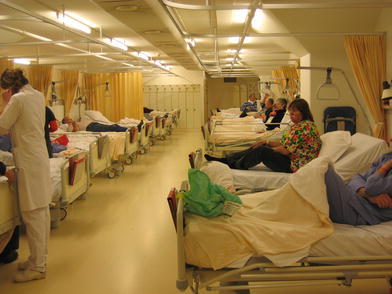
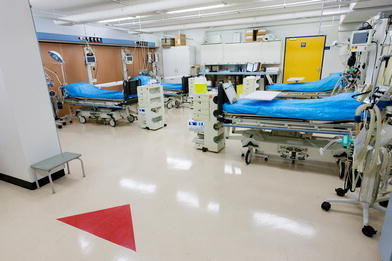
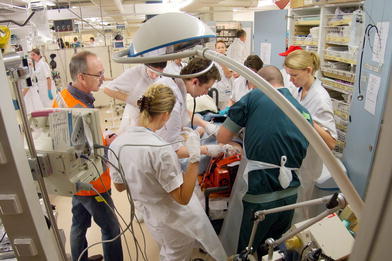
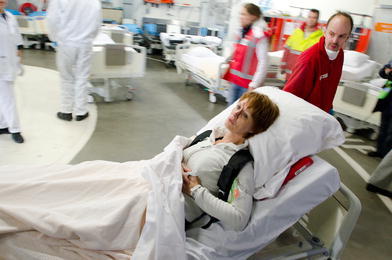
The Major Incident Hospital (MIH) is a unique facility strictly reserved to provide immediate large-scale emergency care for victims of disasters and major incidents. We evaluated the implemented organization to identify strengths and weaknesses, and provide knowledge essential for further improvement of preparedness.
According to the Protocol for Reports from Major accidents and Disasters (PRMD) and along with our five scenarios for activation, we analyzed all the data from evaluation reports of all our deployments since the MIH was founded in 1991.
The MIH was able to provide group-wise emergency care to military (29 admissions) as well as civilian victims of major incidents and disasters, both national (260) and international (226). Group-wise treatment was advantageous for quarantine, logistics, registration, emotional support and (pre)arrangements for family, media and security. Strong points are preparedness and availability of a dedicated facility, including ICU, X-ray and OR facilities, irrespective of MRSA status and prearranged cooperation, e.g., with a trauma centre, poison centre and the military. Evaluation, research and training resulted in a barcode registration system and continuous adaptations to improve preparedness. Shortage of resources did not occur; use of the MIH's available resources for national incidents though, could be further optimized.
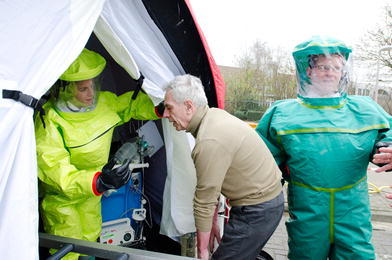
Recommendations for the future are: improvement of imbedding in regional and national procedures, continued dedicated time and staff for training, research and development, improvement of nuclear/biological/chemical decontamination facilities and preparedness, implementation of standardized scoring systems and expansion of registration systems to the prehospital setting.
The online version of this article (doi:10.1007/s00068-010-0067-0) contains supplementary material, which is available to authorized users.
重大事件医院(MIH)是一家独特的机构,专门用于为灾害和重大事件的受害者提供即时大规模紧急护理。我们对已实施的组织进行了评估,以确定其优势和劣势,并提供对进一步提高应急准备能力至关重要的知识。
根据重大事故和灾害报告协议(PRMD)以及我们的五个启动预案,我们分析了自1991年MIH成立以来所有部署评估报告中的所有数据。
MIH能够为军事人员(29例入院)以及重大事件和灾害的国内(260例)和国际(226例)平民受害者提供分组紧急护理。分组治疗在隔离、后勤、登记、情感支持以及为家属、媒体和安保人员进行(预先)安排方面具有优势。优点包括有专门设施且随时可用,包括重症监护病房、X光和手术室设施,无论耐甲氧西林金黄色葡萄球菌(MRSA)状况如何,以及预先安排好的合作,例如与创伤中心、中毒中心和军方的合作。评估、研究和培训促成了条形码登记系统的建立,并不断进行调整以提高应急准备能力。未出现资源短缺情况;不过,将MIH的可用资源用于国内事件的方式仍可进一步优化。
对未来的建议是:更好地融入区域和国家程序,继续为培训、研究和开发投入专门时间和人员,改进核/生物/化学去污设施及应急准备能力,实施标准化评分系统,并将登记系统扩展至院前环境。
本文的在线版本(doi:10.1007/s00068-010-0067-0)包含补充材料,授权用户可获取。