Department of Internal Medicine I, University Hospital Regensburg, Germany.
Exp Mol Pathol. 2011 Dec;91(3):695-701. doi: 10.1016/j.yexmp.2011.07.006. Epub 2011 Aug 5.
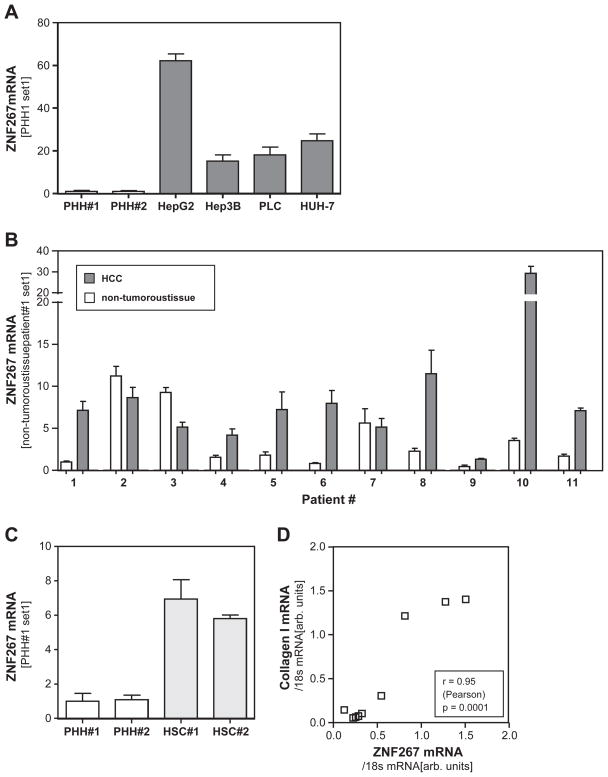
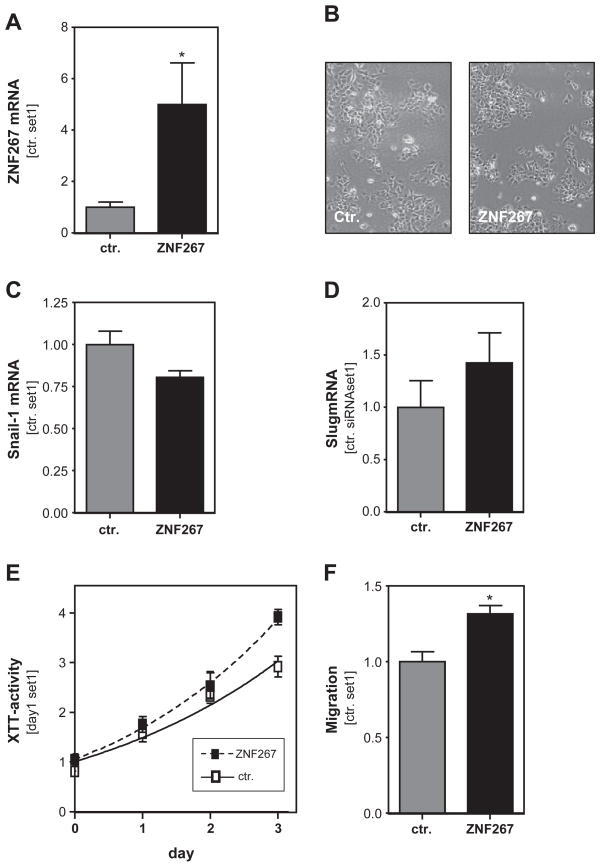
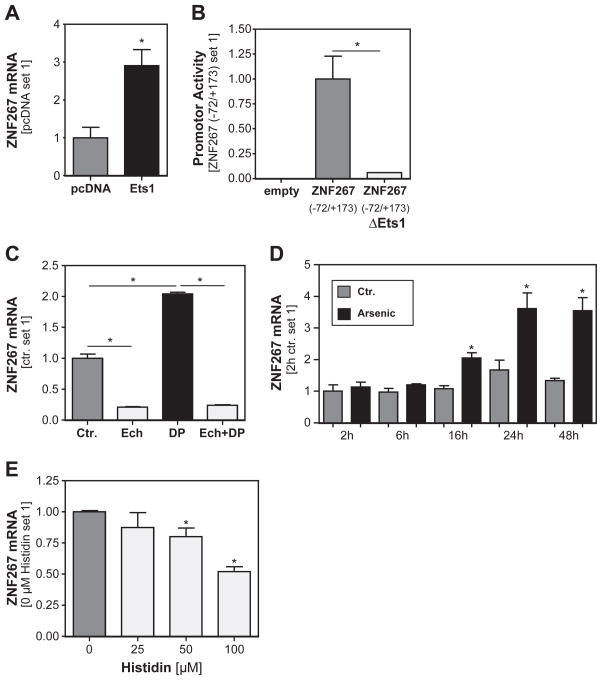
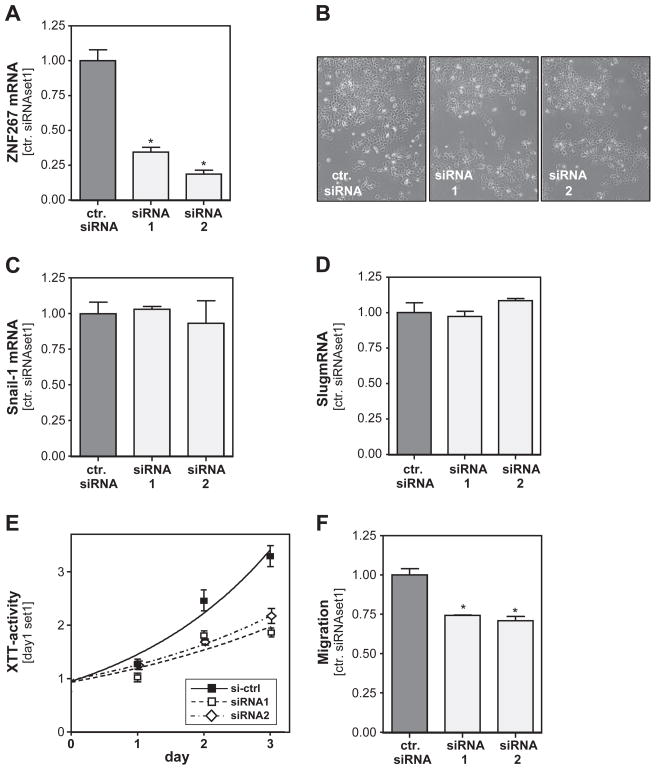
Zinc finger protein 267 (ZNF267) belongs to the family of Kruppel-like transcription factors, which regulates diverse biological processes that include development, proliferation, and differentiation. We have previously demonstrated that ZNF267 mRNA is up-regulated in liver cirrhosis, which is the main risk factor for hepatocellular carcinoma (HCC). Here, we analyzed the expression of ZNF267 in human HCC cells and tissue specimens and found a significant up-regulation compared to primary human hepatocytes and corresponding non-tumorous liver tissue. Over-expression of the transcription factor Ets-1 further enhanced ZNF267 expression, and reporter gene assays revealed that mutation of the Ets-1 binding site to the ZNF267 promotor markedly inhibited ZNF267 promotor activity. Hypoxic conditions induced Ets-1 in HCC cells via HIF1alpha activation, and hypoxia induced ZNF267 expression while HIF1alpha inhibition significantly reduced both hypoxia-induced as well as basal ZNF267 expression in HCC cells. It is known that hypoxic conditions in tumorous tissues induce the formation of reactive oxygen species (ROS), and ROS have been identified as important factor in the regulation of Ets-1 expression in tumor cells. Here, we found that ROS induction induced and ROS scavenging reduced ZNF267 expression in HCC cells, respectively. Loss and gain of function analysis applying siRNA directed against ZNF267 or transient transfection revealed that ZNF267 promotes proliferation and migration of HCC cells in vitro. These findings indicate Ets-1 and HIF1alpha as critical regulators of basal and hypoxia- or ROS-induced ZNF267 expression in HCC, and further suggest that the pro-tumorigenic effect of these factors is at least in part mediated via increased ZNF267 expression in HCC. Since ZNF267 is already elevated in cirrhosis, ZNF267 appears as promising target for both prevention as well as treatment of HCC in patients with chronic liver disease.
锌指蛋白 267(ZNF267)属于 Kruppel 样转录因子家族,它调节包括发育、增殖和分化在内的多种生物过程。我们之前已经证明,ZNF267 mRNA 在肝硬化中上调,肝硬化是肝细胞癌(HCC)的主要危险因素。在这里,我们分析了 ZNF267 在人 HCC 细胞和组织标本中的表达,与原代人肝细胞和相应的非肿瘤性肝组织相比,发现其显著上调。转录因子 Ets-1 的过表达进一步增强了 ZNF267 的表达,而报告基因实验表明,Ets-1 结合位点突变为 ZNF267 启动子,显著抑制了 ZNF267 启动子的活性。低氧条件通过 HIF1alpha 激活诱导 HCC 细胞中的 Ets-1,低氧诱导 ZNF267 表达,而 HIF1alpha 抑制则显著降低 HCC 细胞中低氧诱导和基础 ZNF267 表达。众所周知,肿瘤组织中的低氧条件会诱导活性氧(ROS)的形成,ROS 已被确定为肿瘤细胞中 Ets-1 表达调控的重要因素。在这里,我们发现 ROS 诱导诱导和 ROS 清除分别降低了 HCC 细胞中的 ZNF267 表达。应用针对 ZNF267 的 siRNA 或瞬时转染进行的失活和获得功能分析表明,ZNF267 促进 HCC 细胞的体外增殖和迁移。这些发现表明 Ets-1 和 HIF1alpha 是 HCC 中基础和低氧或 ROS 诱导的 ZNF267 表达的关键调节因子,进一步表明这些因素的促肿瘤作用至少部分是通过增加 HCC 中的 ZNF267 表达介导的。由于 ZNF267 在肝硬化中已经升高,因此 ZNF267 似乎是慢性肝病患者 HCC 预防和治疗的有前途的靶点。