Department of Pharmaceutics and Pharmaceutical Chemistry/CCCD, University of Utah, Salt Lake City, UT 84112, USA.
J Control Release. 2012 Jan 10;157(1):126-31. doi: 10.1016/j.jconrel.2011.08.002. Epub 2011 Aug 6.
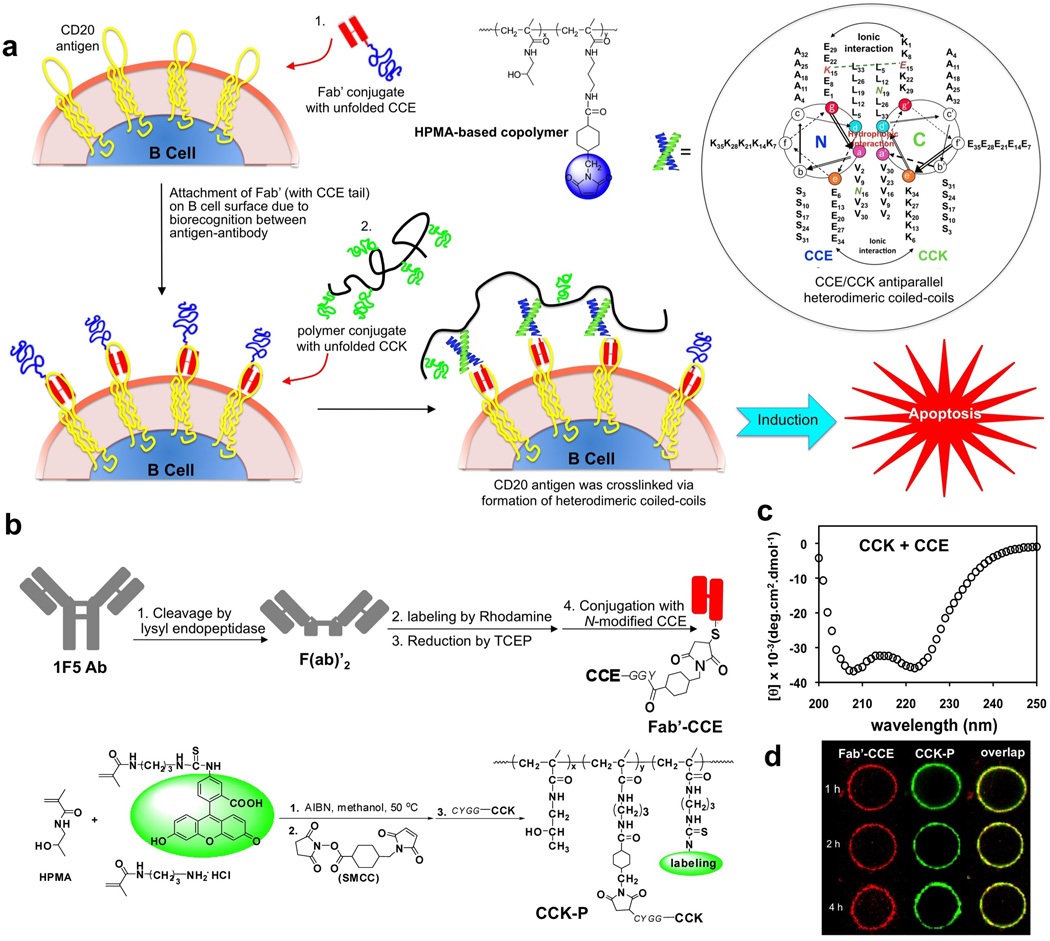
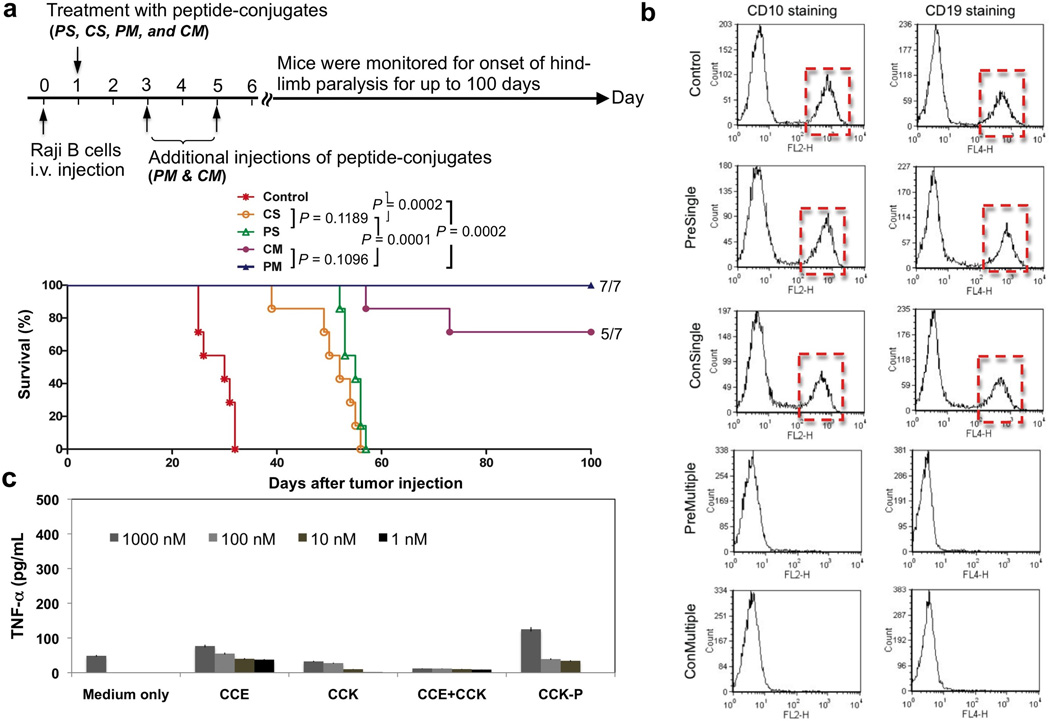
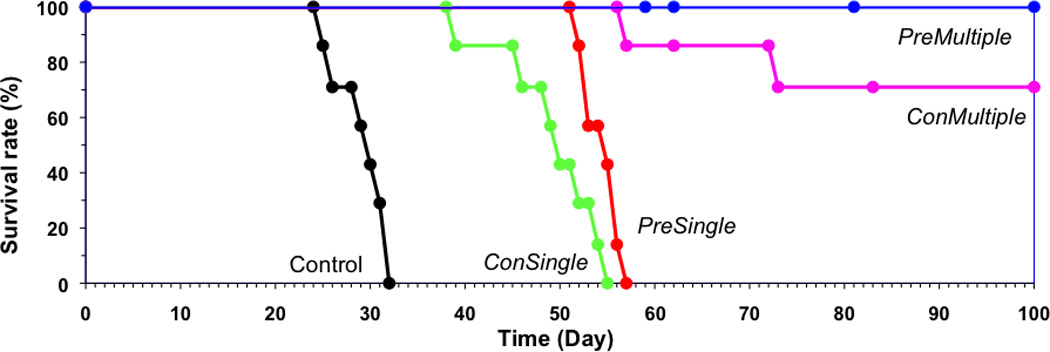
We evaluated a new concept in cancer therapy, coiled-coil mediated induction of apoptosis in Raji B cells, for treatment of human B-cell lymphoma in a preclinical animal model. The system is composed of a pair of complementary coiled-coil peptides, CCE and CCK, forming antiparallel heterodimers; Fab' fragment of the 1F5 anti-CD20 antibody; and N-(2-hydroxypropyl)methacrylamide (HPMA) copolymer. One peptide is conjugated to the Fab' fragment (Fab'-CCE), the other is conjugated in multiple grafts to polyHPMA (CCK-P; P is the HPMA copolymer backbone). Intravenous administration of Fab'-CCE conjugate, followed by the administration of CCK-P produced long-term survivors in SCID (C.B.-17) mice bearing human B-lymphoma xenografts. The rationale of the design is the absence of low molecular weight drugs and the fact that crosslinking of CD20 at B-cell surface results in apoptosis. This approach creates a new paradigm for manipulating molecular recognition principles in the design of improved cancer treatment.
我们评估了一种癌症治疗的新概念,即卷曲螺旋介导的 Raji B 细胞凋亡,用于治疗临床前动物模型中的人类 B 细胞淋巴瘤。该系统由一对互补的卷曲螺旋肽 CCE 和 CCK 组成,形成反平行异二聚体;1F5 抗 CD20 抗体的 Fab'片段;以及 N-(2-羟丙基)甲基丙烯酰胺(HPMA)共聚物。一个肽与 Fab'片段(Fab'-CCE)结合,另一个肽以多个接枝形式与聚 HPMA(CCK-P;P 是 HPMA 共聚物主链)结合。静脉注射 Fab'-CCE 缀合物,然后给予 CCK-P,可使携带人 B 细胞淋巴瘤异种移植物的 SCID(C.B.-17)小鼠长期存活。设计的原理是不存在低分子量药物,并且 B 细胞表面的 CD20 交联导致细胞凋亡。这种方法为在设计改进的癌症治疗方法中操纵分子识别原理创造了一个新范例。