Institute of Molecular Biology and Biophysics, ETH Zürich, Zürich, Switzerland.
EMBO J. 2011 Aug 16;30(20):4223-35. doi: 10.1038/emboj.2011.300.
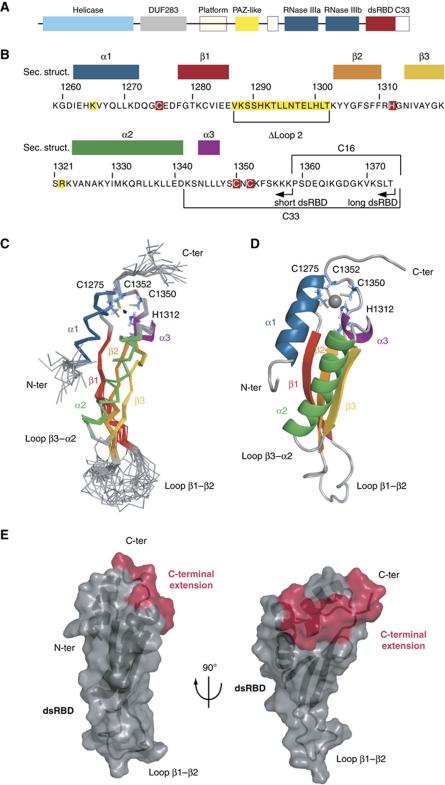
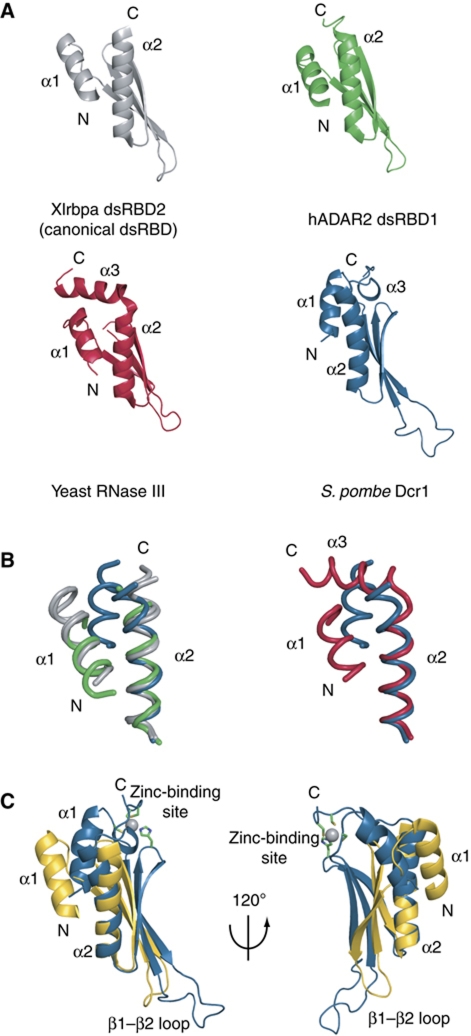
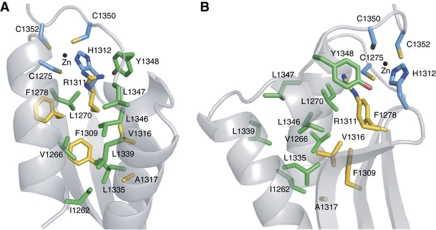
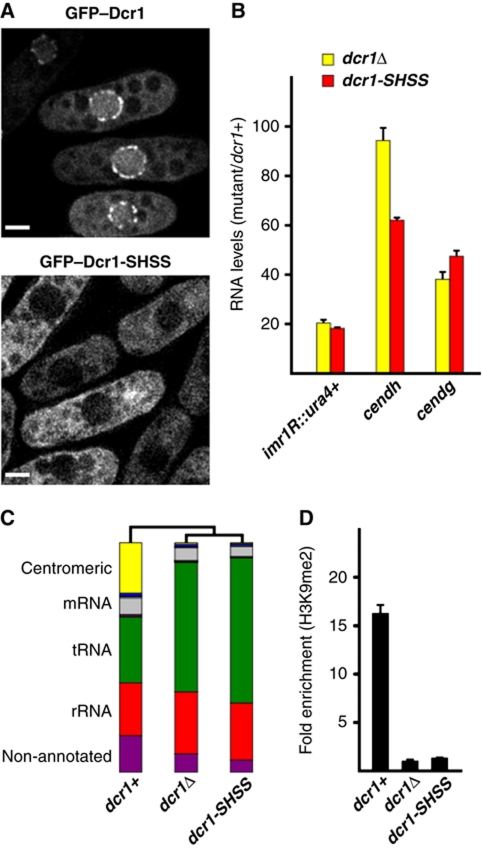
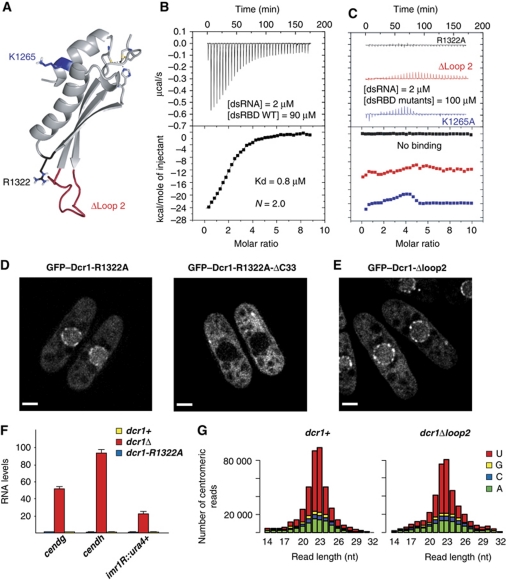
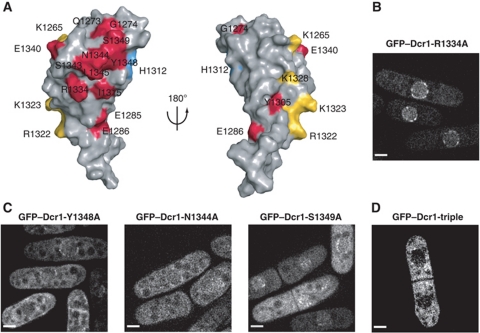
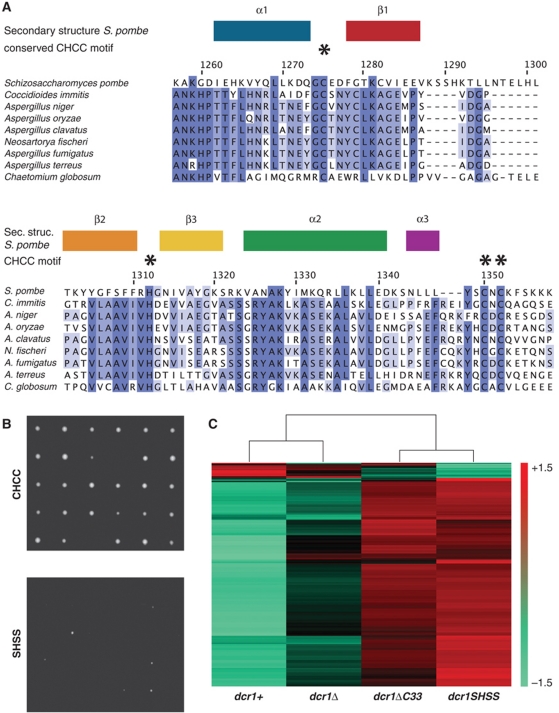
Dicer proteins function in RNA interference (RNAi) pathways by generating small RNAs (sRNAs). Here, we report the solution structure of the C-terminal domain of Schizosaccharomyces pombe Dicer (Dcr1). The structure reveals an unusual double-stranded RNA binding domain (dsRBD) fold embedding a novel zinc-binding motif that is conserved among dicers in yeast. Although the C-terminal domain of Dcr1 still binds nucleic acids, this property is dispensable for proper functioning of Dcr1. In contrast, disruption of zinc coordination renders Dcr1 mainly cytoplasmic and leads to remarkable changes in gene expression and loss of heterochromatin assembly. In summary, our results reveal novel insights into the mechanism of nuclear retention of Dcr1 and raise the possibility that this new class of dsRBDs might generally function in nucleocytoplasmic trafficking and not substrate binding. The C-terminal domain of Dcr1 constitutes a novel regulatory module that might represent a potential target for therapeutic intervention with fungal diseases.
Dicer 蛋白通过生成小 RNA(sRNAs)在 RNA 干扰(RNAi)途径中发挥作用。在这里,我们报告了酿酒酵母 Dicer(Dcr1)的 C 端结构域的溶液结构。该结构揭示了一种不寻常的双链 RNA 结合域(dsRBD)折叠,其中嵌入了一个新的锌结合基序,该基序在酵母中的 Dicer 中保守。尽管 Dcr1 的 C 端结构域仍然可以结合核酸,但这种特性对于 Dcr1 的正常功能并非必需。相比之下,锌配位的破坏使 Dcr1 主要位于细胞质中,并导致基因表达的显著变化和异染色质组装的丧失。总之,我们的结果揭示了 Dcr1 核保留机制的新见解,并提出了一个可能性,即这一新类 dsRBD 可能普遍在核质运输中发挥作用,而不是在底物结合中发挥作用。Dcr1 的 C 端结构域构成了一个新的调节模块,可能代表着真菌疾病治疗干预的潜在靶点。