Panjala Surekha Rani, Jiang Youde, Kern Timothy S, Thomas Steven A, Steinle Jena J
Department of Ophthalmology, Hamilton Eye Institute, The University of Tennessee Health Science Center, Memphis, TN, USA.
Mol Vis. 2011;17:1822-8. Epub 2011 Jul 6.
To investigate the role of β1-adrenergic receptors on insulin like growth factor (IGF)-1 receptor signaling and apoptosis in the retina using β1-adrenergic receptor knockout (KO) mice.
Western blotting and enzyme-linked immunosorbent assay analyses were done on whole retinal lysates from β1-adrenergic receptor KO mice and wild-type littermates. In addition, vascular analyses of degenerate capillaries and pericyte ghosts were done on the retina of the β1-adrenergic receptor KO mice versus littermates.
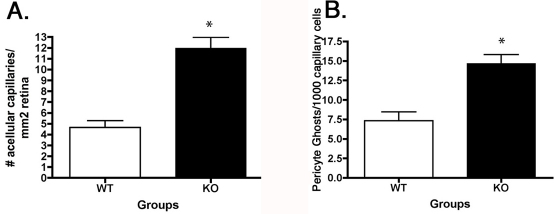
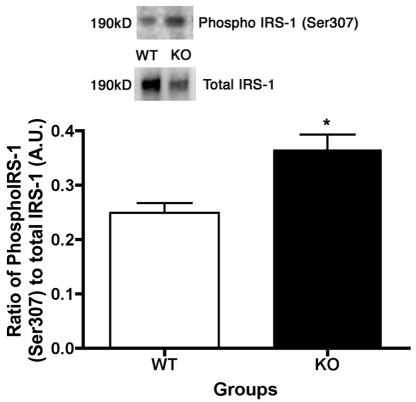
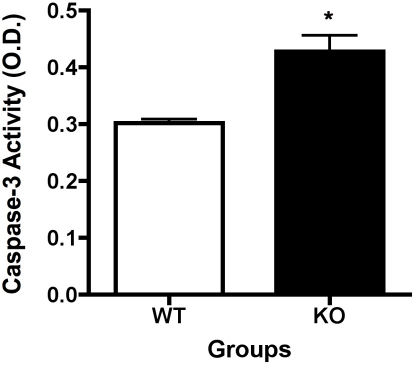
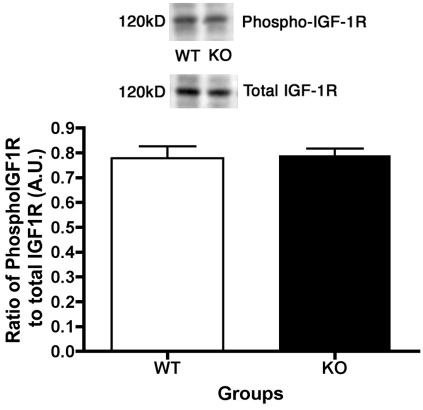
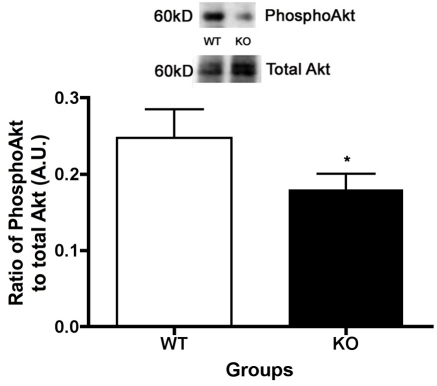
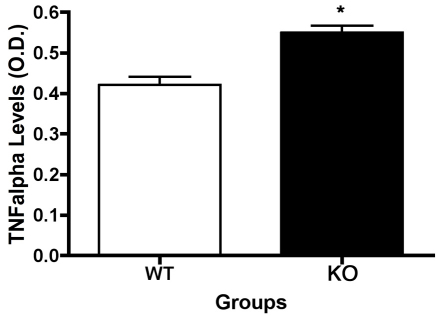
Lack of β1-adrenergic receptors produced a significant increase in both degenerate capillaries and pericyte ghosts. This was accompanied by an increase in cleaved caspase 3 and tumor necrosis factor α levels. IGF-1 receptor phosphorylation was not changed; however, protein kinase B (Akt) phosphorylation was significantly decreased. The decrease in Akt phosphorylation is likely caused by increased insulin receptor substrate-1 serine 307 (IRS-1(Ser307)) phosphorylation, which is inhibitory to IGF-1 receptor signaling.
These studies further support the idea that maintenance of β-adrenergic receptor signaling is beneficial for retinal homeostasis. Loss of β1-adrenergic receptor signaling alters tumor necrosis factor α and apoptosis levels in the retina, as well as Akt and IGF-1 receptor phosphorylation. Since many of these same changes are observed in the diabetic retina, these data support that novel β-adrenergic receptor agents may provide additional avenues for therapeutics.
利用β1-肾上腺素能受体基因敲除(KO)小鼠,研究β1-肾上腺素能受体在视网膜胰岛素样生长因子(IGF)-1受体信号传导及细胞凋亡中的作用。
对β1-肾上腺素能受体KO小鼠和野生型同窝小鼠的全视网膜裂解物进行蛋白质印迹法和酶联免疫吸附测定分析。此外,对β1-肾上腺素能受体KO小鼠及其同窝小鼠的视网膜进行退化毛细血管和周细胞鬼影的血管分析。
β1-肾上腺素能受体的缺失导致退化毛细血管和周细胞鬼影均显著增加。这伴随着裂解的半胱天冬酶3和肿瘤坏死因子α水平的升高。IGF-1受体磷酸化未发生变化;然而,蛋白激酶B(Akt)磷酸化显著降低。Akt磷酸化的降低可能是由于胰岛素受体底物-1丝氨酸307(IRS-1(Ser307))磷酸化增加所致,而这对IGF-1受体信号传导具有抑制作用。
这些研究进一步支持了β-肾上腺素能受体信号传导的维持对视网膜稳态有益的观点。β1-肾上腺素能受体信号传导的丧失会改变视网膜中的肿瘤坏死因子α和细胞凋亡水平,以及Akt和IGF-1受体磷酸化。由于在糖尿病视网膜中也观察到许多相同的变化,这些数据支持新型β-肾上腺素能受体药物可能提供额外的治疗途径。